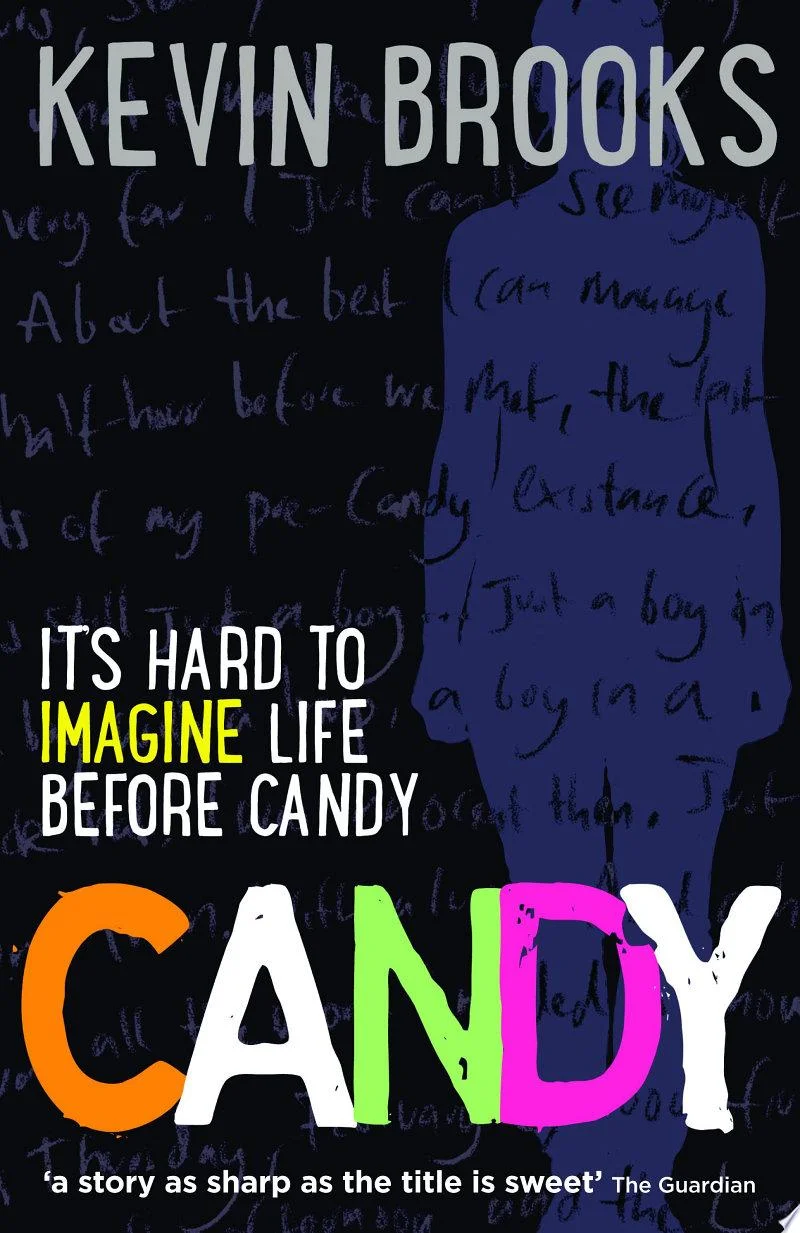
Candy
by Kevin Brooks
- Publication Date:
- July 3rd, 2014
- Publisher:
- Chicken House
- ISBN-13:
- 9781909489219
- ISBN-10:
- 1909489212
- Pages:
- 321
Why Candy Has Been Challenged
Readers who expected a straightforward teen romance have pushed back on the novel's willingness to follow attraction into darker, more adult territory than its premise suggests. See more ↓
Challenged or banned in 1 state across 2 school districts.
Overview
Kevin Brooks's "Candy" opens with a single, almost involuntary moment of attraction: a boy named Joe notices a girl, and something about her stops him cold. The novel lingers on that instant, teasing apart what exactly draws him in before letting the two of them meet properly over coffee.
From there, the story follows the quick, disorienting pull of early infatuation. Joe and Candy's conversation sparks an immediate connection, the kind that feels both thrilling and slightly unsteady, and the narrative uses that uncertainty to raise its central question rather than answer it right away.
That question — whether this particular attraction can actually sustain something as uncomplicated as the word "love" implies — hangs over the book from its earliest pages, setting up a story less interested in a tidy romance than in testing what first attraction can and cannot survive.
Beyond First Impressions
Brooks has built a body of young adult fiction known for resisting easy comfort, and "Candy" fits that pattern by framing a classic romantic premise — boy sees girl, boy is smitten — as an opening into something more unsettled. The novel's early focus on surface details, a look, a smile, a posture, mirrors how infatuation actually works: attraction arrives before understanding does, and the book is interested in what happens once understanding has to catch up.
That gap between instant attraction and the slower work of actually knowing someone gives the novel its tension. Joe's pursuit of Candy becomes a way of examining how much a person can really see in another from a single charged encounter, and how much gets projected onto them instead. Within Brooks's wider catalog of unsentimental, often bleak coming-of-age stories, "Candy" stands out for grounding that scrutiny in the familiar, deceptively simple shape of a love story.
Why Candy Has Been Challenged
Much of the friction around "Candy" centers less on whether teenagers should encounter stories about attraction and more on where, and at what age, this particular one belongs on a shelf. Reviewers and parents weighing the book for classroom or library use have debated whether its content fits comfortably in middle grade collections or is better suited to older high school readers.
The substance of that debate rests on the mature terrain the relationship at the book's center eventually crosses into, including frank depictions of a troubled, adult-tinged world that Candy is caught up in and the physical and emotional risk that comes with Joe's pursuit of her. Objecting readers have pointed to its treatment of substance use and its unflinching look at exploitation and coercion within a relationship as going further than they expect from a book shelved as teen romance. Within the catalog tracked here, "Candy" has drawn a recorded challenge in one state and two school districts, reflecting a narrower but still notable instance of this broader tension between a book's romantic premise and the harder realities it turns out to explore.
Where to Buy




Affiliate links may generate a small commission at no extra cost to you, which helps support this site.
Banned in Schools
Banned or challenged in 1 state across 2 school districts.
Florida 2 districts
- Collier County Public Schools Banned
- Orange County Public Schools Banned by restriction