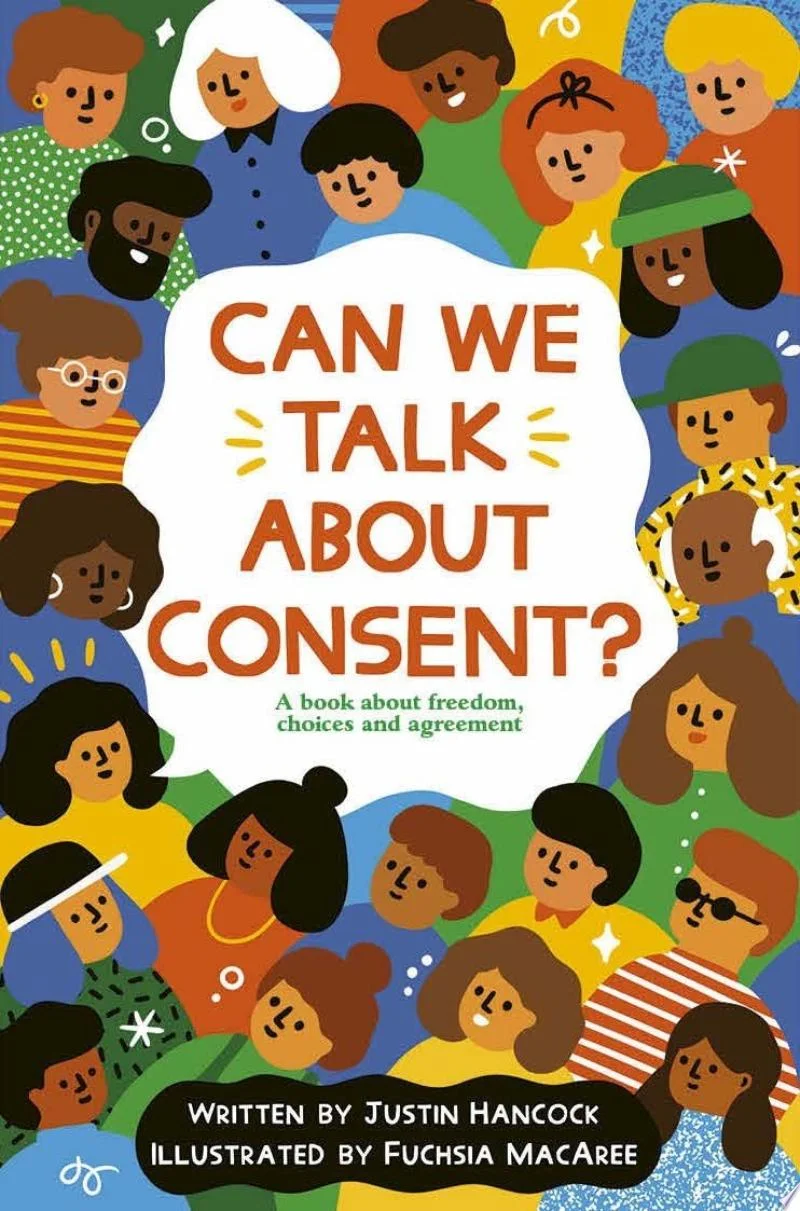
Can We Talk About Consent?
- Publication Date:
- January 5th, 2021
- Publisher:
- Frances Lincoln Children's Books
- ISBN-13:
- 9780711256576
- ISBN-10:
- 0711256578
- Pages:
- 162
Why Can We Talk About Consent? Has Been Challenged
Some parents and reviewers have objected to a teen-oriented guide addressing sexual boundaries and decision-making so directly, arguing the subject matter outpaces what younger readers are ready to handle. See more ↓
Challenged or banned in 1 state across 1 school district.
Overview
Can We Talk About Consent? is a nonfiction primer written for teenage readers who are beginning to navigate friendships, dating, and their own sense of bodily autonomy. Author Justin Hancock, who works professionally in sex and relationships education, sets out to demystify a word that gets used constantly but rarely gets explained: consent.
Rather than confining the topic to sexual encounters alone, the book treats consent as a habit of everyday life. It walks through how people greet one another, how they decide what belongs to them to choose, and how they can say no without guilt or say yes without pressure. From there it moves into more explicit territory, addressing communication within sexual relationships and the various circumstances that can compromise a person's real ability to choose freely.
Throughout, the tone favors plain language and approachable analogies over clinical instruction, aiming to make an often-awkward subject feel discussable rather than taboo.
A Vocabulary for Boundaries
The book arrives amid a broader shift in how schools and publishers approach adolescent sex education, moving away from purely biological or abstinence-focused material toward frameworks centered on communication and mutual respect. Consent-literacy titles like this one position themselves as complements to, rather than replacements for, traditional health curricula, filling gaps that many students report never being addressed directly by a teacher or parent.
What distinguishes Hancock's approach is its insistence that consent is not a single skill deployed in a single moment but a disposition that shapes how a person moves through the world — how they touch a friend's shoulder, how they respond to peer pressure, how they extend the same respect to others that they expect for themselves. That framing situates the book less as a manual for sexual encounters specifically and more as a broader argument about self-respect and interpersonal ethics, with sexuality treated as one application among several.
Why Can We Talk About Consent? Has Been Challenged
Sexual content aimed at a teenage readership is the central concern raised by objectors, who argue that direct discussion of sexual boundaries and consent negotiation is inappropriate for the book's intended age range even when framed educationally rather than graphically. Some challenges characterize the material as introducing minors to concepts about sexual decision-making that critics believe should be left to parents or omitted from school and library collections entirely.
A related strand of objection focuses on the book's candor about the factors that can compromise someone's ability to consent, including power imbalances and impairment, with some reviewers arguing that naming these situations explicitly exposes young readers to material beyond their maturity level. The book has been challenged or restricted in one state and one district tracked in this catalog, disputes that reflect the wider debate over how — and how early — consent education belongs in materials accessible to teenagers.
Where to Buy




Affiliate links may generate a small commission at no extra cost to you, which helps support this site.
Banned in Schools
Banned or challenged in 1 state across 1 school district.