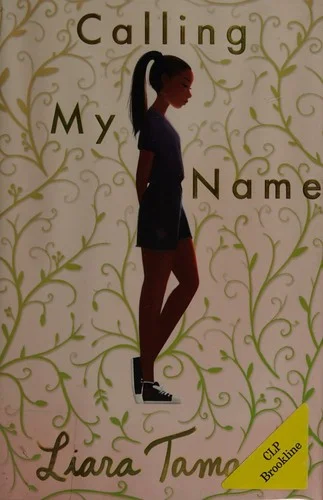
Calling My Name
by Liara Tamani
- Publication Date:
- January 1st, 2017
- Publisher:
- Greenwillow Books
- ISBN-13:
- 9780062656865
- ISBN-10:
- 0062656864
- Pages:
- 320
Why Calling My Name Has Been Challenged
Some readers have pushed back on the book's unflinching look at a teenage girl's private physical awakening and her wavering religious faith, seeing material better left out of a young reader's hands rather than an honest account of growing up. See more ↓
Challenged or banned in 1 state across 1 school district.
Overview
Calling My Name follows Taja Brown through the years of her adolescence in Houston, Texas, told in short, impressionistic chapters that read more like accumulating memories than a conventional plot. Raised in a devout Christian household, Taja is steeped in the rhythms of church, family expectation, and Southern Black middle-class life, and much of the novel's tension comes from watching her test those inherited certainties against her own emerging thoughts and feelings.
Liara Tamani builds the book around small, specific moments — a sermon that doesn't quite land the way it used to, a friendship that shifts, a first stirring of physical attraction — rather than a single dramatic arc. The effect is closer to a portrait than a story with a clean beginning and end, and Taja's voice, wry and searching, carries the reader through changes in her body, her friendships, and her sense of what she believes.
By the novel's close, Taja has not rejected the world she came from so much as begun to hold it more critically, choosing for herself which parts of her upbringing to keep and which to question. It is a book more interested in interior growth than external events, and its quiet, cumulative structure asks readers to sit with a character's uncertainty rather than resolve it neatly.
A Quiet Bildungsroman of Faith and Selfhood
What Calling My Name is really doing is less about any single event in Taja's life than about the slow work of separating inherited belief from personal conviction. The novel sits within a tradition of coming-of-age fiction that centers a Black girl's inner life on its own terms — her spiritual doubts, her physical awakening, her friendships and family loyalties — without organizing that life around trauma or crisis for its own sake.
That choice has shaped how the book has been read and discussed since its publication: reviewers and educators have tended to praise it as an unusually tender, unhurried entry in a genre that often rushes its young protagonists toward resolution. Its fragmented, vignette-driven structure mirrors the way memory and adolescence actually feel — nonlinear, accretive, full of small revisions to what a person believes about herself. In that sense, the novel's form is inseparable from its subject: a portrait of a girl discovering that faith, family, and self can be held simultaneously, and imperfectly, without collapsing into either total acceptance or total rebellion.
Why Calling My Name Has Been Challenged
The novel has generally been praised for its honesty — critics have singled out its unguarded, lyrical treatment of a teenage girl's inner life as a strength rather than a liability — but that same candor is precisely what has drawn objection from some parents and reviewers. Where admirers see an authentic coming-of-age voice, challengers have focused on the book's frank handling of adolescent sexuality, including Taja's private exploration of her own body and her early experiences of physical desire, arguing that this content is inappropriate for the age group the book is otherwise aimed at.
A second thread of objection concerns the novel's treatment of religion. Because Taja's spiritual doubts are portrayed sympathetically, and the church of her upbringing is not always shown in a flattering light, some challengers have read the book as undermining religious faith or presenting a critical view of Christian family life to young readers rather than simply depicting one character's personal struggle with it. Taken together, these two concerns — over sexual content and over the book's stance toward faith — account for its record of one state and one district challenge tracked in this catalog, reflecting a broader disagreement about whether frank, interior depictions of a teenage girl's body and beliefs belong in school and library collections for young readers.
Where to Buy




Affiliate links may generate a small commission at no extra cost to you, which helps support this site.
Banned in Schools
Banned or challenged in 1 state across 1 school district.
Florida 1 district
- Escambia County Public Schools Banned pending investigation