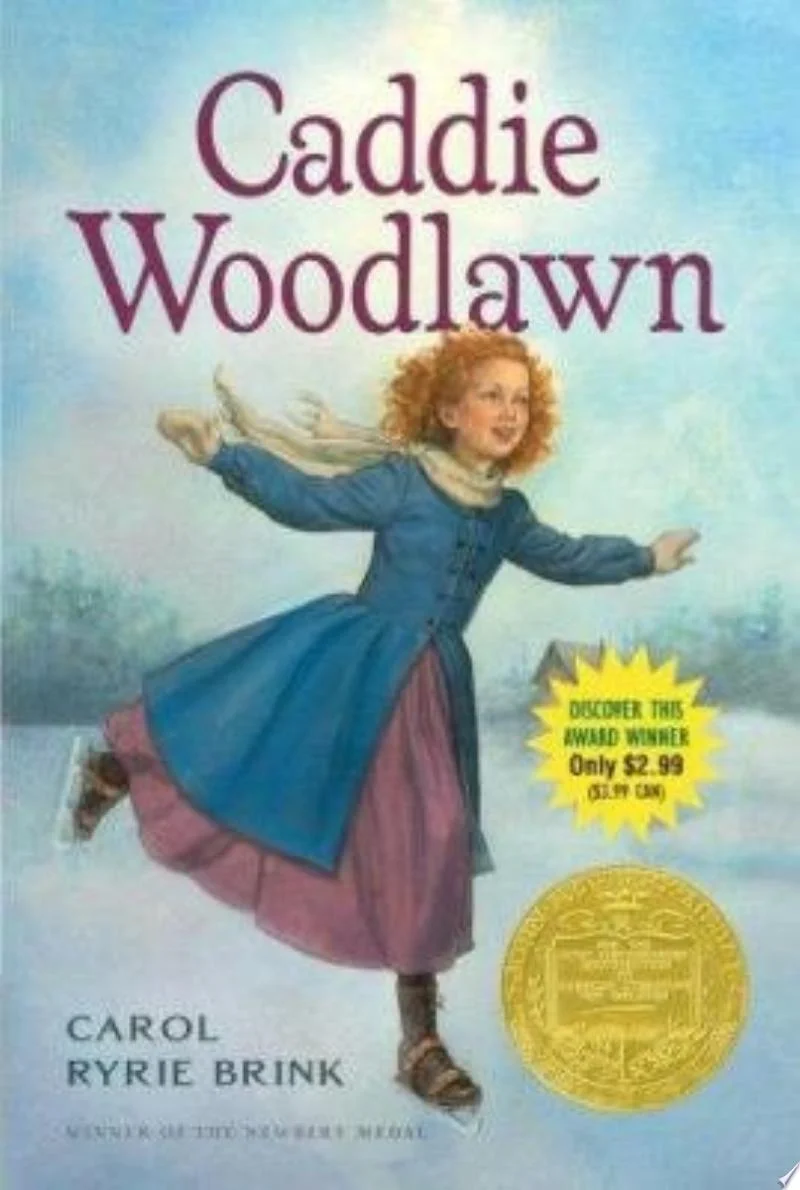
Caddie Woodlawn
- Publication Date:
- January 1st, 2007
- Publisher:
- Simon and Schuster
- ISBN-13:
- 9781416948186
- ISBN-10:
- 141694818X
- Pages:
- 292
Why Caddie Woodlawn Has Been Challenged
Modern readers have pushed back on the novel's settler-centered framing of frontier life, particularly how it portrays Native American characters through the unexamined attitudes of its nineteenth-century setting. See more ↓
Challenged or banned in 1 state across 1 school district.
Overview
Carol Ryrie Brink's novel follows Caddie Woodlawn, a tomboyish girl allowed to run wild across her family's Wisconsin homestead rather than confined to the domestic training expected of girls in the 1860s. Alongside her six brothers and sisters, she climbs, hunts, explores, and gets into the kind of scrapes usually reserved for boys in fiction of the period.
The narrative unfolds as a loose sequence of episodes rather than a single driving plot, moving through the seasons of frontier life: harvests, illnesses, neighborly disputes, encounters with Native American communities living nearby, and the small crises that punctuate a large, close-knit household. Brink drew on family history for the book, giving the episodic structure a lived-in, remembered quality.
Underneath the adventure is a quieter story about growing up and the pressure to conform. As Caddie nears adolescence, she is increasingly steered toward the ladylike behavior her mother and society expect, and the book tracks her working out, on her own terms, what kind of woman she wants to become.
A Different Kind of Pioneer Story
Published in the 1930s, the book arrived at a moment when American children's literature was newly interested in the country's own frontier past as source material, alongside contemporaries exploring similar terrain. What distinguished Caddie was its heroine: an unruly, physically bold girl treated not as a problem to be corrected but as a character worth admiring on her own terms, even as the story acknowledges the social forces pushing her toward convention.
The novel also reflects its era's limitations. Its depiction of Native American characters and settler-Indigenous relations is filtered through a nineteenth-century, pioneer-family perspective that later readers and educators have scrutinized more critically than audiences did at the time of publication. That tension between the book's celebrated portrait of an independent girl and its dated treatment of Indigenous people is central to how the novel is now discussed in classrooms and libraries.
Why Caddie Woodlawn Has Been Challenged
For decades the book was held up as a model of spirited, character-driven historical fiction for young readers, praised for giving girls a heroine who wasn't required to be demure. Its more recent scrutiny centers on exactly the material once treated as incidental local color: how the story portrays Native Americans and frames the settlers' claim to the land. Critics argue that the depictions rely on period stereotypes and a one-sided, settler-centered view of frontier encounters, presenting them without the context a modern reader would need to recognize them as such. Some objections also touch on the casual violence and racial attitudes woven into the era it depicts, which appear on the page without much authorial comment or correction. The book has been formally challenged in one state and one school district within the records tracked by this catalog, reflecting a broader and ongoing debate over how classic pioneer narratives should be presented, contextualized, or set aside in contemporary curricula.
Where to Buy




Affiliate links may generate a small commission at no extra cost to you, which helps support this site.
Banned in Schools
Banned or challenged in 1 state across 1 school district.
Florida 1 district
- Escambia County Public Schools Banned pending investigation