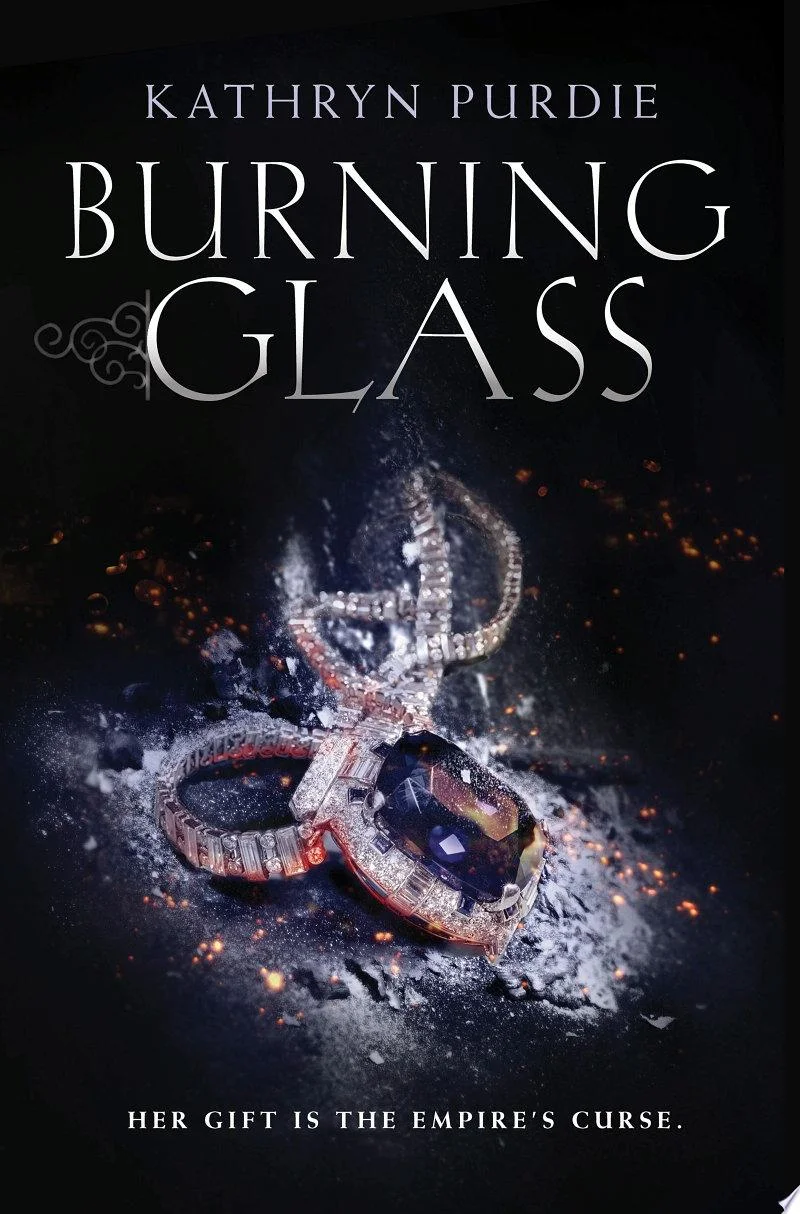
Burning Glass
- Publication Date:
- March 1st, 2016
- Publisher:
- HarperCollins
- ISBN-13:
- 9780062412386
- ISBN-10:
- 0062412388
- Pages:
- 289
Why Burning Glass Has Been Challenged
Objections to Burning Glass have centered on its romantic and sexual content, including scenes and relationship dynamics that some challengers have deemed too mature for the young adult shelf, as well as its depictions of violence within the court intrigue and rebellion storylines. See more ↓
Challenged or banned in 1 state across 2 school districts.
Overview
Kathryn Purdie's debut novel introduces Sonya, an Auraseer — a young woman whose heightened synesthesia allows her to detect and, involuntarily, take on the emotions of everyone around her. In the empire of Riaznin, this ability is prized as a defense against assassination: an Auraseer stationed near the throne can sense malice before it strikes. For Sonya, the gift is less an honor than a burden, one that leaves her porous to other people's rage, grief, and desire.
When the queen is murdered and a subsequent accident reshapes the line of succession, Sonya is conscripted to guard an unpredictable new emperor whose moods she can feel as sharply as her own. Her power, prone to overwhelming her rather than obeying her, makes this an unstable arrangement from the start.
As unrest spreads through the empire, Sonya is pulled between the emperor she is sworn to protect and his brother, a prince whose motives she cannot easily read. The novel follows her attempt to master an ability that blurs the line between her own feelings and everyone else's, while the political stakes around her escalate toward open rebellion.
A Body That Isn't Fully Its Own
Burning Glass arrived as part of a wave of mid-2010s YA fantasy built around girls with extraordinary, uncontrollable powers set against ornate, quasi-historical courts. What distinguishes Sonya's ability is its intimacy: she cannot simply observe danger, she must absorb it, feeling other people's violence and longing as though they were her own. That premise turns the book's court intrigue into something more psychological than tactical — Sonya's struggle isn't only to identify the threat, but to keep her own identity intact while she is repeatedly flooded by other people's inner lives.
The novel also uses its Auraseer conceit to interrogate consent and autonomy in a fairly literal way: Sonya's body and emotional state are treated as instruments of state security, deployed by rulers who value her usefulness more than her wellbeing. That tension — between service and selfhood, and between the roles assigned to her and the choices she'd make for herself — runs underneath the romance and rebellion plots and gives the series (Purdie followed it with a sequel) its emotional throughline.
Why Burning Glass Has Been Challenged
Objections to Burning Glass have centered on its romantic and sexual content, including scenes and relationship dynamics that some challengers have deemed too mature for the young adult shelf, as well as its depictions of violence within the court intrigue and rebellion storylines. The book's blend of battlefield stakes, palace brutality, and a protagonist whose power forces her into emotionally and physically fraught entanglements has made it a target for those seeking to limit younger readers' access to romantic and violent content in YA fantasy. In this catalog, the novel has been documented as challenged or banned in 1 state and 2 districts.
Where to Buy




Affiliate links may generate a small commission at no extra cost to you, which helps support this site.
Banned in Schools
Banned or challenged in 1 state across 2 school districts.
Florida 2 districts
- Clay County School District Banned pending investigation
- Orange County Public Schools Banned pending investigation