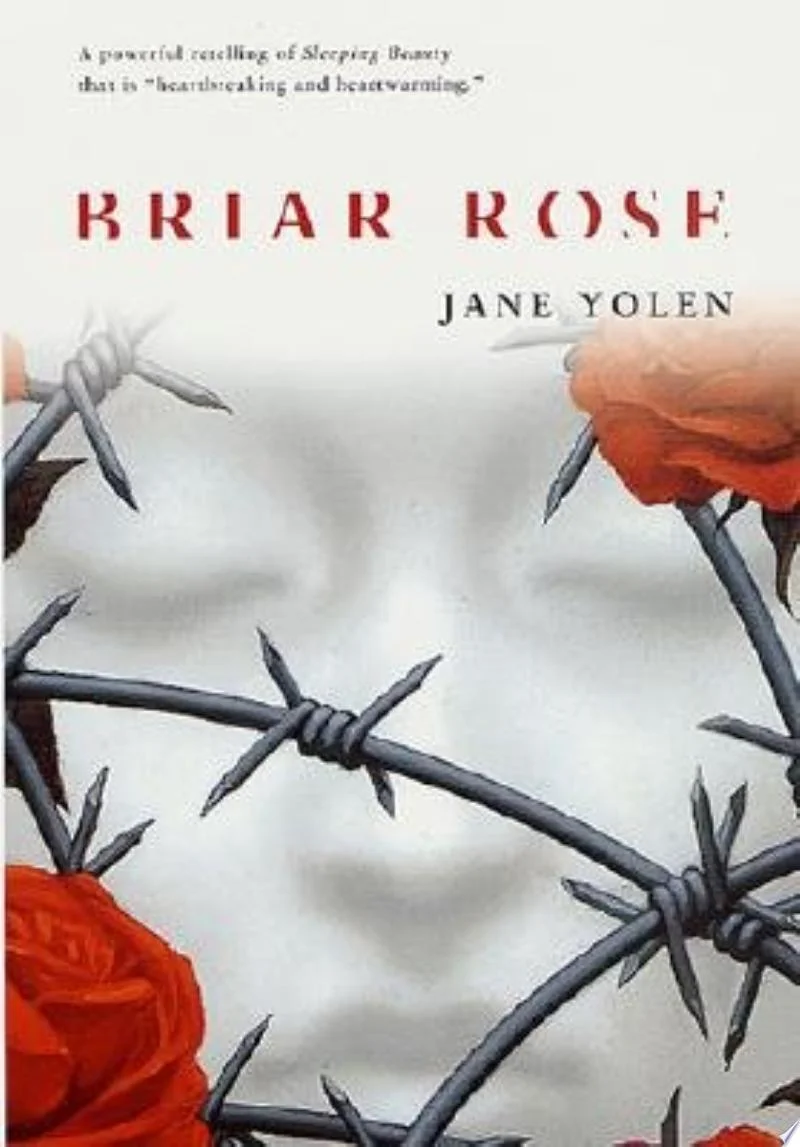
Briar Rose
by Jane Yolen
- Publication Date:
- March 15th, 2002
- Publisher:
- Macmillan
- ISBN-13:
- 9780765342300
- ISBN-10:
- 0765342308
- Pages:
- 260
Why Briar Rose Has Been Challenged
Some readers have pushed back against pairing a beloved fairy tale with unsparing scenes of genocide, arguing the combination exposes younger audiences to brutality the story's familiar framing doesn't prepare them for. See more ↓
Challenged or banned in 1 state across 1 school district.
Overview
Jane Yolen's Briar Rose follows Becca Berlin, a young reporter whose dying grandmother has spent a lifetime insisting that she herself is Sleeping Beauty. Dismissed for years as an old woman's bedtime fancy, the claim becomes a deathbed charge: Becca must find out what the story actually means and where it came from.
The search pulls Becca across the Atlantic to Poland, where she pieces together fragments of her grandmother's hidden history. What she uncovers is not a fairy tale at all, but a true and harrowing account of survival tied to one of the era's death camps, hidden for decades beneath the language of princesses, curses, and a long sleep.
By braiding a familiar children's tale with testimony-like historical reconstruction, Yolen builds a narrative that moves between registers — innocent and horrific, symbolic and documentary — until the two can no longer be separated.
A Fairy Tale Reworked as Witness
Briar Rose belongs to a lineage of adult fairy-tale retellings that use inherited story structures to carry weight the original was never built for. Yolen takes the passive, waiting heroine of "Sleeping Beauty" and repurposes her sleep as a cipher for trauma too enormous to narrate directly, something endured rather than told. The novel asks what happens when a fable is the only vessel left for an experience that defies ordinary memoir or history.
The book also sits within a broader conversation about how the Holocaust is transmitted to new generations once firsthand witnesses are gone. Becca's generational remove from the events she investigates mirrors the reader's own distance, and the fairy-tale frame becomes a way of asking how inherited stories, however distorted or softened, still carry truth forward. Published as part of a series pairing fantasy authors with fairy-tale reinterpretations, it stands out for turning a genre built for escapism toward unflinching historical reckoning.
Why Briar Rose Has Been Challenged
Graphic depictions of violence tied to the Holocaust setting sit at the center of objections to this novel, particularly its unsparing treatment of a death camp and the atrocities committed there. Readers and committees raising concerns have pointed to scenes depicting killing and mass death as too intense for the age groups to which the book is sometimes assigned, especially given its fairy-tale packaging, which some feel sets up younger readers for content far darker than the framing implies.
A secondary line of concern involves sexual content referenced in connection with the camp narrative, which some challengers argue is inappropriate for school libraries regardless of the book's literary or historical purpose. Defenders of the novel counter that its unflinching approach is precisely what allows it to serve as a serious engagement with genocide rather than a sanitized one. The book has been formally challenged in one state and one school district tracked in this catalog, reflecting the tension between its value as Holocaust literature and discomfort with how directly it portrays its subject.
Where to Buy




Affiliate links may generate a small commission at no extra cost to you, which helps support this site.
Banned in Schools
Banned or challenged in 1 state across 1 school district.
Florida 1 district
- Escambia County Public Schools Banned pending investigation