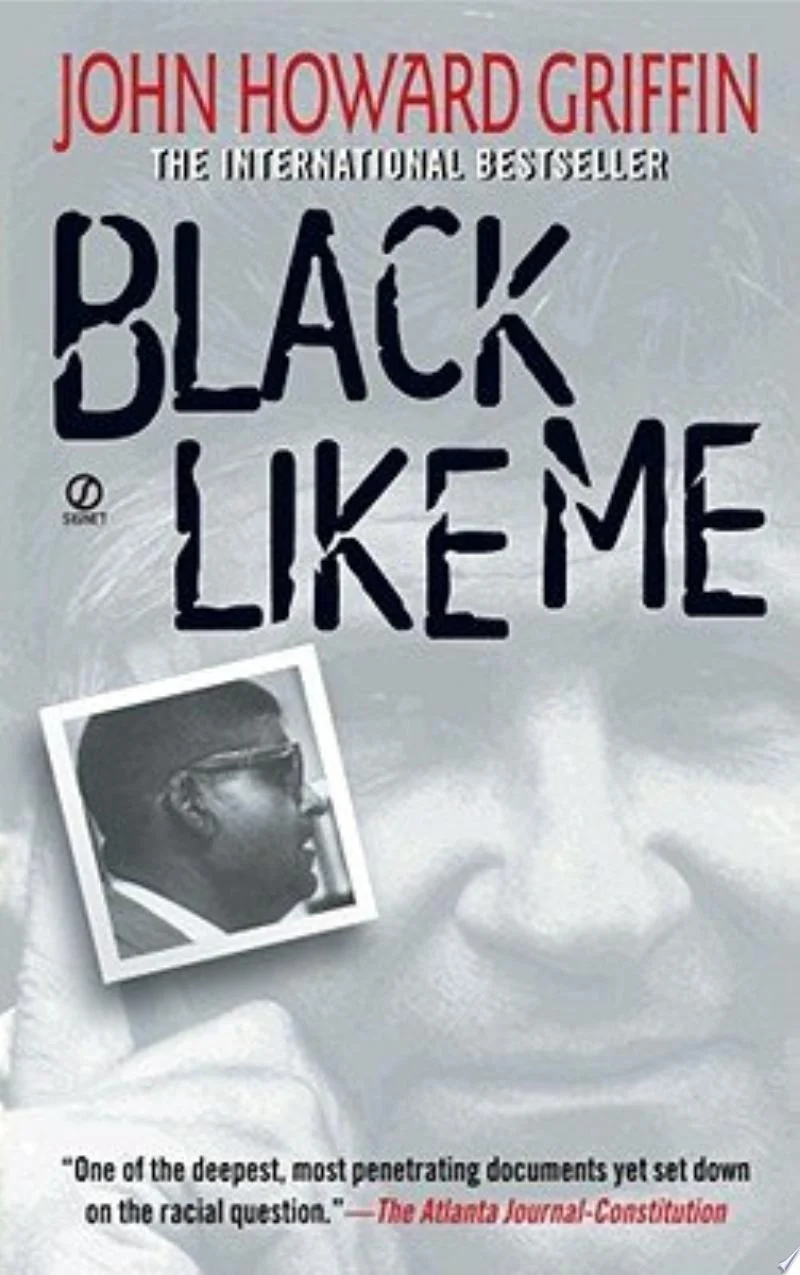
Black Like Me
- Publication Date:
- January 1st, 1996
- Publisher:
- Penguin
- ISBN-13:
- 9780451192035
- ISBN-10:
- 0451192036
- Pages:
- 212
Why Black Like Me Has Been Challenged
Some parents and administrators have argued that the book's unflinching language and scenes of racial hostility are too disturbing for students to encounter without extensive guidance. See more ↓
Challenged or banned in 2 states across 2 school districts.
Overview
In 1959, journalist John Howard Griffin underwent a medical process to darken his skin and spent weeks traveling through Louisiana, Mississippi, and Georgia as a Black man. What he recorded was not a work of fiction but a diary of lived experience: the daily indignities, fear, and occasional kindness he encountered once the color of his skin changed how strangers, employers, and even friends treated him.
This edition restores the text to Griffin's original manuscripts, correcting omissions and edits made in earlier printings, and adds period photographs alongside a substantial afterword detailing the author's background and the aftermath of the project's publication.
The result reads less like reportage from a distance than testimony from inside an experience the author chose, briefly and at real personal cost, to live.
A Document of Its Moment and After
Griffin's account sits at an unusual angle to the civil rights literature of its era. Rather than centering the voices of Black Southerners directly, it uses a white author's deliberate transformation as a lens, forcing readers of the time, many of them white, to confront a system they might otherwise have been able to look past. That approach has drawn both praise, for the empathy it provoked in audiences who might not have picked up a book by a Black writer on the same subject, and later criticism, for centering a white narrator's shock rather than lived Black testimony as the primary source of authority.
The book's continued presence in classrooms and libraries reflects its unusual function as primary-source-adjacent history: a close, dated record of how segregation operated in ordinary encounters, bus stations, job interviews, and hitchhiking, at a moment just before the civil rights movement reshaped the law. Read today, it functions as much as a document of mid-century attitudes as a narrative, and its afterword situates Griffin's own evolving understanding of race against the controversy and threats he faced after the book appeared.
Why Black Like Me Has Been Challenged
Readers encountering Griffin's account inevitably run into the plain transcription of what he heard on buses, in diners, and from strangers who assumed they were speaking to one of their own: racial epithets, threats, and casual cruelty rendered without euphemism, alongside passages describing sexual harassment and physical intimidation directed at him. Because the book reproduces this language and these encounters directly rather than summarizing them, some readers have found the experience of reading it genuinely upsetting, and that reaction has translated into formal objections to its place on school reading lists.
The challenges brought against the book center on concerns that its frank language and disturbing scenes are inappropriate for the age of students assigned to read it, that the material requires more classroom context than it typically receives, or that its portrayal of racial violence is too graphic for inclusion without restriction. In the catalog tracked here, the book has been the subject of challenges in two states and two school districts, with objecting parties generally focused on the explicitness of the racist language and the intensity of the discrimination it depicts rather than on the book's historical accuracy or its account of Griffin's methods.
Where to Buy




Affiliate links may generate a small commission at no extra cost to you, which helps support this site.
Banned in Schools
Banned or challenged in 2 states across 2 school districts.
Florida 1 district
- Escambia County Public Schools Banned pending investigation
Tennessee 1 district
- Monroe County Schools Banned