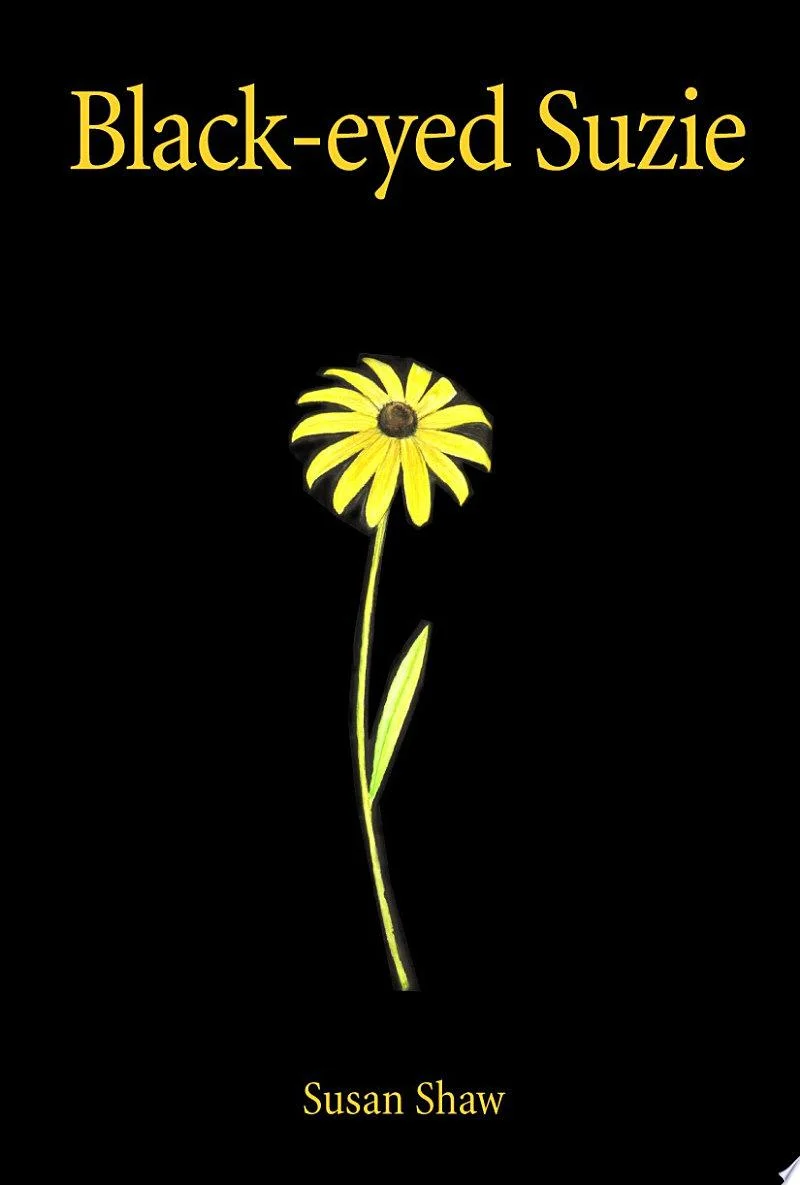
Black-Eyed Suzie
by Susan Shaw
- Publication Date:
- October 7th, 2014
- Publisher:
- Boyds Mills Press
- ISBN-13:
- 9781629792897
- ISBN-10:
- 1629792896
- Pages:
- 147
Why Black-Eyed Suzie Has Been Challenged
Because the novel traces a child's path toward naming the abuse behind her silence, some have argued the material itself is too much for young readers to encounter on the page. See more ↓
Challenged or banned in 1 state across 1 school district.
Overview
Black-Eyed Suzie follows a twelve-year-old girl who has stopped speaking. Suzie's stillness isn't defiance; it's self-protection, the only way she knows to manage a fear that has taken over her body and her days. Susan Shaw renders that fear from the inside, so readers experience Suzie's withdrawal not as a symptom to be diagnosed from the outside but as a logic that makes painful sense once her history comes into view.
When Suzie is admitted to a psychiatric hospital, the novel shifts into something closer to a mystery. Scattered, seemingly unconnected objects—a damaged bicycle, a ripped photograph, a scattering of peacock feathers—surface as clues she and the reader must assemble. Each fragment nudges her, and us, closer to understanding what silenced her in the first place.
The payoff is not a tidy diagnosis but a gradual reclaiming: as the pieces fall into place, Suzie begins to find language again, and with it, a tentative claim on her own story and her own future.
A Child's Interior World on the Page
Shaw's novel sits within a tradition of middle-grade fiction that takes psychological distress seriously rather than treating it as a plot device to be resolved in a chapter. By structuring the book as a puzzle Suzie herself must solve, Shaw gives young readers a model for how memory, trauma, and selfhood can be fragmented and then reassembled—an unusually sophisticated narrative choice for its intended age group.
The book also resists the instinct to explain Suzie to the reader before she can explain herself. Her silence is given weight and dignity rather than being rushed past, which asks something of younger readers: patience, and a willingness to sit with uncertainty alongside a character who is working, piece by piece, toward her own clarity.
Why Black-Eyed Suzie Has Been Challenged
Reviewers and readers have generally praised the book for its restraint and its respect for a young character's inner life, crediting Shaw with handling a difficult subject without melodrama. That same unflinching quality is precisely what has unsettled some adults making decisions about school and library shelves: the novel's slow revelation points toward childhood sexual abuse, and the implication that a trusted adult is responsible has struck some as more than children should have to confront in a story written for them.
The objections tend to center less on explicit content—the book is notably indirect, relying on symbol and suggestion rather than graphic description—and more on the subject matter itself. Critics worry that even an oblique treatment of abuse introduces young readers to realities they aren't ready for, or that the material belongs in the hands of a parent or counselor rather than a classroom or library shelf. Others have raised concerns about the portrayal of institutional mental health care and the mistrust of adult authority the plot requires. In this catalog, that discomfort has translated into a tracked challenge in one state and one school district.
Where to Buy




Affiliate links may generate a small commission at no extra cost to you, which helps support this site.
Banned in Schools
Banned or challenged in 1 state across 1 school district.