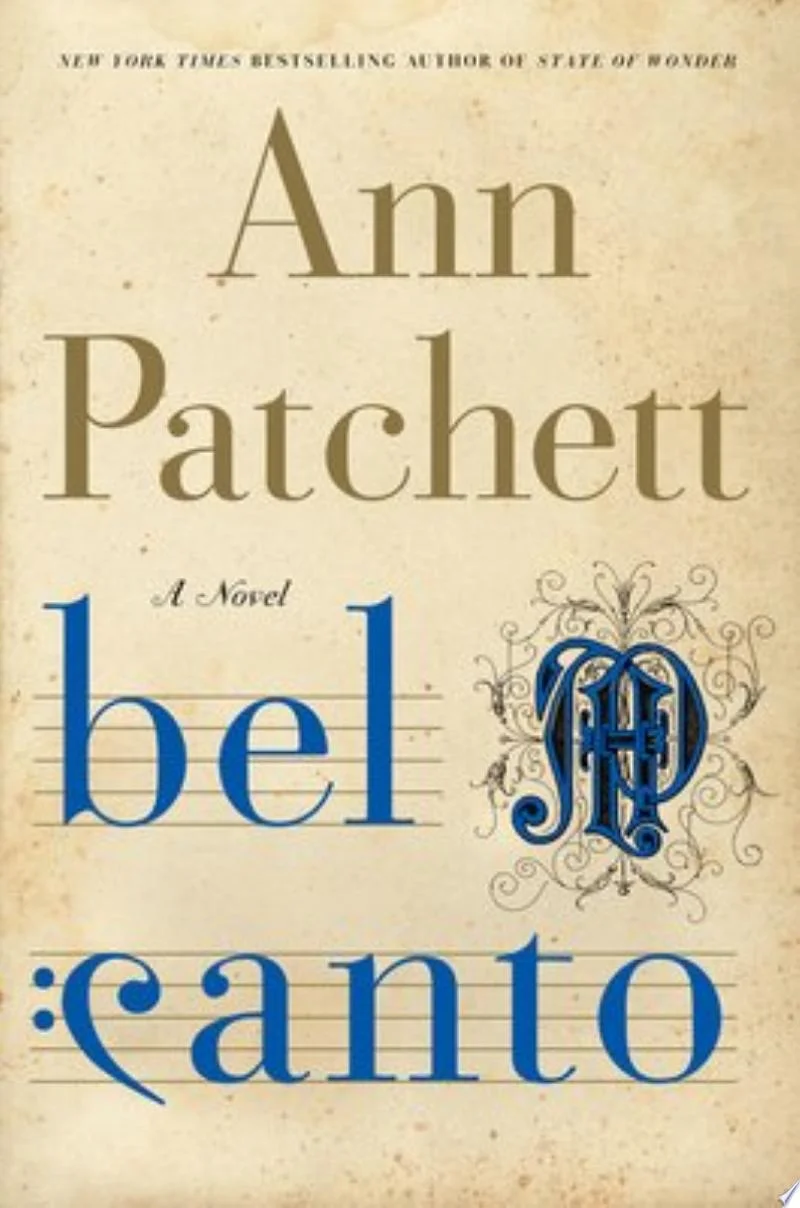
Bel Canto
by Ann Patchett
- Publication Date:
- May 22nd, 2001
- Publisher:
- Harper Collins
- ISBN-13:
- 9780060188733
- ISBN-10:
- 0060188731
- Pages:
- 335
Why Bel Canto Has Been Challenged
Readers have pushed back on a story that asks them to feel warmth toward armed captors rather than simple relief when a hostage crisis ends. See more ↓
Challenged or banned in 1 state across 1 school district.
Overview
Ann Patchett's novel opens on an elegant reception thrown for a Japanese businessman, Mr. Hosokawa, in an unnamed South American nation, where the evening's centerpiece is a performance by a celebrated opera singer. The gathering is interrupted when armed insurgents enter the residence and take everyone present captive, intending to seize the country's president, who is not even in attendance.
With their original target absent and an escape plan unraveling, the captors settle into an extended standoff, and the household of hostages and guards begins to reorganize itself around the rhythms of daily life rather than the threat of violence. Patchett spends much of the book inside this suspended interval, watching translators, guards, and guests form attachments that would have been unthinkable on the night the ordeal began.
Music becomes the connective thread of the story, as the soprano's singing gives people who share no common language a way to understand one another, and the novel builds toward the collision between the intimacy the characters have found and the violence the situation was always going to produce.
A Novel About What Captivity Reveals
Bel Canto is less interested in the mechanics of a hostage crisis than in what happens to people once immediate danger becomes background noise. Patchett uses the closed setting of the vice-presidential residence to strip her characters of nationality, class, and role, replacing those categories with the improvised intimacies of shared confinement. The novel has often been read as an inquiry into how beauty and art can flourish alongside, and even because of, extreme constraint.
The book also sits apart from Patchett's more contemporary domestic fiction in its scale and its allegorical distance from any specific country or conflict, which has allowed critics to read it as a meditation on translation, empathy, and the limits of political violence rather than a story tied to a particular headline. Its acclaim on release helped establish Patchett as a major American novelist and remains a frequent touchstone in discussions of her broader body of work.
Why Bel Canto Has Been Challenged
The section of the novel that draws the most scrutiny is its patient, sympathetic portrayal of the hostage-takers themselves, who are given backstories, humor, and romantic lives rather than being kept as a faceless threat. Objectors argue that by the novel's midpoint, readers are invited to mourn the insurgents alongside the hostages, and some find that emotional arrangement troubling regardless of the author's literary intent, seeing it as a story that asks for compassion toward people who have committed kidnapping. Related concern has focused on the adult relationships that form between hostages and captors during the confinement, which some readers consider inappropriate content given the novel's presence in school libraries. Cataloged records show the book has been the subject of formal challenges in 1 state and 1 school district.
Where to Buy




Affiliate links may generate a small commission at no extra cost to you, which helps support this site.
Banned in Schools
Banned or challenged in 1 state across 1 school district.
Florida 1 district
- Orange County Public Schools Banned by restriction