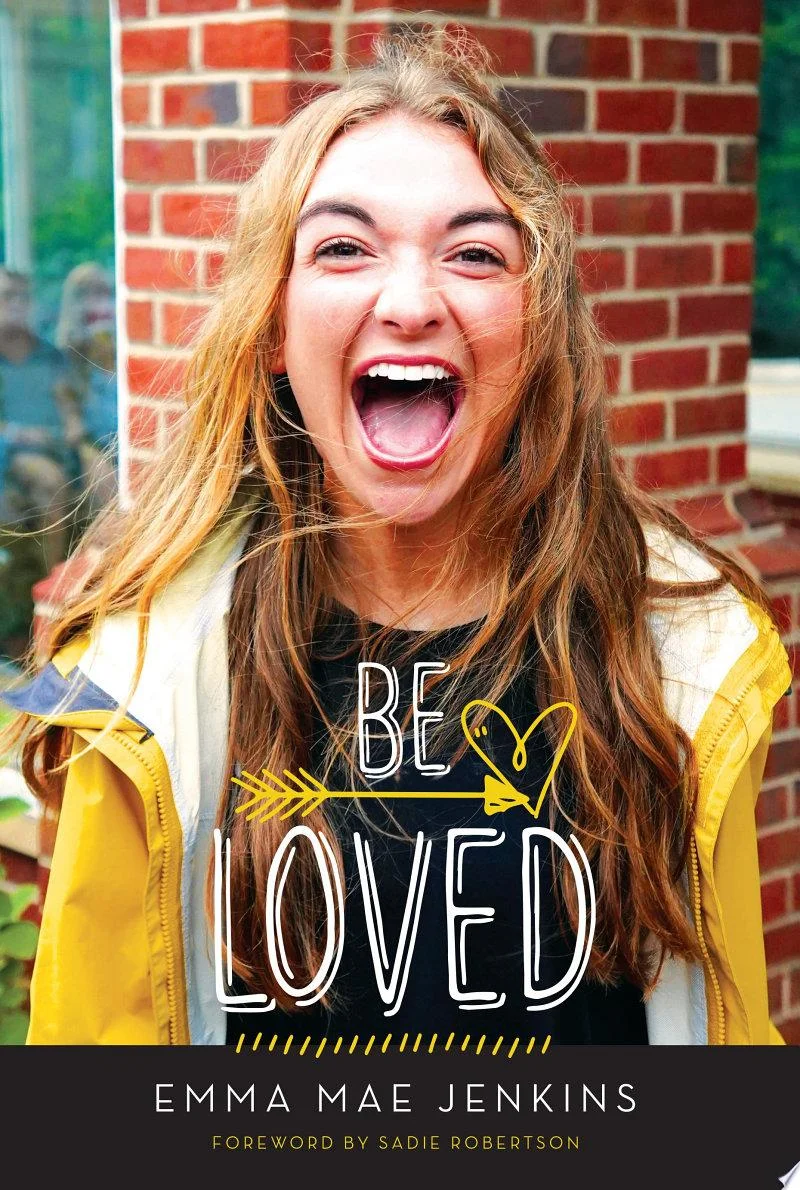
Be Loved
- Publication Date:
- November 11th, 2019
- Publisher:
- New Growth Press
- ISBN-13:
- 9781645070702
- ISBN-10:
- 1645070700
- Pages:
- 12
Why Be Loved Has Been Challenged
Critics have questioned whether a memoir built around urging its teenage readers toward a specific religious conversion belongs in a public school library collection meant to serve a religiously diverse student body. See more ↓
Challenged or banned in 1 state across 1 school district.
Overview
Be Loved is a memoir of adolescence told through the eyes of Emma Mae Jenkins, a young woman whose personality and conviction shape every page. She describes herself through small, telling details — an unconventional sense of style, a habit of noticing people others overlook, and an exuberant affection for those around her — before turning to the larger story of how her faith took root and grew during her teenage years.
The book moves through the ordinary terrain of high school: friendships, self-doubt, social pressure, and the search for identity. What distinguishes Jenkins's account is the consistency with which she filters these experiences through her relationship with Christianity, presenting her spiritual commitments not as a separate chapter of her life but as the organizing force behind it.
Rather than offering a conventional coming-of-age arc built around external milestones, the memoir is structured as a testimony — a first-person record intended to encourage readers to adopt a similarly bold and unapologetic posture of belief, regardless of the social cost that might entail.
Faith, Vulnerability, and the Teen Memoir
Be Loved belongs to a recognizable strand of young adult nonfiction: the personal testimony written by and for teenagers, in which lived experience serves as the primary evidence for a larger argument about how to live. Jenkins writes from inside adolescence rather than looking back on it from adulthood, which gives the book an immediacy that distinguishes it from more retrospective memoirs, but also means its concerns are narrowly those of a specific, present-tense high school experience.
The book's central tension is one familiar to religious coming-of-age writing: the pull between private conviction and public performance. Jenkins frames her faith as something meant to be visible and costly rather than private and comfortable, and much of the memoir's energy comes from her willingness to describe moments of social risk — standing apart from peers, facing skepticism, or simply being conspicuous — as evidence of integrity rather than embarrassment. In this sense, the book functions less as a chronicle of events and more as an extended argument for a particular way of inhabiting one's beliefs during a period of life defined by conformity pressures.
Why Be Loved Has Been Challenged
Religious viewpoint and proselytizing content are at the center of the objections this book has drawn. Critics have taken issue with a personal memoir that doubles as an explicit invitation for readers to adopt the author's specific religious convictions, arguing that the book's purpose is less to recount an individual's experience than to persuade an audience of young readers toward a particular faith commitment. In institutional settings that serve students of many or no religious backgrounds, this has raised concerns about the appropriateness of shelving a work whose stated aim is conversion-oriented rather than descriptive.
A related strand of concern involves the suitability of overtly religious instructional material in school library collections, where selection policies often call for a secular orientation or balanced representation of viewpoints. Because the book presents its author's theology as a model to be followed rather than one perspective among several, some reviewers have questioned whether it meets those standards. The catalog records this title as the subject of one challenge, tracked in a single state and a single district, reflecting a localized rather than widespread pattern of objection.
Where to Buy




Affiliate links may generate a small commission at no extra cost to you, which helps support this site.
Banned in Schools
Banned or challenged in 1 state across 1 school district.