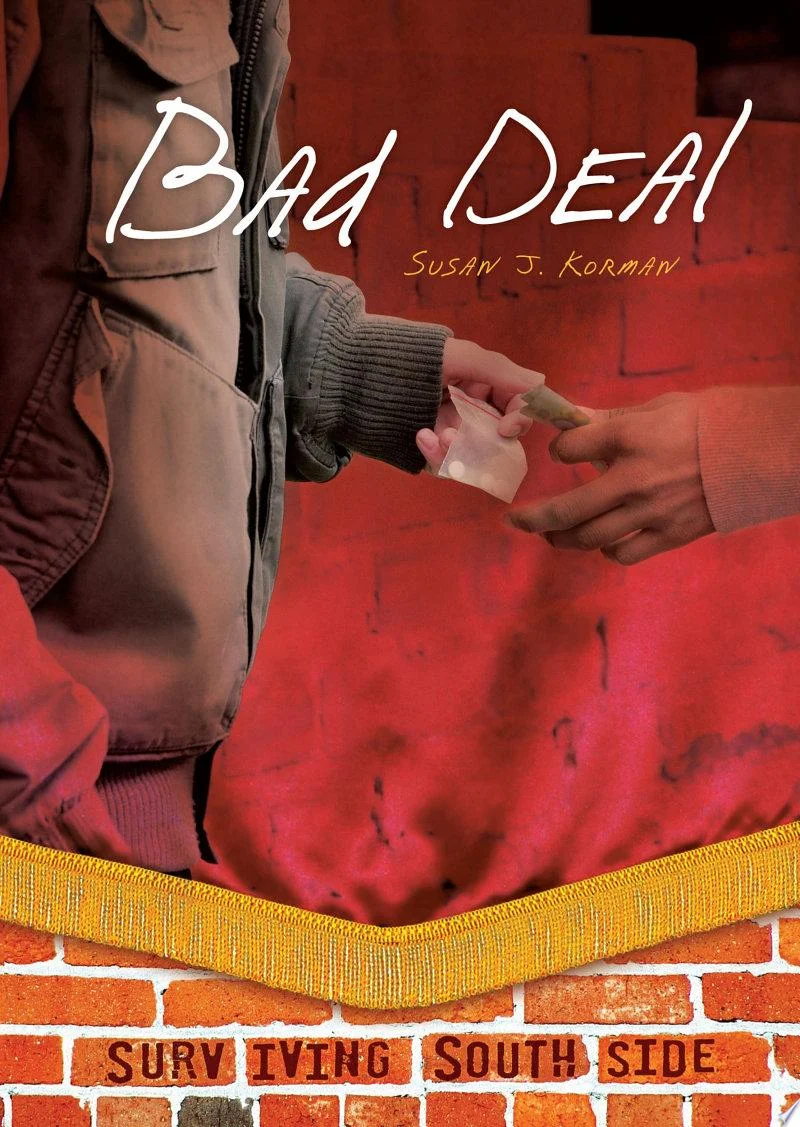
Bad Deal
- Publication Date:
- August 1st, 2014
- Publisher:
- Darby Creek ™
- ISBN-13:
- 9781467773614
- ISBN-10:
- 1467773611
- Pages:
- 75
Why Bad Deal Has Been Challenged
Because the story follows a sympathetic teenager who profits from diverting prescription medication, some reviewers have worried that it walks too close to instruction rather than warning. See more ↓
Challenged or banned in 1 state across 1 school district.
Overview
Susan J. Korman's Bad Deal follows Fish, a teenager prescribed medication for ADHD who resents the side effects even as he depends on the focus it gives him. When his crush Ella asks for help getting through exams, he offers her one of his own pills, a small favor that quickly becomes a habit among their classmates.
As demand grows, Fish finds himself running an informal business, and the profits are enough to keep him looking for ways to expand it. He locates a doctor willing to write prescriptions without asking questions, a shortcut that lets the operation continue until the doctor is arrested.
The arrest forces a reckoning. Fish has to decide whether to admit what he has been doing, knowing that honesty may alienate the friends and customers who have come to depend on him.
Context and Reception
The novel is part of a body of short, plot-driven fiction aimed at younger and reluctant readers, a category built around fast pacing and stakes that feel immediate rather than abstract. Within that format, Bad Deal takes on prescription stimulant misuse, a subject more often addressed to adults than to the middle-grade and early-teen readers this book targets.
What distinguishes the story is its refusal to frame Fish as a villain. He begins from a position many readers with ADHD will recognize, medicated against his own preference, and drifts into wrongdoing through small, plausible steps rather than a single bad decision. That structure lets the book explore how ordinary compromises accumulate into serious consequences, and how peer demand can make a bad choice feel reasonable in the moment.
Why Bad Deal Has Been Challenged
Advocates for the book point to its accessibility and its willingness to take a real adolescent pressure seriously, while critics have pushed to restrict it on the grounds that its subject matter is too risky to place in front of young readers without more guardrails. The disagreement centers less on writing quality than on whether a plot about profiting from diverted medication belongs on classroom or library shelves at all.
Central to the objection is the portrayal of Fish's business itself: the mechanics of obtaining extra pills, recruiting customers, and sourcing fraudulent prescriptions are laid out clearly enough that some reviewers see the book as uncomfortably close to a how-to, whatever its intended moral. Others have raised concern that a sympathetic narrator profiting from drug distribution, even one who eventually comes clean, risks normalizing the behavior for readers still forming their own judgment about medication and peer pressure. The presence of an unethical doctor supplying prescriptions has also drawn scrutiny, as has the broader question of whether the book's brisk, high-interest format is suited to a topic this sensitive. In the catalog tracked here, Bad Deal has been challenged in 1 state and 1 school district.
Where to Buy



Affiliate links may generate a small commission at no extra cost to you, which helps support this site.
Banned in Schools
Banned or challenged in 1 state across 1 school district.