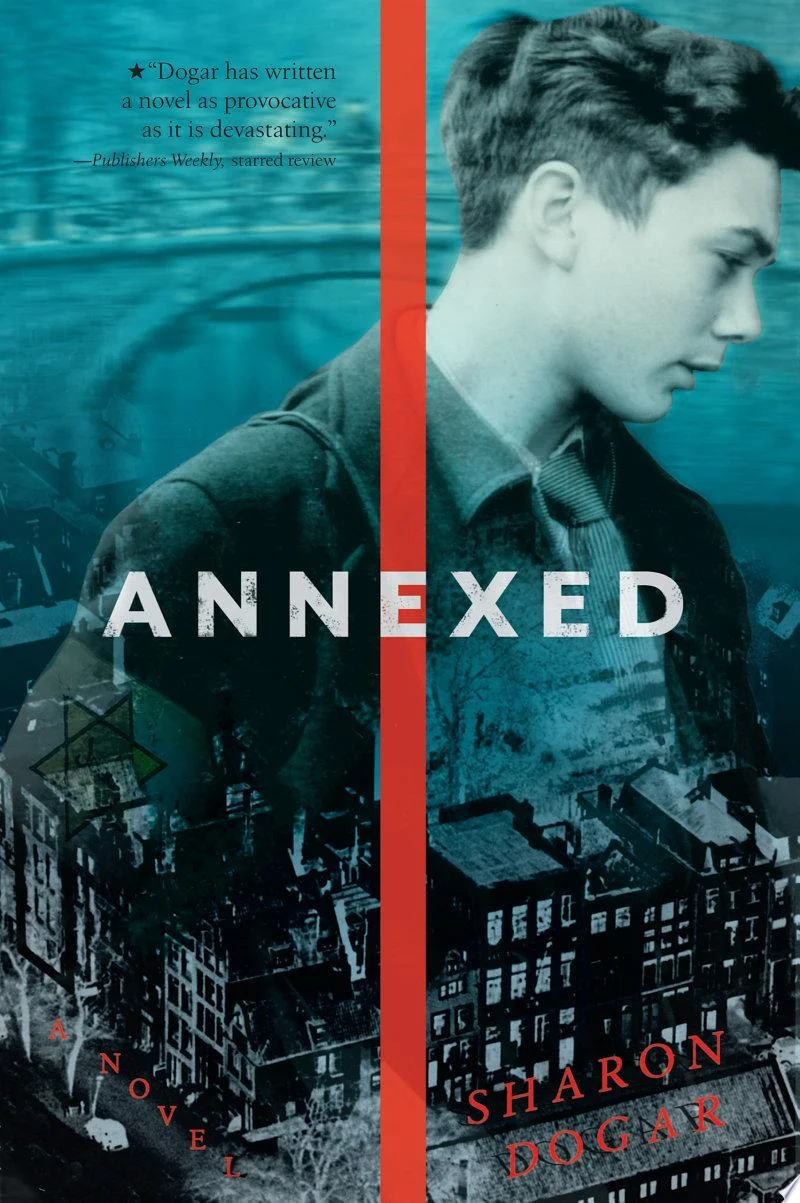
Annexed
by Sharon Dogar
- Publication Date:
- October 4th, 2010
- Publisher:
- HarperCollins
- ISBN-13:
- 9780547505077
- ISBN-10:
- 0547505078
- Pages:
- 321
Why Annexed Has Been Challenged
Critics of this novel have focused less on the history it retells than on the imagined intimacy and camp-set brutality Dogar adds to it, along with unease over fictionalizing real people tied to a diary students already study as fact. See more ↓
Challenged or banned in 1 state across 3 school districts.
Overview
Annexed retells a story readers think they already know by shifting the vantage point from Anne Frank to Peter van Pels, the teenage boy sharing the cramped hiding space with her family. Sharon Dogar imagines Peter's interior life during the two years in the Annex: his early irritation with Anne, the slow pull toward her as confinement forces them into constant proximity, and the strange discomfort of knowing their every gesture is being recorded in her diary while both sets of parents look on.
The novel also follows Peter past the point where Anne's own diary breaks off. After the group's discovery and arrest, Dogar traces his deportation and imprisonment, rendering the daily mechanics of survival, loss, and death inside the camps with unflinching detail.
Set against the enforced stillness of hiding, the book pairs an adolescent romance with the encroaching machinery of genocide, asking what it meant to come of age while waiting, listening, and hoping not to be found.
A Companion Story to a Familiar Diary
Dogar's novel belongs to a small but persistent literary tradition of works that extend or answer Anne Frank's diary by giving voice to someone who appears in it only as a name. Peter van Pels is a minor presence in Anne's own account, and Annexed uses fiction to fill that gap, imagining motivations, doubts, and desires the historical record cannot supply. This approach places the book in dialogue with Holocaust literature more broadly, raising questions about how much invention is permissible when writing alongside a real historical figure and a canonical text already assigned in classrooms.
The novel also grapples with faith under duress, following Peter as he questions why his Jewish identity has made him a target at all. That thread, along with the depiction of the camps themselves, pushes the book beyond a coming-of-age romance into a meditation on persecution, complicity, and the randomness of who survives.
Why Annexed Has Been Challenged
Depictions of adolescent sexuality and romantic intimacy sit at the center of most objections to this book, since Dogar imagines physical and emotional dimensions of Peter and Anne's relationship that go beyond what either historical record or Anne's diary describes. Some readers have also raised concerns about the novel's graphic treatment of violence and death in its concentration camp chapters, arguing that the sustained detail is too intense for the young readers who typically encounter Anne Frank's story in school. Others have objected on the grounds that fictionalizing real, identifiable people—particularly figures associated with a widely taught historical diary—blurs the line between documented history and invented narrative in ways they consider inappropriate for classroom use. Within this catalog, the book has been the subject of 1 state-level and 3 district-level challenges.
Where to Buy




Affiliate links may generate a small commission at no extra cost to you, which helps support this site.
Banned in Schools
Banned or challenged in 1 state across 3 school districts.
Florida 3 districts
- Clay County School District Banned
- Escambia County Public Schools Banned pending investigation
- Santa Rosa County Schools Banned Pending Investigation