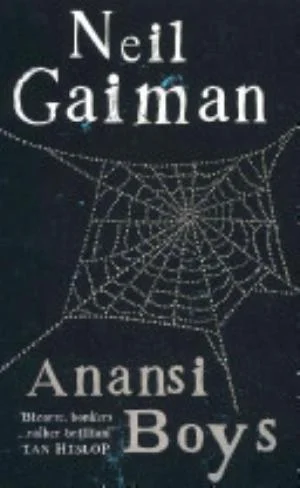
Anansi Boys
by Neil Gaiman
- Publication Date:
- January 1st, 2006
- ISBN-13:
- 9780755331147
- ISBN-10:
- 0755331141
- Pages:
- 457
Why Anansi Boys Has Been Challenged
Some parents and community members have pushed to remove this novel over its frank sexuality and its portrayal of gods and folk-magic practice as morally ambiguous rather than clearly wrong. See more ↓
Challenged or banned in 1 state across 1 school district.
Overview
Charlie Nancy has built a quiet, unremarkable life in London, one carefully insulated from embarrassment and surprise. That composure collapses when a phone call meant to invite his estranged father to his wedding instead brings news of the man's death. Traveling to Florida for the funeral, Charlie learns two things he never expected: he has a brother he never knew existed, and his father was not merely eccentric but was, in fact, Anansi, the West African trickster god of story and mischief.
The brother, Spider, arrives in London soon after carrying inherited divine powers and none of Charlie's caution. Within days he costs Charlie his job, seduces his fiancée, and leaves him implicated in a financial crime he had no part in. What began as an ordinary inheritance of grief becomes something closer to cosmic chaos, as old family history and older mythology intrude on Charlie's tidy adult life.
Forced to respond, Charlie turns to a cast of other gods and supernatural figures for help, setting off a chain of encounters that swing between comic misadventure and genuine menace. As he is pulled deeper into his father's world, Charlie begins to recognize a talent for trickery of his own, suggesting he is more his father's son than he ever wanted to admit.
Myth, Inheritance, and the Ordinary Self
Anansi Boys extends the mythological framework Neil Gaiman built in American Gods into a smaller, more domestic register, asking what it means to discover that the fantastic has been quietly embedded in one's own family all along. Rather than treating gods as remote or abstract, the novel makes them relatives: petty, funny, dangerous, and impossible to fully disown. Charlie's arc is less about defeating a villain than about reconciling with a father, and later a brother, whose disregard for consequence keeps rewriting his life without his consent.
The book is also a meditation on storytelling itself, since Anansi is traditionally the god who owns all stories. Gaiman uses that inheritance to blend farce with folklore, letting the narrative's tone shift quickly from domestic comedy to something closer to dread. Within his broader body of work, it stands out as one of his lighter, funnier novels, even as it retains the interest in myth, identity, and the porous line between the human and the divine that runs through much of his fiction.
Why Anansi Boys Has Been Challenged
One formal objection raised against the novel centered on a school library's decision to keep it on general circulation shelves, with a complainant arguing that its scenes of casual sexual encounters between adult characters made it inappropriate for the age range with library access, regardless of its literary reputation or awards attention. The complaint framed the issue less as isolated language and more as a broader concern that the book normalizes sex outside of any committed relationship as unremarkable.
A related strand of concern has focused on the novel's treatment of gods, spirits, and folk magic as morally neutral or even sympathetic forces rather than as clearly false or dangerous beliefs to be rejected. Because the story draws on West African and Caribbean folklore and depicts its trickster deities with genuine affection and moral complexity, some challengers have argued it could be read as endorsing non-Christian spiritual traditions or blurring lines around good and evil in ways they consider unsuitable for younger readers. Taken together, these objections reflect a single state and a single district's formal challenge, and center on content and worldview rather than on the book's literary merit.
Where to Buy




Affiliate links may generate a small commission at no extra cost to you, which helps support this site.
Banned in Schools
Banned or challenged in 1 state across 1 school district.
Florida 1 district
- Orange County Public Schools Banned pending investigation