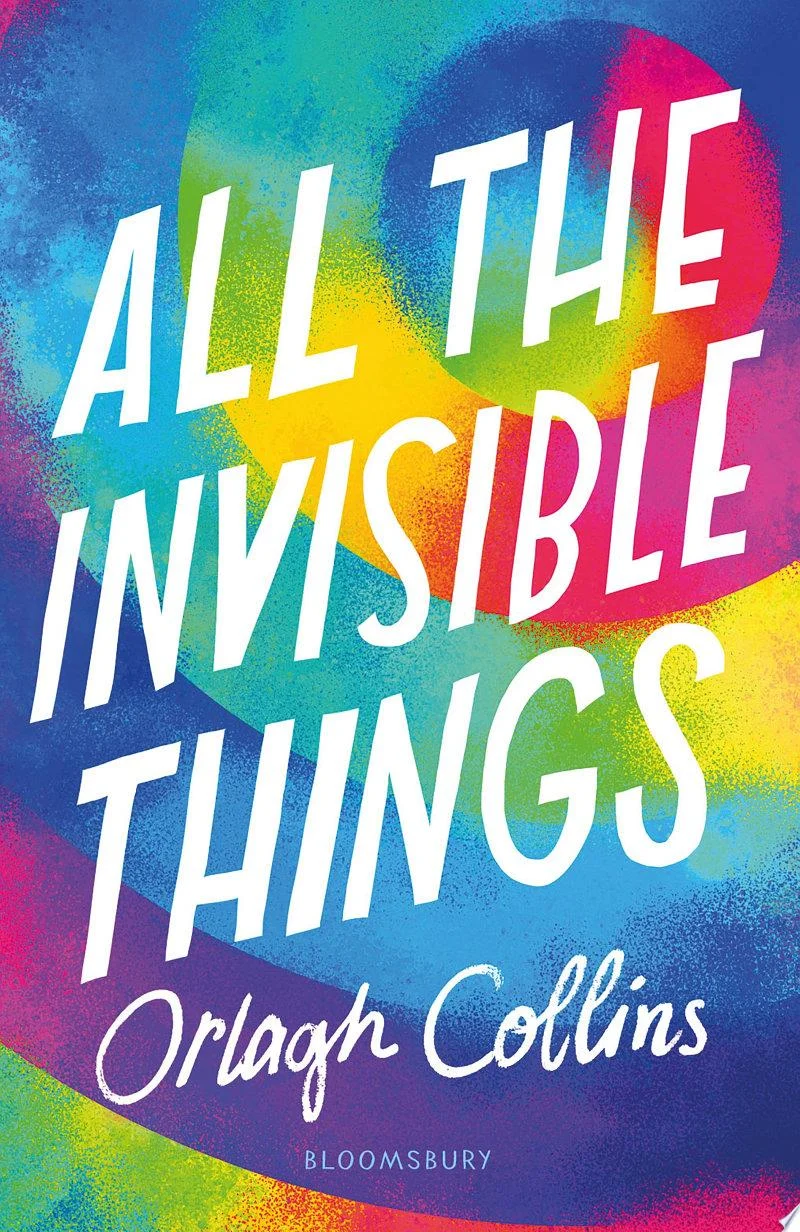
All the Invisible Things
- Publication Date:
- March 7th, 2019
- Publisher:
- Bloomsbury Publishing
- ISBN-13:
- 9781408888322
- ISBN-10:
- 1408888327
- Pages:
- 371
Why All the Invisible Things Has Been Challenged
Critics of the novel have generally taken aim not at its craft but at its candor, arguing that a bisexual teenager's romantic and sexual experiences are handled too openly for the young readers who might encounter the book on a school shelf. See more ↓
Challenged or banned in 2 states across 2 school districts.
Overview
Orlagh Collins' novel follows Vetty Lake, a teenager who has spent four years since her mother's death learning to keep her feelings to herself. After her family's move away from London, reticence became a kind of armor; she stopped telling people what she actually wanted, including the fact that she is attracted to both girls and boys.
A return to the city gives Vetty a reason to seek out Pez, the boy who was once her fearless summer companion, all bikes and climbed trees and reckless candy. She is counting on him to be unchanged, a fixed point she can orient herself around. Instead she finds someone guarded in his own right, and the novel becomes less about rekindling an old bond than about two people slowly figuring out what the other has been hiding.
The story moves between present-day London and the remembered freedom of childhood summers, using that contrast to trace how loss reshapes a person's willingness to be known.
A Coming-of-Age Story About Grief and Disclosure
Collins writes in a lineage of contemporary British YA concerned less with plot mechanics than with emotional honesty — the tradition invoked by comparisons to Holly Bourne's work. The book's real subject is the gap between the self a person shows the world and the self underneath, and how bereavement can widen that gap until it feels unbridgeable. Vetty's bisexuality is treated as one more piece of the interior life she has learned to withhold, not a separate plot thread, which lets the novel talk about coming out and grieving as versions of the same struggle: deciding whether it's safe to be fully seen.
The novel also sits within a broader shift in YA publishing toward protagonists whose queerness is incidental to, rather than the engine of, their central crisis. That choice has made the book a point of reference in discussions about how adolescent identity and family loss intersect, and it accounts for much of the critical warmth the novel has received as an example of quietly political storytelling.
Why All the Invisible Things Has Been Challenged
Most objections to the novel center on whether its content is suited to the shelves or classrooms where it has been placed, rather than on the story's literary merit. Reviewers who have sought its removal generally argue it belongs in an older readers' section, if anywhere, given its frank handling of teenage sexuality and physical intimacy. The book has been formally challenged in 2 states and 2 districts tracked in this catalog, with complaints clustering around two concerns.
The first is the novel's depiction of a bisexual teenager exploring attraction to both boys and girls, which some challengers characterize as content promoting a particular view of sexual identity to minors. The second is its portrayal of teenage sexual activity and romantic relationships, described in terms some parents and administrators consider too explicit for a young-adult audience. Taken together, these objections reflect a recurring tension in challenges to contemporary YA fiction: whether stories that treat adolescent sexuality as an ordinary part of growing up belong in school libraries at all, or whether their placement should be restricted regardless of the narrative's broader themes of grief and self-acceptance.
Where to Buy



Affiliate links may generate a small commission at no extra cost to you, which helps support this site.
Banned in Schools
Banned or challenged in 2 states across 2 school districts.
Tennessee 1 district
- Wilson County Schools Banned