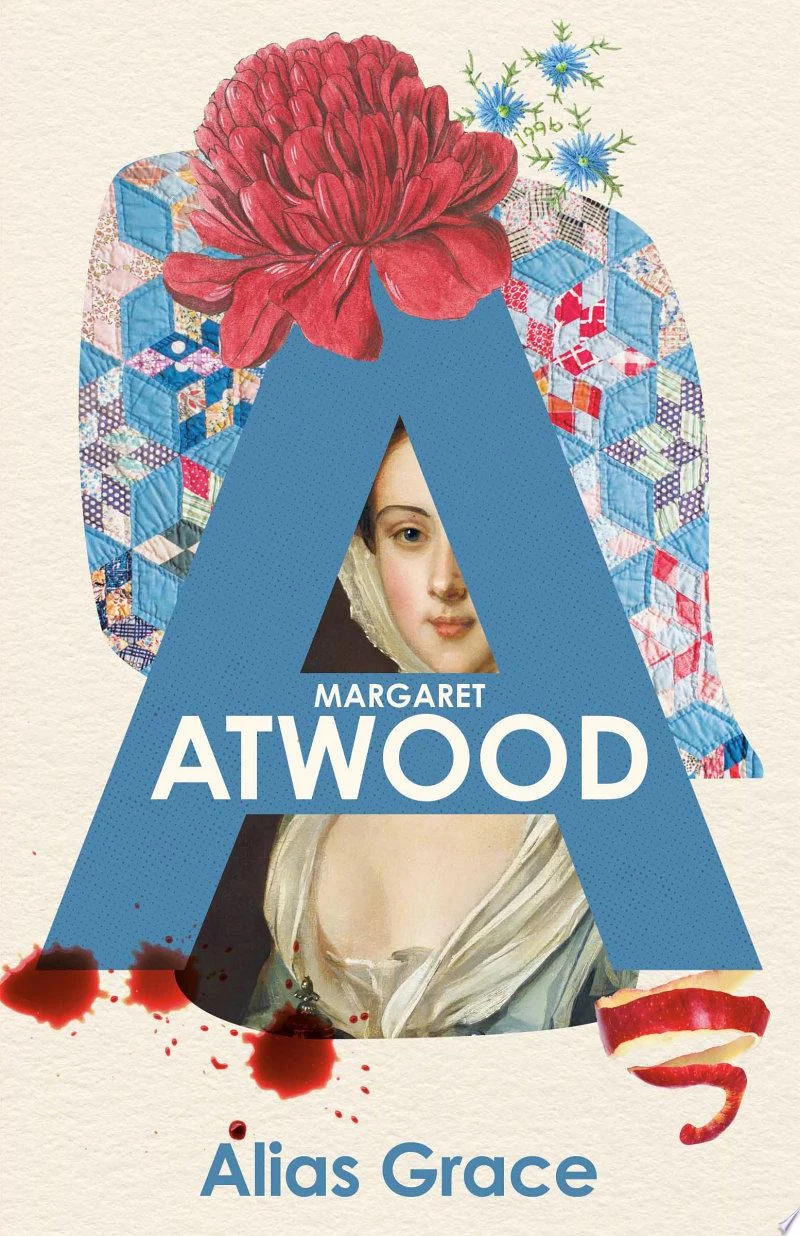
Alias Grace
- Publication Date:
- December 10th, 2010
- Publisher:
- McClelland & Stewart
- ISBN-13:
- 9781551994864
- ISBN-10:
- 1551994860
- Pages:
- 593
Why Alias Grace Has Been Challenged
Objections to Alias Grace in schools and libraries have centered on its frank treatment of sexual content, including scenes depicting abuse and exploitation of women in domestic servitude, as well as its violent subject matter drawn from a real double murder. See more ↓
Challenged or banned in 1 state across 1 school district.
Overview
Margaret Atwood builds Alias Grace around an actual criminal case from Canadian history: the 1843 murders of Thomas Kinnear and his housekeeper, Nancy Montgomery, and the conviction of sixteen-year-old servant Grace Marks as an accomplice. Rather than settle the question of Grace's guilt, Atwood uses it as the novel's engine, letting contradictory testimony and Grace's own selective recollections accumulate without ever fully resolving.
The present-tense frame follows Dr. Simon Jordan, a young physician working in the still-new field of mental illness, who is brought in years after the trial to interview Grace and determine whether her claimed amnesia is genuine. Their sessions form a psychological duel as much as a diagnostic exercise, with Grace's narration shifting between candor, performance, and silence in ways that keep both Jordan and the reader guessing.
Atwood renders the texture of nineteenth-century domestic service, asylums, and courtrooms with careful period detail, but the novel's real interest lies in how a woman's story gets shaped by the people recording it. Grace is by turns cast as calculating, damaged, and simply unknowable, and the book resists handing readers a final verdict.
Behind the Story
Atwood has long been drawn to women whose historical record is thin or distorted by the assumptions of the men who documented them, and Grace Marks fits that pattern. By working from sparse trial transcripts and newspaper accounts, Atwood is able to fill the gaps with invented interiority while leaving the historical uncertainty intact, a technique that lets the novel comment on how "madness," criminality, and femininity were diagnosed and narrated in the Victorian era.
The novel also sits within Atwood's broader interest in unreliable memory and the instability of personal testimony, themes she returns to across her fiction. Alias Grace was well received on publication and later adapted into a television miniseries, which introduced Grace's story to a wider audience and renewed interest in the historical case underlying it.
Why Alias Grace Has Been Challenged
Objections to Alias Grace in schools and libraries have centered on its frank treatment of sexual content, including scenes depicting abuse and exploitation of women in domestic servitude, as well as its violent subject matter drawn from a real double murder. Some challengers have also raised concerns about the novel's ambiguous, non-judgmental framing of criminal guilt, arguing that its refusal to clearly condemn or exonerate Grace makes it unsuitable for younger readers. In this catalog, the novel has been the subject of 1 challenge tracked at the state level and 1 at the district level, reflecting the discomfort some communities have felt with pairing mature content and moral ambiguity in a work assigned to students.
Where to Buy




Affiliate links may generate a small commission at no extra cost to you, which helps support this site.
About Margaret Atwood

Margaret Atwood is a Canadian author, poet, and literary critic widely regarded as one of the most important writers of the 20th and 21st centuries. Best known for The Handmaid's Tale, a dystopian novel about a theocratic regime that subjugates women, she has received the Booker Prize twice and the Pen Pinter Prize, among many other honors. The Handmaid's Tale has been banned or challenged in over 100 school districts across more than a dozen states.
Also by Margaret Atwood


Banned in Schools
Banned or challenged in 1 state across 1 school district.
Florida 1 district
- Orange County Public Schools Banned by restriction