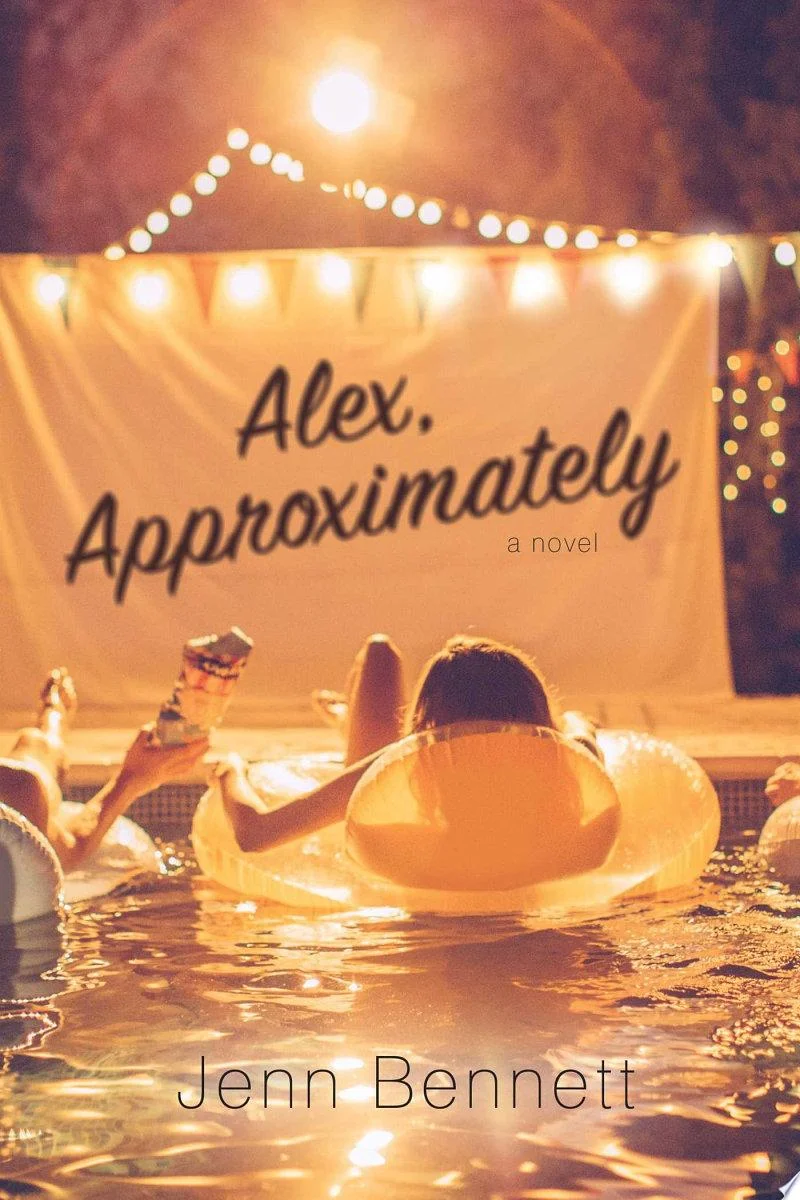
Alex, Approximately
by Jenn Bennett
- Publication Date:
- April 4th, 2017
- Publisher:
- Simon and Schuster
- ISBN-13:
- 9781481478793
- ISBN-10:
- 1481478796
- Pages:
- 349
Why Alex, Approximately Has Been Challenged
Some parents and reviewers have pushed back on the book's frank handling of teenage physical intimacy, arguing it goes further than they consider appropriate for the young readers who make up its core audience. See more ↓
Challenged or banned in 1 state across 2 school districts.
Overview
Jenn Bennett's "Alex, Approximately" follows Bailey Rydell, a teenager who has spent months trading messages with an online film buff she knows only as Alex. When Bailey relocates to live with her father in a Northern California beach town, she discovers she's landed in Alex's own backyard, though she keeps that discovery to herself, wary of turning an anonymous digital friendship into something that might disappoint in person.
Instead of pursuing Alex directly, Bailey takes a summer job at a local history museum, where she's needled daily by a mouthy, good-looking security guard named Porter Roth. The two spar constantly, and Bailey writes him off as an annoyance standing between her and the more perfect romance she's built up in her head. As the summer wears on, though, the line between irritation and attraction starts to blur.
The novel builds toward an inevitable convergence: Bailey's carefully separated online and offline lives are headed for collision, and the boy she's been avoiding in person may not be so different from the one she's been writing to all along. Bennett frames the story as a modern update of the old mistaken-identity romance, filtered through classic movies, texting, and the particular anxieties of meeting someone from the internet in real life.
Context and Reception
"Alex, Approximately" belongs to a wave of mid-2010s young adult romances that translated the pen-pal courtship plot, familiar from earlier films and novels, into a world of screens and usernames. Bennett uses Bailey's cinephilia as both a running motif and a structural device, with old film references standing in for the kind of shared language that lets two people feel close before they've actually met.
The book also engages with anxiety that trails online relationships for teenagers specifically: the fear that the person on the other end of a conversation might not match their words, and the vulnerability of wanting to be known by someone who hasn't seen your face. Bailey's reluctance to reveal herself to Alex is tied to a specific unresolved trauma from her past, which the story treats as a serious throughline rather than a plot device to be resolved lightly. Read alongside Bennett's other contemporary romances, the novel continues her interest in headstrong, flawed narrators navigating desire, self-protection, and the gap between the person someone performs and the person they are.
Why Alex, Approximately Has Been Challenged
Most objections to this novel center on its suitability for readers in the middle grades of high school, roughly ninth and tenth grade, the age range typically cited when the book appears on challenge lists. Critics in this camp argue that its romantic content, including scenes depicting physical intimacy between the teenage leads, is too explicit for a book marketed to that age group and shelved in school libraries alongside less mature titles.
Beyond specific scenes, some challengers have taken issue with the book's broader treatment of teen sexuality and relationships, contending that it normalizes behavior they feel is inappropriate to present without heavier caveats or adult oversight. Others have raised concerns rooted in the online-relationship plot itself, worried that a story built around a teenager meeting an internet stranger in person, even one that ultimately resolves warmly, sends an unintended message about the safety of such encounters. In this catalog, the novel has drawn a recorded challenge in 1 state and 2 districts, reflecting a pattern of localized objections rather than a single widespread campaign.
Where to Buy




Affiliate links may generate a small commission at no extra cost to you, which helps support this site.
Also by Jenn Bennett

Banned in Schools
Banned or challenged in 1 state across 2 school districts.
Florida 2 districts
- Clay County School District Banned
- Escambia County Public Schools Banned pending investigation