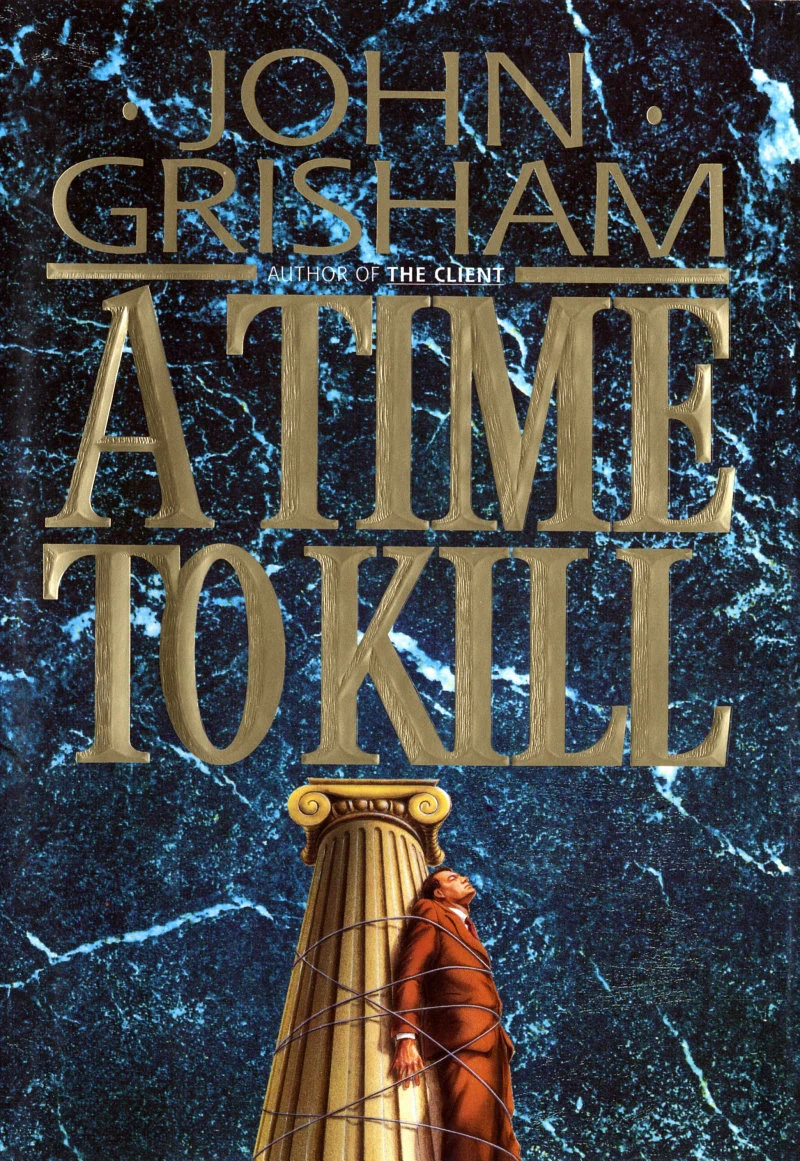
A Time to Kill
- Publication Date:
- November 1st, 1993
- Publisher:
- Random House
- ISBN-13:
- 9780385470810
- ISBN-10:
- 0385470819
Why A Time to Kill Has Been Challenged
Some readers have pushed to restrict the novel over its unsparing depiction of a child's assault, racially charged language, and scenes of vigilante and mob violence that follow. See more ↓
Challenged or banned in 1 state across 4 school districts.
Overview
A Time to Kill was John Grisham's first novel, and it introduced readers to small-town lawyer Jake Brigance, a character Grisham would return to in later books. The story is set in the fictional Ford County, Mississippi, a stand-in for the rural South Grisham knew as a young attorney himself.
The plot turns on an act of brutal violence against a young Black girl, committed by two white men, and the anguished response it provokes in her father, who takes matters into his own hands rather than trust the system to deliver justice. Brigance agrees to defend him, and the resulting trial becomes a flashpoint for the town's buried racial tensions.
As the case unfolds, Clanton is gripped by unrest—intimidation, threats, and violence spill into the streets even as the courtroom drama plays out. Grisham uses the trial structure to examine not just one man's fate, but whether a community can face its own history honestly.
A Courtroom Drama Rooted in Southern Reckoning
Grisham wrote A Time to Kill before he had any reputation as a novelist, drawing on his own years practicing law in Mississippi to ground the book in procedural detail and regional texture. It did not sell well on first release, but it became retroactively popular once his later legal thrillers made him a bestselling author, and it is often read as the more literary, personal work in his catalog—less a page-turning mystery than a moral drama about race and retribution.
The novel sits at the intersection of crime fiction and social commentary, using the conventions of the courtroom thriller to ask harder questions: what justice means in a community shaped by its racial past, and whether the law can be trusted to answer a crime that the law itself seems poorly equipped to address. That tension—between institutional process and raw human anger—has kept the book in conversation well beyond the legal-thriller genre, and it remains closely tied to Brigance, who Grisham later revisited as an older, more seasoned attorney.
Why A Time to Kill Has Been Challenged
Critics have long praised the novel for refusing to look away from the uglier realities of racial violence in the American South, treating that unflinching quality as the source of its power. That same directness is precisely what has drawn objections from some parents and community members, who argue the book goes further than a school setting should allow.
Much of the concern centers on the novel's opening chapters, which describe the assault on a child in graphic terms, and on the racist language used by characters to authentically render the prejudices of the setting. Reviewers have also flagged the book's violence more broadly—the vigilante killing, the cross burnings, and the sniper standoff that follows—as well as its frank treatment of mob intimidation and courtroom depictions of sexual violence. In the catalog tracked here, the book has drawn formal challenges in one state and four school districts, reflecting a narrower but recurring set of objections tied to its subject matter rather than to any single passage.
Where to Buy




Affiliate links may generate a small commission at no extra cost to you, which helps support this site.
Banned in Schools
Banned or challenged in 1 state across 4 school districts.
Florida 4 districts
- Collier County Public Schools Banned
- Escambia County Public Schools Banned pending investigation
- Orange County Public Schools Banned by restriction
- School District of Manatee County Banned by Restriction