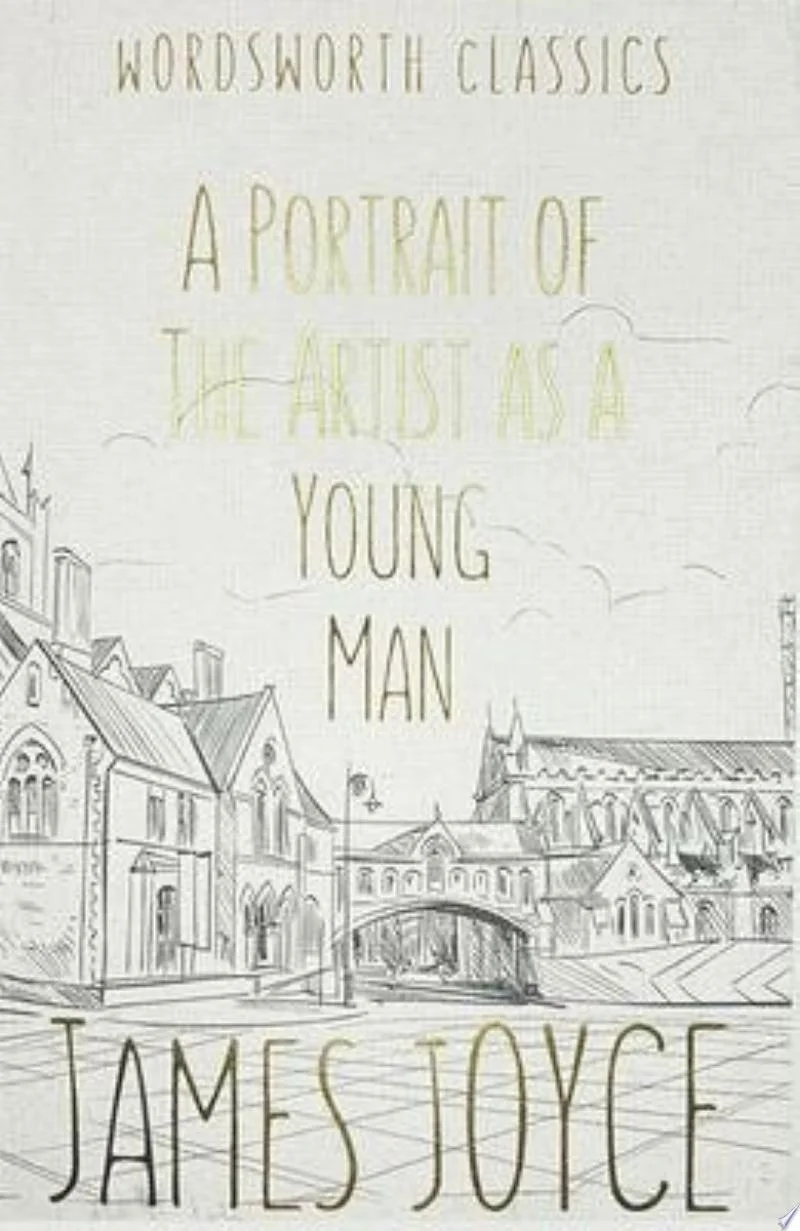
A Portrait of the Artist as a Young Man
by James Joyce
- Publication Date:
- January 1st, 1992
- Publisher:
- Wordsworth Editions
- ISBN-13:
- 9781853260063
- ISBN-10:
- 1853260061
- Pages:
- 276
Why A Portrait of the Artist as a Young Man Has Been Challenged
Some readers have pushed to restrict the novel over its frank rendering of adolescent sexual experience and its harrowing depiction of religious fear, rather than any dispute over its literary merit. See more ↓
Challenged or banned in 1 state across 1 school district.
Overview
A Portrait of the Artist as a Young Man follows Stephen Dedalus from early childhood through his university years in Dublin, tracing the gradual formation of a mind under the competing pressures of family, church, and country. Joyce structures the novel around Stephen's interior development rather than external plot, letting the prose itself grow more complex as its protagonist ages, from the fragmented sensations of infancy to the reasoned aesthetic theorizing of early adulthood.
Much of the book concerns Stephen's entanglement with Catholic doctrine, culminating in a period of intense religious fervor followed by his decisive rejection of a vocation in the priesthood. That rupture clears the way for the novel's real subject: Stephen's determination to live as an artist, answerable to his own conscience rather than to the inherited loyalties of family, faith, or nation.
The novel ends not with resolution but with departure, as Stephen prepares to leave Ireland to pursue the artistic life he has defined for himself. It stands as both a self-contained narrative and a prelude to the character's reappearance in Joyce's later fiction.
A Portrait in Context
The novel occupies a pivotal place in Joyce's development and in the history of the English-language novel more broadly. Its technique of shifting style to match the protagonist's cognitive and emotional age was a significant departure from conventional narration, and it anticipates the more radical formal experiments Joyce would pursue afterward. Scholarly editions of the text, including ones built around Hans Walter Gabler's textual work, reflect sustained critical attention to establishing an authoritative version of a book whose composition history was itself unusually complicated.
Critics have approached the novel from many directions over the past century, reading it through the lenses of Irish political history, the aesthetics of the literary revival, Catholic theology, and, more recently, gender and post-colonial theory. This range of interpretive approaches speaks to a text that resists any single explanation of what, exactly, constitutes artistic freedom or how a person separates an individual conscience from the institutions that shaped it. The novel's continued presence in university curricula and its role as an entry point into Joyce's broader body of work reflect its standing as a foundational document of literary modernism.
Why A Portrait of the Artist as a Young Man Has Been Challenged
A novel widely credited with reshaping how fiction could render consciousness on the page has, at the same time, drawn objections over specific passages rather than its literary standing. The friction centers on content concerning Stephen's adolescent sexual experiences, including his visits to prostitutes and his subsequent, unsparingly graphic wrestling with guilt, which some readers have judged inappropriate for younger audiences regardless of the novel's larger design.
A related strand of objection concerns the novel's unflinching treatment of Catholic religious instruction, most notably an extended sermon on damnation that Stephen hears as a boy. Readers who object to the book have sometimes characterized its portrayal of religious authority and fear-based instruction as disturbing or corrosive, apart from any argument about its literary purpose within the story. Taken together, these objections center less on the novel's reputation as a landmark of modern fiction than on specific scenes of sexual content and religious depiction that some have found unsuitable for school settings. This catalog tracks the book as challenged in one state and one district.
Where to Buy




Affiliate links may generate a small commission at no extra cost to you, which helps support this site.
Banned in Schools
Banned or challenged in 1 state across 1 school district.
Florida 1 district
- Escambia County Public Schools Banned pending investigation