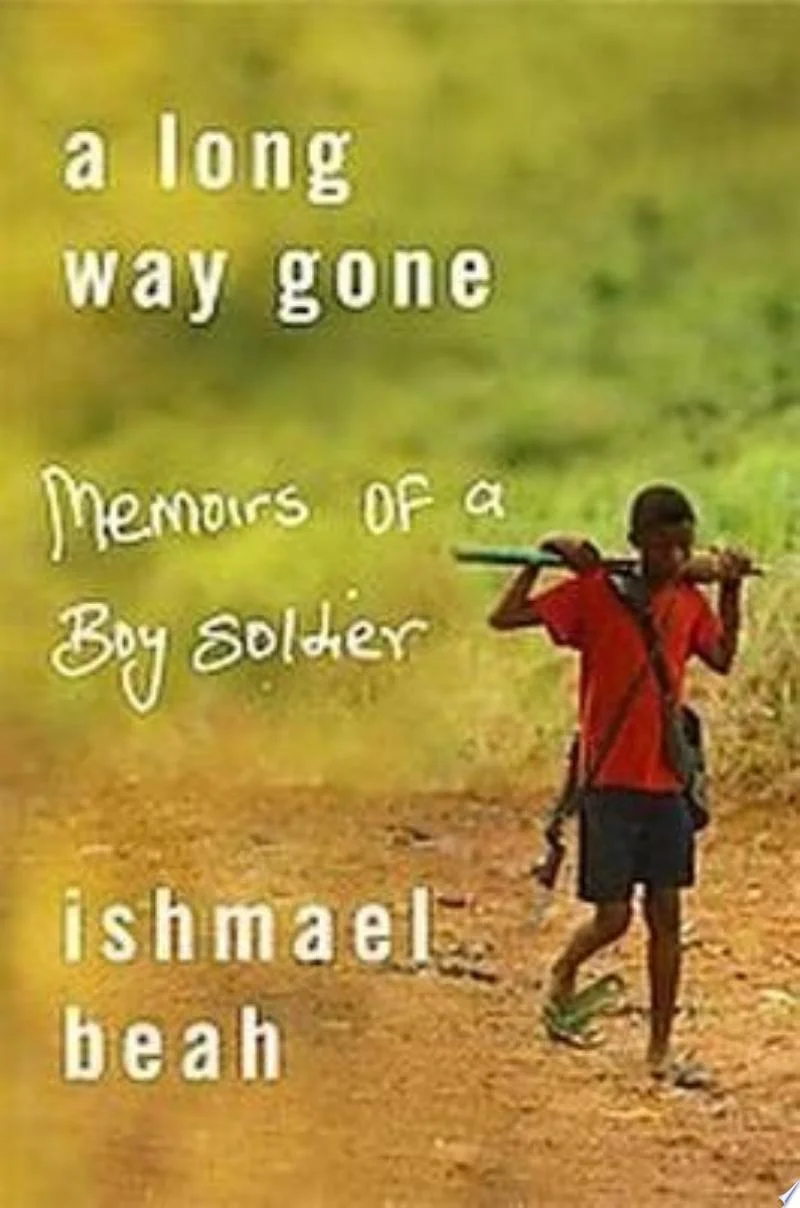
A Long Way Gone
by Ishmael Beah
- Publication Date:
- February 13th, 2007
- Publisher:
- Macmillan
- ISBN-13:
- 9780374105235
- ISBN-10:
- 0374105235
- Pages:
- 238
Why A Long Way Gone Has Been Challenged
Critics of the book's place on school shelves point less to its honesty than to how directly it renders a child's experience of killing and being made to kill. See more ↓
Challenged or banned in 1 state across 1 school district.
Overview
Ishmael Beah writes from the far side of an experience most readers only encounter secondhand: recruitment into an army at an age when other children are in middle school. The memoir begins with the war arriving in the margins of his life, first as rumor, then as the reason his village empties and he is separated from his family while walking with friends between towns. What follows is less a single journey than a long unraveling, as safety becomes a moving target and the ordinary categories of childhood stop applying.
By the time government soldiers take him in, Beah is no longer simply a refugee of the conflict but a candidate for it. The book traces how quickly that transformation occurs once a rifle is put in a child's hands and fear, grief, and drugs are allowed to do the rest of the work. Beah does not soften this part of his account; he describes becoming someone capable of the same violence he once fled.
The memoir's final movement concerns extraction and reentry, the halting process of being pulled out of combat and reintroduced to a version of life with rules, routines, and adults who are not commanding officers. Beah is candid about how incomplete and uneven that return feels, and the narrative resists offering a clean resolution in exchange for a survivable one.
A Firsthand Record of a Global Practice
Part of what distinguishes this book is its vantage point. Child soldiering has been the subject of news reports, NGO campaigns, and fiction, but Beah writes as someone who lived inside the machinery rather than observed it. The memoir sits at an uneasy intersection of testimony and literature, asking readers to hold both the specificity of one boy's war in Sierra Leone and the broader, ongoing reality that children continue to be conscripted into armed conflicts around the world.
The book is also notable for what it declines to do. It does not build toward a single redemptive turn or absolve its narrator of what he did as a soldier; it stays with the discomfort of a former child combatant trying to narrate his own culpability. That refusal to simplify is part of why the memoir has been read widely in classrooms and human rights curricula as a way of putting a human face on statistics about children in war, while also unsettling easy distinctions between victim and perpetrator.
Why A Long Way Gone Has Been Challenged
Much of the friction around this memoir centers on whether its unflinching content belongs in collections read by younger students, rather than on any dispute over the truth of what it describes. Because Beah writes in first person about the mechanics of combat, drug use forced on child recruits, and specific acts of violence he committed and witnessed, some readers have argued the material is too graphic for the age groups typically assigned the book, and that it warrants restricted shelving or a parental notice rather than open access.
Objectors have also pointed to the memoir's refusal to look away from bloodshed as the crux of the concern: passages depicting killing and its aftermath are rendered with an immediacy that some find appropriate to the subject and others find gratuitous for a school setting. Records in this catalog show the book has drawn a formal challenge in 1 state and 1 school district, reflecting a narrow but real dispute over where a firsthand war memoir fits within age-banded reading lists.
Where to Buy




Affiliate links may generate a small commission at no extra cost to you, which helps support this site.
Banned in Schools
Banned or challenged in 1 state across 1 school district.
Texas 1 district
- Conroe Independent School District Banned by restriction