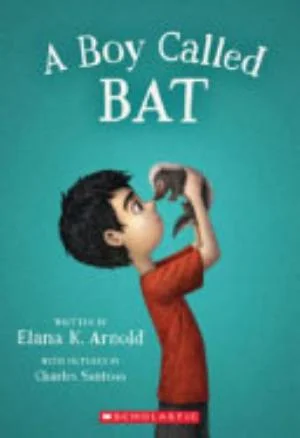
A Boy Called Bat
- Publication Date:
- January 1st, 2017
- ISBN-13:
- 9781338274561
- ISBN-10:
- 1338274562
- Pages:
- 198
Why A Boy Called Bat Has Been Challenged
Some parents have pushed to restrict this book on the grounds that its matter-of-fact depiction of a neurodivergent child and a divorced-parent household reaches young readers before families have a chance to weigh in on how those topics are introduced. See more ↓
Challenged or banned in 1 state across 1 school district.
Overview
Bixby Alexander Tam, known to everyone as Bat, is used to a world that rarely goes as expected. Most days bring some mix of the welcome and the unwelcome, and Bat has learned to hold both. When his mother, a veterinarian, arrives home with an orphaned skunk kit she has agreed to nurse until a wildlife shelter can take him, Bat recognizes something in the small, displaced creature almost immediately.
What follows is less a rescue story than a negotiation. Bat gives himself a single month to convince his mother that the skunk should stay for good, and the narrative moves through the small, daily labor of caretaking: feedings, quiet routines, and the slow building of trust between a boy and an animal that depends on him completely.
The stakes are modest by design. There is no villain and no crisis beyond a ticking clock and a mother's reasonable hesitation, which is part of what gives the book its particular warmth.
A Quiet Study in Attachment and Difference
Arnold's book, the first in a series, is often discussed less for its plot than for how closely it stays inside Bat's experience of the world. He notices textures, sounds, and disruptions to routine with an intensity that shapes how he moves through his days, and the story never treats that intensity as a problem to be solved. Instead, it frames Bat's attentiveness as the very quality that lets him understand the skunk kit's needs before anyone else does.
The book also sits within a family shaped by divorce, with Bat dividing time between two households, and it treats that arrangement matter-of-factly rather than as a source of drama. Taken together, the sensory detail and the unremarkable blended family give the story a quiet realism uncommon in books pitched at newly independent readers, and much of its critical reception has centered on how gently it normalizes both.
Why A Boy Called Bat Has Been Challenged
Most objections to this book point to its intended readership of early elementary students, roughly second through fourth grade, as the reason closer scrutiny is warranted. Critics in these cases have generally not pointed to a single scene or line so much as to the book's underlying premise: a young protagonist whose neurodivergent traits and non-traditional family structure are presented as simply ordinary, without any framing device or adult explanation built into the text. Some challengers argue that children this young should encounter such material only with a parent's prior review rather than as unremarked background in a school library selection.
In practice, the book has also been swept up in broader reviews of classroom and library collections rather than singled out for its own content, appearing on lists compiled by advocacy groups examining how neurodivergence and family diversity are depicted in books for the youngest readers. Within the challenges tracked in this catalog, the book has been formally contested in one state and one school district, reflecting this pattern of inclusion in wider list-based reviews more than a sustained, book-specific campaign.
Where to Buy


Affiliate links may generate a small commission at no extra cost to you, which helps support this site.
About Elana K. Arnold
Elana K. Arnold is an American author of children's and young adult fiction who earned her BA from UC Irvine and her MA from UC Davis. Her 2018 novel Damsel received a Michael L. Printz Award Honor, and What Girls Are Made Of (2017) was a National Book Award finalist. Three of her books were banned by the Alpine School District in Utah in 2022.
Also by Elana K. Arnold
Banned in Schools
Banned or challenged in 1 state across 1 school district.