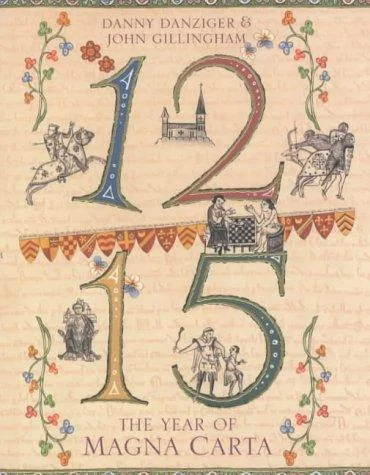
1215: THE YEAR OF MAGNA CARTA
- Publisher:
- HODDER & STOUGHTON
- ISBN-13:
- 9780340824740
- ISBN-10:
- 0340824743
Why 1215: THE YEAR OF MAGNA CARTA Has Been Challenged
Complaints have centered on the book's unflinching detail about medieval violence, bodily suffering, and religious cruelty, which some parents consider too graphic for younger classroom readers. See more ↓
Challenged or banned in 1 state across 1 school district.
Overview
Danny Danziger's 1215: The Year of Magna Carta reconstructs a single, pivotal year in English history not through the lens of kings and barons alone, but through the textures of daily existence for people across the social order. The book moves between the political crisis brewing between King John and his rebellious nobles and the ordinary rhythms of medieval life: farming, marriage, childbirth, worship, and the administration of justice in towns and villages.
Rather than treating Magna Carta as an isolated legal event, the narrative situates it within the broader fabric of thirteenth-century society, drawing on the era's legal records, chronicles, and material culture. Chapters range widely across subjects such as the structure of feudal obligation, the authority of the medieval church, the practice of medicine, and the precarious position of women and children within the household.
The result is less a conventional political history than a composite portrait of a society under strain, one in which the famous charter sealed at Runnymede emerges as a response to specific, often mundane grievances rather than a sudden philosophical breakthrough.
A Document Reconsidered
Much of the book's interest lies in how it complicates the popular image of Magna Carta as a straightforward ancestor of modern constitutional rights. By dwelling on the messy realities of thirteenth-century governance, taxation disputes, and baronial self-interest, Danziger's account suggests that the charter's framers were driven as much by practical grievance and aristocratic privilege as by any abstract commitment to liberty. That reframing has made the book part of a broader trend in popular medieval history writing, which favors social detail and lived experience over grand narrative.
The book also reflects a wider effort to make medieval studies accessible to general readers, translating specialized historical scholarship into an approachable narrative form. Its episodic, thematic structure allows readers to encounter the period through discrete windows, such as a village dispute or a royal hunting expedition, rather than a strict chronological account, a choice that has shaped how the book is used in classrooms and by general audiences alike.
Why 1215: The Year of Magna Carta Has Been Challenged
Most objections to the book have come from readers evaluating it for middle and high school history curricula, where concerns focus on whether its detailed depictions of medieval life are appropriate for younger students. Critics point to the book's frank treatment of subjects such as corporal and capital punishment, the physical realities of childbirth and disease, and the church's methods of enforcing religious conformity, arguing that these passages present a level of graphic historical detail beyond what some assignments intend.
Other concerns have centered on the book's portrayal of violence tied to feudal warfare and baronial conflict, which some reviewers describe as more visceral than typical textbook summaries of the period. The book has been challenged or restricted in 1 state and 1 district tracked in this catalog, with objections generally framed around age-appropriateness for assigned readers rather than disputes over its historical accuracy or interpretation.
Where to Buy




Affiliate links may generate a small commission at no extra cost to you, which helps support this site.
Banned in Schools
Banned or challenged in 1 state across 1 school district.
Florida 1 district
- Orange County Public Schools Banned by restriction