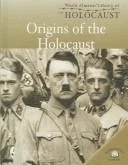
Origins of the Holocaust (World Almanac Library of the Holocaust)
- Publication Date:
- January 1st, 2006
- Publisher:
- World Almanac Library
- ISBN-13:
- 9780836859508
- ISBN-10:
- 0836859502
- Pages:
- 48
Why Origins of the Holocaust (World Almanac Library of the Holocaust) Has Been Challenged
Some parents and educators have questioned whether the book's frank treatment of genocidal violence and racial ideology is suitable for the younger students who typically encounter it. See more ↓
Challenged or banned in 1 state across 1 school district.
Overview
"Origins of the Holocaust" is a nonfiction entry in the World Almanac Library of the Holocaust series, a set of reference-style volumes designed to introduce students to the history of Nazi Germany's campaign of genocide against European Jews and other targeted groups. Author David Downing structures the book around the conditions that made the Holocaust possible, rather than the atrocities themselves, tracing a line from nineteenth-century European antisemitism through Germany's defeat in World War I, the economic collapse of the Weimar Republic, and the rise of Adolf Hitler's National Socialist movement.
As part of a library series aimed at middle and high school readers, the book favors clear explanation and historical context over narrative drama. It situates the Holocaust within a broader pattern of scapegoating, nationalism, and state-sanctioned prejudice, giving readers a framework for understanding how a modern, educated society arrived at industrialized mass murder.
Because the volume is explicitly a building block within a larger series, it functions less as a self-contained story and more as a foundational text meant to prepare students for further study of the Holocaust's later, more harrowing chapters.
Historical Framing and Educational Purpose
Downing's approach reflects a common pedagogical strategy in Holocaust education: establishing causes before confronting consequences. By concentrating on origins, the book asks readers to grapple with how prejudice becomes policy, and how policy becomes atrocity, rather than presenting genocide as an inexplicable eruption of evil. This mirrors an ongoing emphasis in Holocaust studies on process and complicity, examining the legal, social, and economic mechanisms that normalized persecution well before the camps existed.
The World Almanac Library format situates the book alongside companion volumes covering ghettos, camps, resistance, and aftermath, suggesting that its intended audience will encounter the full arc of the history across multiple texts. Its place in a reference series also means it is often shelved and assigned for research purposes, giving it a different classroom function than a memoir or survivor testimony would have.
Why Origins of the Holocaust Has Been Challenged
Even a book focused on historical causes rather than graphic events must eventually describe the ideology and violence that followed from them, and it is this material, discussions of racial pseudo-science, dehumanizing propaganda, and the machinery of persecution, that has drawn objections from some parents and community members. Critics have argued that the subject matter is too disturbing or complex for the age group typically assigned the book, given its place in a series aimed at younger students.
Other objections have centered on how a condensed reference work handles an atrocity of this scale, with concerns that summarizing causes and events for a young audience risks oversimplifying difficult moral and historical questions. In this catalog, the title has been challenged in 1 state and 1 school district, reflecting a narrow but notable instance of pushback against Holocaust education materials in schools.
Where to Buy


Affiliate links may generate a small commission at no extra cost to you, which helps support this site.
Also by David Downing
Banned in Schools
Banned or challenged in 1 state across 1 school district.
Tennessee 1 district
- Monroe County Schools Banned