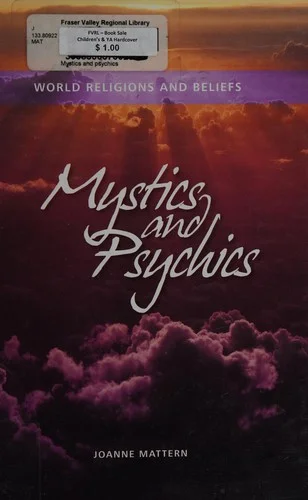
Mystics and psychics
- Publication Date:
- January 1st, 2011
- Publisher:
- Morgan Reynolds Pub.
- ISBN-13:
- 9781599351483
- ISBN-10:
- 159935148X
Why Mystics and psychics Has Been Challenged
Some educators have objected not to any explicit content but to the premise itself, arguing that presenting psychic and mystical claims to children risks lending them undue credibility. See more ↓
Challenged or banned in 1 state across 1 school district.
Overview
Joanne Mattern's "Mystics and Psychics" belongs to the genre of accessible nonfiction that introduces young readers to claims of extraordinary perception: clairvoyance, prophecy, mediumship, and the long history of people who have claimed to sense what others cannot. Rather than arguing for or against any particular belief, the book surveys the territory, presenting famous cases and figures associated with psychic phenomena as part of a broader cultural fascination with the unexplained.
The approach is descriptive rather than persuasive, cataloguing the kinds of claims that have surrounded mystics and psychics across different eras and cultures. It treats the subject the way many entries in popular paranormal series do: as a window into what people have believed, and why those beliefs have persisted, without requiring the reader to adopt them.
For its intended young audience, the book functions as an entry point into questions about perception, belief, and evidence, pairing curiosity with just enough historical context to invite further thinking rather than settle the matter.
A Window Into Belief and Doubt
Books like this one sit at an interesting crossroads in children's and middle-grade nonfiction: they take seriously a subject that mainstream science generally dismisses, while still functioning as an introduction rather than an endorsement. Mattern has built a substantial career writing exactly these kinds of survey titles, covering ghosts, cryptids, and other edges of the supernatural for school and library collections, and "Mystics and Psychics" fits squarely within that body of work.
What makes the subject durable for young readers is less the specific claims about telepathy or foresight than the larger human question underneath them: how do people decide what to believe when evidence is ambiguous or unavailable? By presenting psychic phenomena as a subject of ongoing fascination rather than settled fact, the book invites readers to hold curiosity and skepticism at the same time, a balance that paranormal-themed nonfiction for younger audiences has long tried to strike.
Why Mystics and Psychics Has Been Challenged
Readers and educators who value the book often point to its usefulness as a gateway into critical thinking about extraordinary claims; it is the content itself, not the writing, that has drawn objection. Where some see a survey of folklore and belief, others see a text that lends unwarranted legitimacy to practices they consider spiritually or scientifically suspect, and that distinction is at the core of the pushback the book has received.
The challenges brought against it center on its subject matter: an uneasiness with presenting psychic ability, divination, and mystical practice to children without a stronger framing of skepticism, and in some cases a religious objection to material that engages with occult themes at all. These concerns echo those raised against other titles in the same paranormal nonfiction niche, where the worry is less about explicit content than about the implicit credibility a children's book can lend to ideas its critics see as unfounded or spiritually fraught. In the catalog tracked here, the book has been challenged in 1 state and 1 school district.
Where to Buy




Affiliate links may generate a small commission at no extra cost to you, which helps support this site.
Banned in Schools
Banned or challenged in 1 state across 1 school district.
Tennessee 1 district
- Monroe County Schools Banned