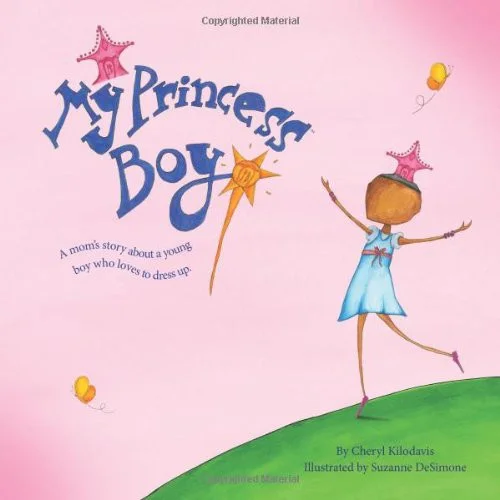
My Princess Boy
- Publication Date:
- April 9th, 2010
- Publisher:
- KD Talent LLC
- ISBN-13:
- 9780615395944
- ISBN-10:
- 0615395945
- Pages:
- 32
Why My Princess Boy Has Been Challenged
At the heart of the pushback is a disagreement over whether young children should encounter stories about gender nonconformity at all before a parent has chosen to raise the topic. See more ↓
Challenged or banned in 1 state across 1 school district.
Overview
My Princess Boy is a picture book built around a simple household truth: a young boy named Dyson prefers tiaras to baseball caps, sparkly skirts to jeans, and sees no contradiction in wearing either depending on the day. The narrative, told from a parent's point of view, follows Dyson through ordinary childhood scenes — playing outside, getting dressed, being around family — without treating his preferences as a puzzle to be solved.
Author Cheryl Kilodavis wrote the book after raising her own son, who gravitated toward traditionally feminine clothing and accessories from an early age. Rather than building a plot around conflict or resolution, the book stays close to observation, letting the boy's tastes speak for themselves while the surrounding adults are shown adjusting their expectations rather than the child adjusting his behavior.
The tone throughout is gentle and instructional in the way many picture books aimed at very young readers are: short sentences, direct address to the reader, and a closing appeal to kindness rather than a moral delivered through incident or drama.
Context and Reception
The book arrived in the early 2010s alongside a small but growing shelf of children's titles taking on gender expression directly rather than through allegory or animal characters, and it is often cited as one of the earlier mainstream examples of that trend for a picture-book audience. Its origin as a memoir-adjacent project — written by a parent responding to her own child's real preferences — distinguishes it from books built around an invented character, and that framing has shaped how both supporters and critics discuss it: as a personal account first, an argument second.
Within debates over children's literature, My Princess Boy is frequently invoked as a test case for what belongs in early-childhood collections versus older-reader sections, since its picture-book format and simple vocabulary put it in front of a much younger audience than most books addressing similar territory. That placement — rather than the content of the story itself, which is largely free of incident — is a recurring point of discussion among librarians, parents, and school boards weighing where and whether to shelve it.
Why My Princess Boy Has Been Challenged
Gender identity and expression sit at the center of nearly every objection raised against this book. Critics argue that a picture book aimed at very young children is an inappropriate venue for material touching on gender nonconformity, contending that such subjects should be left to parents to introduce on their own terms and timeline rather than encountered on a library or classroom shelf. Some challenges frame the book as promoting a particular viewpoint about gender roles rather than simply depicting one family's experience, and object to its presence in early-elementary collections on that basis.
Others raise concerns less about the specific content than about precedent — worried that including this title normalizes a broader category of books they'd prefer to see restricted or relocated to sections requiring parental permission. According to the challenge records tracked in this catalog, objections to My Princess Boy have been formally logged in 1 state and 1 school district, figures that place it among the more narrowly contested titles in the collection even as it remains a frequently cited example in wider debates over gender-related content in children's literature.
Where to Buy


Affiliate links may generate a small commission at no extra cost to you, which helps support this site.
Banned in Schools
Banned or challenged in 1 state across 1 school district.