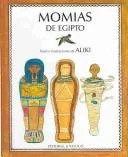
Mummies Made in Egypt
by Aliki
- Publication Date:
- June 1st, 2004
- Publisher:
- Editorial Juventud
- ISBN-13:
- 9788426126948
- ISBN-10:
- 8426126944
- Pages:
- 25
Why Mummies Made in Egypt Has Been Challenged
Some adults have balked at putting the physical realities of embalming and burial in front of children, even in a book aimed squarely at their curiosity. See more ↓
Challenged or banned in 1 state across 1 school district.
Overview
Aliki's illustrated nonfiction book walks young readers through one of ancient Egypt's most enduring practices: the careful, methodical preservation of the dead. Rather than treating mummification as a spooky curiosity, the book presents it as a skilled craft, outlining the sequence of steps embalmers followed and the tools and materials, natron, linen, resin, that made the process possible.
Alongside the how, the book spends real attention on the why. It situates mummification within Egyptian religious belief, explaining that preserving the body was understood as essential to a person's journey into the afterlife. This framing turns what could be a simple procedural account into a window onto an entire worldview.
The book belongs to a long tradition of nonfiction picture books that trust children with real information about history and the body, using clear diagrams and straightforward language to make an unfamiliar culture's practices legible rather than exotic.
Ancient Death Rites as a Gateway to History
Mummification has long functioned as one of the most reliable entry points for introducing children to ancient civilizations, precisely because it combines tangible physical process with abstract belief. A child who can follow the steps of wrapping a body in linen is simultaneously absorbing ideas about an entire cosmology: that death was not an ending, that the body mattered beyond life, that an elaborate system of ritual and craftsmanship existed to serve unseen needs.
Aliki's approach reflects a broader pattern in educational publishing, where subjects adults might consider weighty or uncomfortable, death, the body, religious ritual, are handled matter-of-factly for young audiences. The book's place in elementary and museum curricula speaks to how effectively this kind of direct, illustrated explanation satisfies children's genuine curiosity about how other peoples understood life and death, without recourse to euphemism.
Why Mummies Made in Egypt Has Been Challenged
The book's unflinching depiction of embalming, including the removal and treatment of internal organs and the handling of a corpse, has been the focus of objections from readers who feel the procedural detail is too graphic for the young audience the book is aimed at. Where the book's defenders see age-appropriate, factual science writing, critics have argued that illustrating the mechanics of preparing a dead body exposes children to content more unsettling than instructive.
A related strand of concern centers on the book's treatment of death itself as a plain, matter-of-fact subject, with some adults preferring that such topics be introduced more gradually or with more caution than a picture book format allows. These objections have led to a single challenge recorded in this catalog, spanning one state and one school district, reflecting a narrow but persistent discomfort with nonfiction that treats mortality and the body as fit subjects for young readers rather than topics to be shielded from them.
Where to Buy




Affiliate links may generate a small commission at no extra cost to you, which helps support this site.
Banned in Schools
Banned or challenged in 1 state across 1 school district.
Tennessee 1 district
- Monroe County Schools Banned