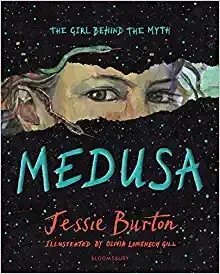
Medusa
- Publication Date:
- January 11th, 2022
- Publisher:
- Bloomsbury YA
- ISBN-13:
- 9781547607594
- ISBN-10:
- 1547607599
- Pages:
- 224
Why Medusa Has Been Challenged
Because it reframes a sexual-assault survivor as a punished "monster," this retelling has unsettled some adults who feel its source material is too weighty for the young readers who typically encounter it. See more ↓
Challenged or banned in 1 state across 1 school district.
Overview
Jessie Burton's "Medusa" retells one of mythology's most familiar monster stories from the monster's own point of view. Rather than opening on a hero's quest, the novel settles the reader on a remote island where a teenage girl lives in near-total isolation, her head wreathed in living snakes, her face hidden from the world. She has been cast out and cursed, and the book slowly unspools why.
Into this solitude arrives a shipwrecked young man, and the story becomes as much about connection as it is about dread. Burton uses their halting, guarded friendship to探 explore what it means to be seen, truly seen, after being taught that your very existence is something to be feared or hidden.
The narrative withholds and reveals in careful measure, letting readers reconsider a story they think they already know. By the time the mythic machinery of gods, vanity, and vengeance fully engages, Medusa has become a person rather than a plot device, which is the novel's central accomplishment.
Reclaiming a Monster
Burton's novel belongs to a broader wave of retellings that return agency and interiority to women who exist in classical mythology mainly as obstacles, punishments, or prizes. Medusa has long served as shorthand for female monstrousness, a face so dangerous it cannot be looked at directly. By narrating from inside that face, the book asks what circumstances turn a girl into a symbol, and who benefits from that transformation.
The novel is also notable for how it handles power that flows unevenly between gods and mortals, men and women, the beautiful and the feared. Medusa's curse is not simply bad luck; it is the product of divine judgment falling on the wrong party, a pattern the book invites readers to notice as uncomfortably familiar rather than confined to ancient Greece. Illustrated editions pair the text with imagery that reinforces this intimate, almost confessional tone, positioning the book as both a myth retelling and a character study of shame, isolation, and the longing to be known without being destroyed for it.
Why Medusa Has Been Challenged
Sexual violence sits near the root of most objections to this book. The myth Burton is adapting includes an assault committed against Medusa by a god, followed by her punishment rather than his, and the novel does not soften that history into something more comfortable for younger readers. Some parents and educators argue that the material, even handled with restraint, is too mature for the shelves where it is typically placed.
Other concerns track the novel's unflinching treatment of trauma's aftermath: the shame, self-blame, and fear that Medusa carries long after the precipitating event. Critics of the book in school and library settings have questioned whether a young audience is equipped to process a story where the victim is also rendered monstrous by those around her, even though that very tension is the point the novel is making. As tracked in this catalog, the book has drawn a formal challenge in one state and one district, reflecting a narrow but notable pushback against its subject matter.
Where to Buy




Affiliate links may generate a small commission at no extra cost to you, which helps support this site.
Banned in Schools
Banned or challenged in 1 state across 1 school district.
Tennessee 1 district
- Monroe County Schools Banned