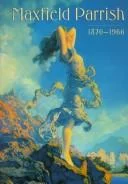
Maxfield Parrish, 1870-1966
by Sylvia Yount
- Publication Date:
- January 1st, 1999
- Publisher:
- Harry N. Abrams in association with the Pennsylvania Academy of the Fine Arts
- ISBN-13:
- 9780810943674
- ISBN-10:
- 0810943670
- Pages:
- 160
Why Maxfield Parrish, 1870-1966 Has Been Challenged
Depictions of unclothed figures in the artist's dreamlike, classically inspired scenes have drawn objections from those who feel such imagery is unsuitable for open display. See more ↓
Challenged or banned in 1 state across 1 school district.
Overview
This volume traces the career of Maxfield Parrish, an illustrator whose luminous skies and idealized figures made him one of the most widely reproduced American artists of his era. Rather than treating that popularity as settled fact, the book examines how it came to be and what it obscured: a working artist whose output spanned magazine covers, book illustrations, stage design, hotel murals, and the mass-produced calendar art that carried his images into countless American homes.
Essays by Sylvia Yount and Mark F. Bockrath anchor the text, moving between biography, cultural context, and technical analysis. Attention is given to the physical construction of Parrish's paintings, including the layered glazing and photographic reference methods that produced his signature luminosity, alongside newly reproduced color illustrations drawn from across his output.
The result positions itself between two audiences: those who simply admire Parrish's visual world and those seeking a more rigorous accounting of his technique, influences, and standing within twentieth-century American art.
A Popular Artist's Uncertain Place in Art History
The book's underlying argument concerns a familiar problem in art history: work made for commercial reproduction and mass consumption has often been treated as unworthy of the sustained critical attention given to gallery and museum painting. Parrish's commissions for magazines, calendars, and hotel interiors placed him squarely in that category, and his very ubiquity, appearing on walls and in print runs numbering in the millions, seems to have reinforced the assumption that his work was decorative rather than significant.
By pairing close technical study with biographical and historical framing, the book pushes back against that divide, asking readers to consider how an artist's reach into popular culture might coexist with, rather than preclude, serious artistic achievement. This reassessment situates Parrish alongside a broader scholarly effort to recover illustrators and commercial artists whose work shaped the visual imagination of their period even as it was excluded from the traditional canon.
Why Maxfield Parrish, 1870-1966 Has Been Challenged
Objections to this book have centered less on its text than on where an illustrated art volume belongs on a shelf and who might encounter it there. Parrish's paintings frequently feature nude or lightly draped figures, often nymphs, maidens, or allegorical subjects set within his trademark dreamlike landscapes, rendered in a classical idealizing tradition with roots in centuries of Western figure painting. Reproduced in full color within a book intended for general circulation, these images have prompted concern from some readers who feel that nudity, even when presented in an established art-historical mode, warrants restricted access or a different placement than open shelving allows.
The dispute reflects a recurring tension in how libraries and schools handle art books more broadly: whether works valued for their aesthetic and historical content should be judged by the same standards applied to illustrated nudity in other contexts, or evaluated on their own terms as records of an artist's practice. According to the challenge records this catalog tracks, objections to the book have been formally logged in one state and one district, reflecting a narrow but notable instance of this broader debate playing out over how classical and commercial art depicting the human form should be shelved and accessed.
Where to Buy




Affiliate links may generate a small commission at no extra cost to you, which helps support this site.
Banned in Schools
Banned or challenged in 1 state across 1 school district.
Tennessee 1 district
- Oak Ridge Schools Banned