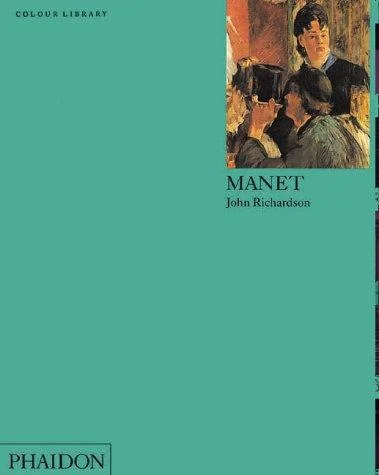
Manet
- Publication Date:
- August 12th, 1998
- Publisher:
- Phaidon Press
- ISBN-13:
- 9780714827551
- ISBN-10:
- 071482755X
- Pages:
- 128
Why Manet Has Been Challenged
A school library pulled this art-historical study from circulation over concerns that its reproductions of nineteenth-century nude paintings were unsuitable for younger students. See more ↓
Challenged or banned in 1 state across 1 school district.
Overview
John Richardson's "Manet" is a compact critical biography of Édouard Manet, the French painter whose work sits at the hinge between academic tradition and the modern movements that followed. Rather than a sprawling life story, the book works as a focused introduction: it traces Manet's training, his scandalous debuts at the Paris Salon, and the stylistic choices that made him a flashpoint for critics and a touchstone for younger artists.
Richardson, an art historian known for his close, often opinionated readings of painters' lives and canvases, uses Manet's career to illustrate a larger argument about how reputations are made and unmade in the art world. The book moves chronologically but keeps returning to a handful of key paintings, using them to show how Manet's flat planes of color and blunt, unsentimental figures unsettled Salon audiences accustomed to polished allegory and history painting.
As a short-form study, the book favors argument and interpretation over exhaustive biographical detail, making it more a critical essay illustrated with a life than a conventional cradle-to-grave account.
Manet's Place Between Tradition and Modernity
The book's real subject is less a single man's biography than a turning point in Western painting. Richardson situates Manet as neither a committed Impressionist nor a conventional academician, but as a transitional figure whose refusal to flatter his subjects or smooth over his brushwork opened the door for the generation that followed him. That ambiguous position is what makes Manet durably interesting to art historians: he is claimed by movements he never formally joined.
Richardson's broader body of work, including his later volumes on Picasso, shows a recurring interest in artists who provoke scandal in their own moment and are only later absorbed into the canon. "Manet" reads as an early exercise in that same critical project, asking how shock and controversy function as engines of artistic change rather than simply as obstacles to an artist's acceptance.
Why Manet Has Been Challenged
Objections to this book have tended to center less on its prose than on where it belongs on a shelf and who should have ready access to it, since its subject matter is inseparable from reproductions of Manet's most famous and most contested canvases. Paintings such as his reclining nude and his depiction of a nude figure picnicking alongside clothed men were considered indecent in their own century, and the same images, reprinted here for critical discussion, have drawn renewed discomfort from some readers encountering them in a school or library setting rather than a museum.
The underlying dispute is less about the book's scholarship, which treats these works as serious objects of art-historical analysis, than about the reproduction of nude imagery in a volume that might be shelved where younger students browse. In this catalog, the book has been the subject of 1 challenge tracked across 1 state and 1 district, reflecting a narrow but notable instance of that broader tension between art-historical context and concerns about age-appropriate content.
Where to Buy




Affiliate links may generate a small commission at no extra cost to you, which helps support this site.
Banned in Schools
Banned or challenged in 1 state across 1 school district.
Tennessee 1 district
- Oak Ridge Schools Banned