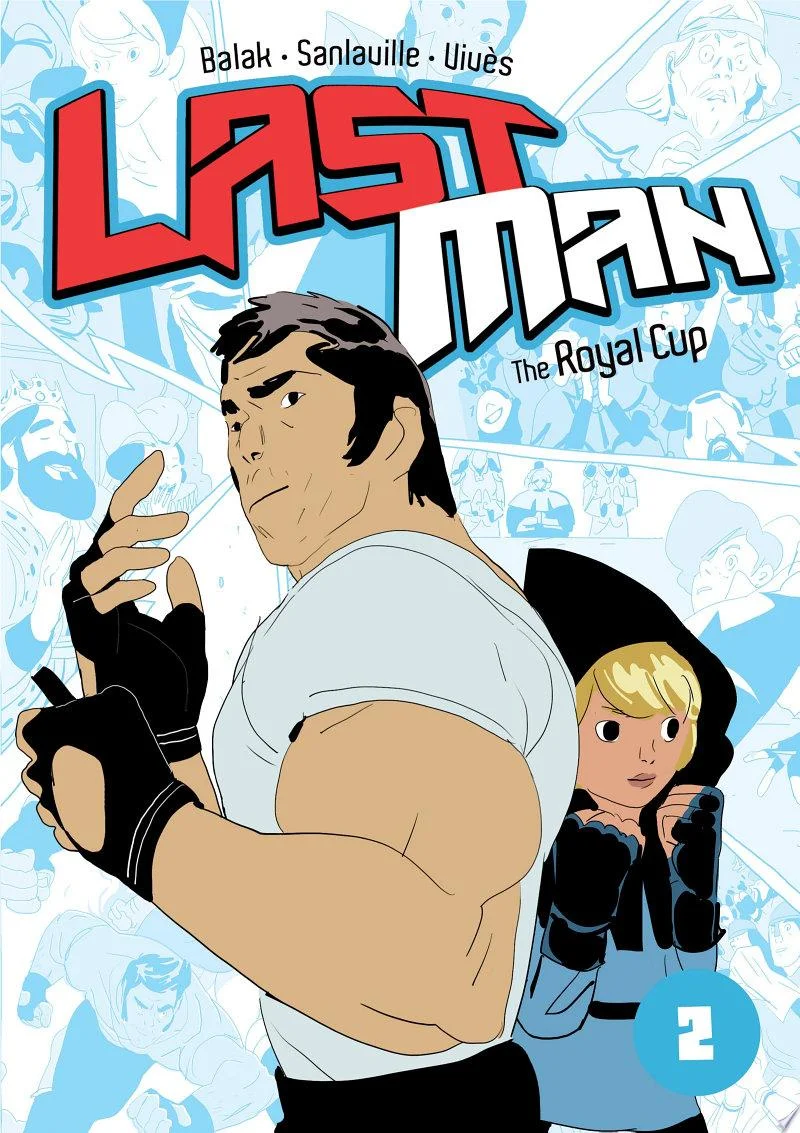
Last man: The Royal Cup
- Publication Date:
- June 23rd, 2015
- Publisher:
- First Second
- ISBN-13:
- 9781626724716
- ISBN-10:
- 1626724717
- Pages:
- 212
Why Last man: The Royal Cup Has Been Challenged
Reviewers have pushed back on the book's unflinching fight choreography, arguing that its combat scenes read as more intense than the graphic-novel format suggests to parents browsing shelves. See more ↓
Challenged or banned in 2 states across 2 school districts.
Overview
The second volume of Bastien Vivès' Last Man picks up where the tournament arc left off. Richard Aldana, the enigmatic newcomer who entered the Games with no visible magic and an unapologetic reliance on hand-to-hand combat, keeps dismantling opponents who come armed with spells, creatures, and tricks. His young partner Adrian fights beside him, and together they look poised to make a real run at the Royal Cup.
Then the story turns. Without spoiling the mechanics of the reveal, the volume uses its final chapters to upend the reader's understanding of the setting and of Aldana himself, recasting everything that came before. It is a structural gamble that trades the straightforward tournament narrative of the first book for something stranger and more unsettled.
The art carries much of that shift. Vivès renders fights with a cartoonist's economy of line and a choreographer's sense of motion, and the same visual fluency is turned toward disorientation once the plot's assumptions start to crack. Readers are left mid-sentence, so to speak, waiting for the next installment to make sense of what just happened.
A Twist That Reframes a Genre Exercise
Last Man began as a loving pastiche of tournament fighting fiction and fantasy-sports storytelling, genres with deep roots in manga and shonen comics. The first volume played that premise fairly straight: a mysterious outsider, a gifted but overlooked kid, an arena, and a prize. The second volume is where the series declares its actual ambitions, using genre familiarity as a setup it can subvert rather than an end in itself.
That move has shaped how critics and readers talk about the project as a whole. Vivès, writing with collaborators Michaël Sanlaville and Balak, built Last Man as a long-form experiment in withholding information, letting readers' assumptions about Aldana's nature and the world's rules do narrative work before pulling them out from under everyone. The book's reputation rests less on any single fight sequence than on this willingness to destabilize its own premise partway through.
Why Last Man: The Royal Cup Has Been Challenged
Most objections to this volume center on its suitability for middle-grade and early teen readers, the audience many bookstores and libraries shelve graphic novels for by default. Critics argue that the book's fight sequences are rendered with a level of physical intensity and consequence that reads as more mature than its cartoon-style art might initially suggest, and that the tournament's stakes grow bloodier as the story escalates toward its twist.
Some challenges also point to the series' tonal ambiguity: the same instability that makes the twist effective can make it hard to classify who the book is actually for, leaving younger readers exposed to content their parents did not anticipate from the cover or premise. In this catalog, Last Man: The Royal Cup has drawn 2 state-level and 2 district-level challenges, reflecting disagreement over where exactly a genre-bending action comic should sit on a shelf.
Where to Buy




Affiliate links may generate a small commission at no extra cost to you, which helps support this site.
Banned in Schools
Banned or challenged in 2 states across 2 school districts.
Tennessee 1 district
- Oak Ridge Schools Banned
Wyoming 1 district
- Natrona County Schools Banned by restriction