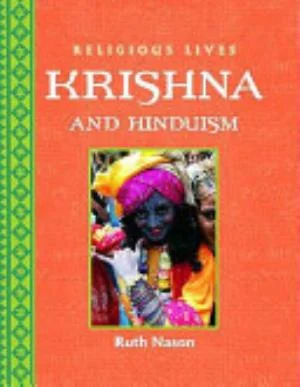
Krishna and Hinduism
- Publication Date:
- November 27th, 2008
- Publisher:
- Wayland
- ISBN-13:
- 9780750247948
- ISBN-10:
- 0750247940
- Pages:
- 48
Why Krishna and Hinduism Has Been Challenged
Some parents and community members have pushed back against a children's book that explains a non-Christian faith's teachings in terms they felt read more like instruction in belief than neutral description of it. See more ↓
Challenged or banned in 1 state across 1 school district.
Overview
Kerena Marchant's "Krishna and Hinduism" sets out to make one of Hinduism's central figures legible to readers just beginning to study world religions. Aimed at upper-primary and early-secondary students, the book traces the stories told about Krishna, the god revered as a protector and teacher, and connects those stories to the beliefs and daily practices of Hindus today.
Rather than treating Krishna as a remote mythological figure, the book situates him within a living tradition, drawing lines between ancient narrative and contemporary worship. It is structured as an introduction rather than a scholarly survey, favoring clear explanation and visual appeal over density of detail.
The result is a compact entry point meant to orient young readers before they encounter more advanced religious studies material, part of a broader pattern in children's nonfiction publishing that pairs a single deity or figure with an overview of the religion surrounding them.
Context and Reception
Books of this kind occupy an unusual place in school and library collections: they are devotional in subject matter but educational in intent, written to inform rather than to convert. "Krishna and Hinduism" belongs to a genre of comparative-religion titles that attempt to explain non-Christian traditions to a largely Western, often Christian-majority readership, a task that requires simplifying complex theology without flattening it into caricature.
That balancing act is itself part of what makes such books interesting as cultural artifacts. They reflect assumptions about what a young reader needs to know, what counts as appropriately "introductory," and how much nuance a short illustrated volume can carry. Marchant's contribution sits within this tradition, functioning less as a standalone narrative and more as a curricular companion piece for units on world religions.
Why Krishna and Hinduism Has Been Challenged
Religious content is the central issue raised about this book: because it presents Hindu belief and devotional practice directly to children, some challengers have objected to a public school or library setting teaching or endorsing a non-Christian faith tradition, rather than describing it from a strictly neutral, outside vantage point. The concern tends to center on whether an introductory book written for young readers can discuss a god's teachings and worship without appearing to affirm them.
This places the book at the intersection of religious literacy education and longstanding anxieties about religious instruction in public institutions. Records in this catalog show the title has drawn a formal challenge in 1 state and 1 district, reflecting a narrow but notable instance of pushback against comparative-religion material aimed at children.
Where to Buy




Affiliate links may generate a small commission at no extra cost to you, which helps support this site.
Banned in Schools
Banned or challenged in 1 state across 1 school district.
Tennessee 1 district
- Monroe County Schools Banned