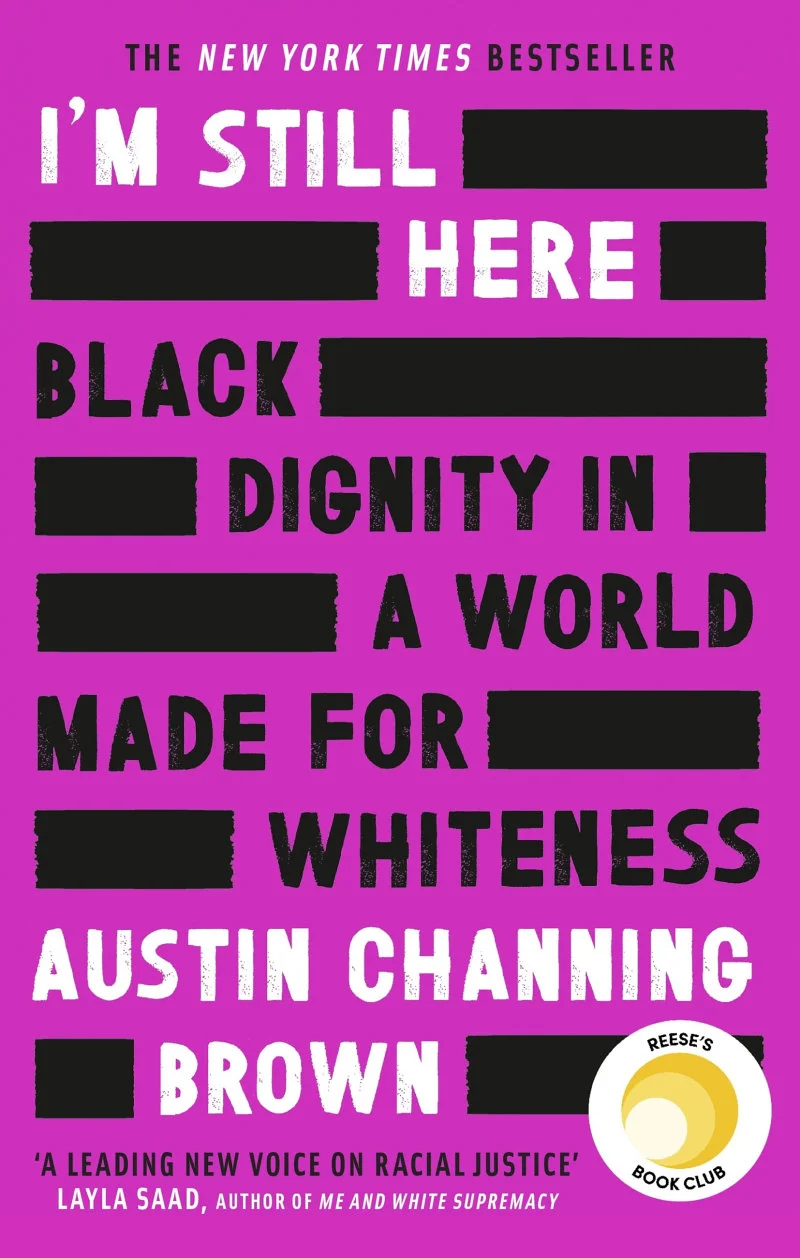
I'm Still Here: Black Dignity in a World Made for Whiteness
- Publication Date:
- July 10th, 2020
- Publisher:
- Hachette UK
- ISBN-13:
- 9780349014845
- ISBN-10:
- 0349014841
- Pages:
- 114
Why I'm Still Here: Black Dignity in a World Made for Whiteness Has Been Challenged
Objections to the book center on its treatment of race, whiteness, and institutional bias in the United States. See more ↓
Challenged or banned in 1 state across 1 school district.
Overview
I'm Still Here is Austin Channing Brown's memoir of growing up Black in institutions—schools, churches, workplaces—built around white comfort and white expectations. The book opens with the story behind her own name, given to her by parents who hoped it would get her foot in the door before an employer ever saw her face, and uses that early lesson as a lens for everything that follows.
From there, Brown moves through the experiences that shaped her understanding of her own worth: predominantly white classrooms, youth groups, and later the diversity and inclusion work she has built a career around. Rather than a strict chronology, the memoir circles through scenes and reflections that build toward a larger argument about what it costs Black people to move through spaces designed without them in mind.
The book is less a recounting of dramatic events than an accumulation of ordinary, recurring moments—slights, silences, small negotiations—that together reveal a pattern. Brown writes in a direct, personal register, treating her own life as evidence for a broader claim about race in American institutions.
Context and Reception
Brown wrote the book from her vantage point as a practitioner inside the diversity-and-inclusion field, and that professional experience shapes its central concern: the gap between organizations that claim to value inclusion and the lived reality of the Black employees, students, and congregants inside them. The memoir is often read alongside other contemporary works of racial reckoning, but it distinguishes itself by staying close to the personal and the institutional rather than the historical or the political.
The book found a wide readership after being selected for a major celebrity-endorsed book club, which introduced it to audiences well beyond the diversity-training circles where Brown had already built a reputation. That crossover attention placed a memoir originally rooted in workplace and faith-community critique into much broader public conversation about race, prompting both wide praise for its candor and, in some communities, pushback against its inclusion in schools.
Why I'm Still Here Has Been Challenged
Objections to the book center on its treatment of race, whiteness, and institutional bias in the United States. Critics of its inclusion in schools have argued that its framing of predominantly white institutions and its critique of racial dynamics amount to divisive or one-sided commentary on race relations, and some have characterized its discussion of systemic inequity as inappropriate for younger readers or as promoting a particular ideological viewpoint. Because the memoir draws directly on Brown's personal encounters with racism, some challenges have also focused on specific passages describing discriminatory treatment as being too pointed or unsettling for a school setting. In the catalog tracked here, the book has been the subject of 1 challenge at the state level and 1 at the district level.
Where to Buy




Affiliate links may generate a small commission at no extra cost to you, which helps support this site.
Banned in Schools
Banned or challenged in 1 state across 1 school district.