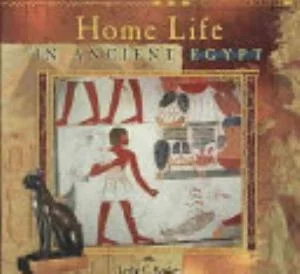
Home Life in Ancient Egypt
- Publication Date:
- January 1st, 2004
- Publisher:
- Rosen Publishing Group
- ISBN-13:
- 9780823989355
- ISBN-10:
- 0823989356
- Pages:
- 24
Why Home Life in Ancient Egypt Has Been Challenged
Some adults have questioned whether a young readership should encounter candid, matter-of-fact descriptions of ancient domestic and bodily customs at all, regardless of their historical framing. See more ↓
Challenged or banned in 1 state across 1 school district.
Overview
Leslie C. Kaplan's Home Life in Ancient Egypt is a nonfiction survey aimed at young readers curious about the texture of everyday existence along the Nile thousands of years ago. Rather than focusing on pharaohs, monuments, or military campaigns, the book turns its attention inward, toward the household: how families formed, how children were raised, and what daily routines looked like for ordinary Egyptians.
The book moves through a sequence of domestic topics, including courtship and marriage customs, the responsibilities and status of women, child-rearing practices, and the schooling available to the young. It also describes the rhythms of daily sustenance and self-care, from the preparation of meals to grooming habits, situating these practical matters alongside the spiritual beliefs that shaped how Egyptians understood their place in the world.
By assembling these threads, the book offers a composite picture of ancient Egyptian society built from the ground up, through the ordinary concerns of eating, cleanliness, worship, and family, rather than from the top down through royal chronicles.
A Window Into the Ordinary Past
Much of what is popularly known about ancient Egypt comes filtered through its monumental achievements: pyramids, tombs, and the lives of its rulers. Kaplan's book belongs to a different tradition of historical writing for young people, one that treats the household as a legitimate and illuminating unit of historical study. This approach asks readers to consider how a civilization organized its most intimate relationships and routines, and what those choices reveal about its values.
The decision to include the role of women and the structure of marriage within a children's reference book reflects a broader trend in educational publishing toward social history, which aims to make ancient cultures feel inhabited rather than merely monumental. Treating religion as one domestic thread among many, alongside meals and hygiene, also underscores how thoroughly belief was woven into daily life rather than confined to temples and formal ritual.
Why Home Life in Ancient Egypt Has Been Challenged
Discomfort with frank discussion of the human body and family structure accounts for the objections this book has drawn. Passages addressing marriage practices and the roles assigned to women in ancient Egyptian households have been read by some challengers as introducing concepts about gender and family arrangements that they consider inappropriate for the age group the book targets, even though the material is presented in a historical, descriptive register rather than as commentary on contemporary life. Sections on personal hygiene have likewise drawn scrutiny from adults who consider any discussion of the body, however clinical or historically framed, unsuited to a young audience.
The book has been formally challenged in 1 state and 1 school district within the records this catalog tracks. The underlying tension reflects a recurring pattern in challenges to educational nonfiction: material presented as straightforward historical fact can be recast as unsuitable once removed from the fuller context of a classroom or library setting, where a teacher or librarian would normally frame its purpose.
Where to Buy




Affiliate links may generate a small commission at no extra cost to you, which helps support this site.
Banned in Schools
Banned or challenged in 1 state across 1 school district.
Tennessee 1 district
- Monroe County Schools Banned