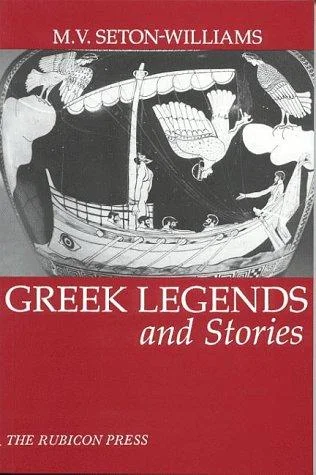
Greek Legends and Stories
- Publication Date:
- January 1st, 1993
- Publisher:
- Rubicon Press
- ISBN-13:
- 9780948695223
- ISBN-10:
- 0948695226
- Pages:
- 176
Why Greek Legends and Stories Has Been Challenged
A parent review flagged the book's unflinching retellings of divine seduction and violence as too mature for the classroom shelf where it was placed, regardless of the material's classical pedigree. See more ↓
Challenged or banned in 1 state across 1 school district.
Overview
Greek Legends and Stories gathers the foundational myths of ancient Greece into a single volume meant to introduce readers to the gods, heroes, and monsters at the root of so much later literature. M. V. Seton-Williams organizes the material around the familiar cast: Zeus and the Olympians, the labors of Heracles, the wanderings of Odysseus, and the tragic figures whose stories have been retold across centuries.
Rather than presenting mythology as a single fixed narrative, the book treats these stories as a living tradition, shaped by oral retelling long before they were set down by poets like Homer and Hesiod. The emphasis falls on the shape and logic of myth itself, how these tales explained natural phenomena, codified social values, and gave the Greeks a shared vocabulary for fate, pride, and mortality.
As a reference and introductory text, the book serves readers encountering classical mythology for the first time, functioning less as scholarly analysis than as an accessible gateway into stories that continue to inform art, language, and literature today.
Myth as Cultural Inheritance
Greek mythology occupies an unusual position in modern education: it is simultaneously ancient religious belief and secular cultural touchstone. Books like this one are typically assigned not to promote belief in the Olympian gods but to equip students with the shared reference points embedded in Western art, idiom, and literature, from "Achilles' heel" to the Oedipal complex. Seton-Williams's compilation sits within a long tradition of myth anthologies aimed at general and younger readers, following figures such as Edith Hamilton and Bulfinch in making classical material legible to those without a classical education.
What makes these myths enduring, and occasionally contentious, is their refusal to sand down the rough edges of the ancient worldview. The gods are petty, jealous, and violent; mortals are punished disproportionately for pride or curiosity; and the natural world is governed by forces indifferent to human welfare. A faithful retelling preserves that moral ambiguity rather than resolving it into a tidy lesson, which is precisely what has made the material both durable and, at times, uncomfortable for modern audiences accustomed to clearer ethical signposting in children's literature.
Why Greek Legends and Stories Has Been Challenged
One school district review of the book centered on its treatment of the gods' sexual conduct, arguing that myths involving Zeus's seductions and transformations amounted to depictions of coercion inappropriate for the age group assigned the text, regardless of their mythological framing. The complaint pressed for either removal or supplemental framing material, contending that retelling these episodes without commentary implicitly normalized the behavior for young readers.
Beyond that specific objection, challenges to classical mythology collections in general tend to cluster around a few recurring concerns: the frank violence of myths like the dismemberment in the Heracles cycle or the punishments meted out in the underworld; the casual treatment of incest, abduction, and divine infidelity among the Olympians; and, less frequently, objections from religious viewpoints uneasy with young readers absorbing polytheistic cosmology presented in a matter-of-fact narrative voice rather than as clearly fictional or historical artifact. This title has been challenged or restricted in 1 state and 1 school district within the catalog tracked here, reflecting a narrower but persistent pattern of concern about how classical material is presented to young audiences rather than a broad rejection of the subject itself.
Where to Buy




Affiliate links may generate a small commission at no extra cost to you, which helps support this site.
Banned in Schools
Banned or challenged in 1 state across 1 school district.
Tennessee 1 district
- Oak Ridge Schools Banned