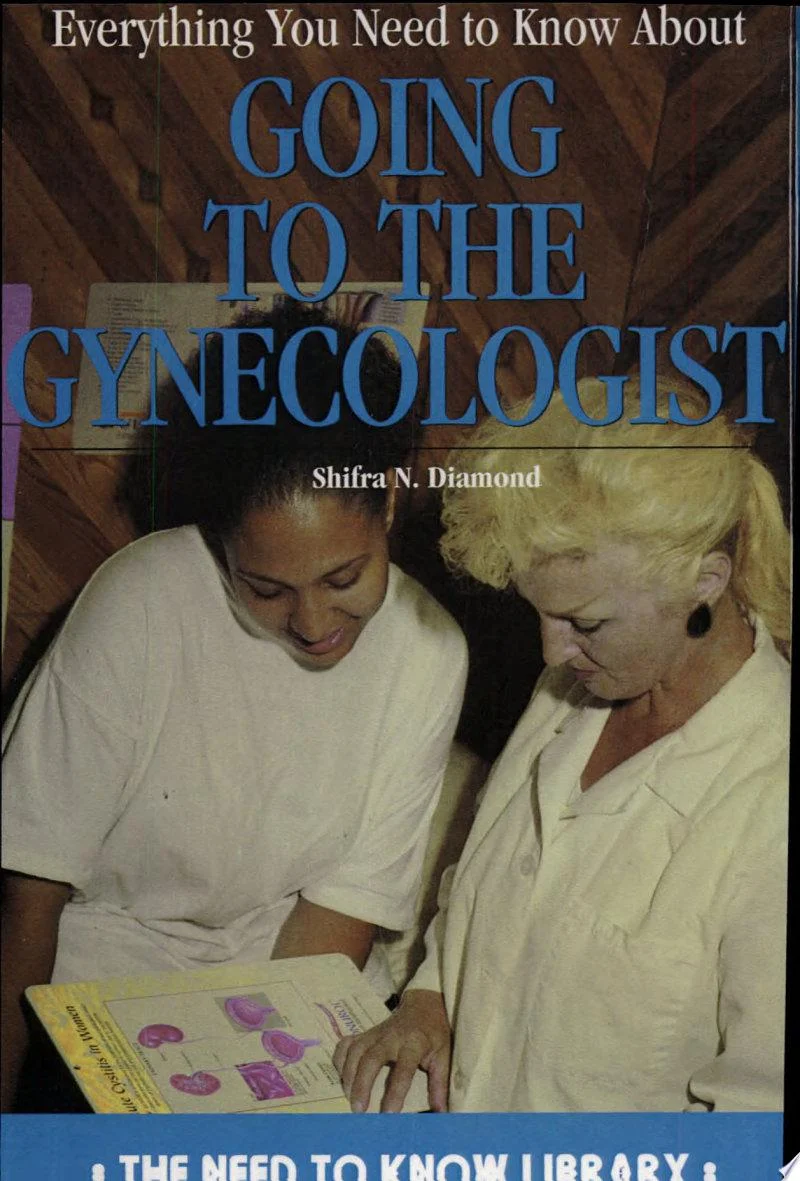
Everything You Need to Know about Going to the Gynecologist
- Publication Date:
- January 1st, 1999
- Publisher:
- Taylor & Francis
- ISBN-13:
- 9780823928392
- ISBN-10:
- 082392839X
- Pages:
- 72
Why Everything You Need to Know about Going to the Gynecologist Has Been Challenged
A reference guide aimed at easing young readers' nerves about a first gynecological visit has drawn fire for addressing contraception and reproductive anatomy in frank, practical terms. See more ↓
Challenged or banned in 1 state across 1 school district.
Overview
Shifra N. Diamond's book functions less as narrative and more as orientation: a plainspoken walkthrough of what actually happens during a gynecological appointment, aimed at readers who may be facing one for the first time. It covers the mechanics of the exam itself, from the questions a doctor might ask to the instruments used, with the goal of replacing uncertainty with a clear sense of what to expect.
Beyond the exam room, the book surveys the female reproductive system in anatomical terms, explaining how its parts function and what changes are considered normal versus worth flagging to a doctor. It also lays out the range of birth control methods available, describing how each works and what tradeoffs they involve, alongside a survey of common gynecological conditions and how they are typically treated.
The result is a reference work in the spirit of a health-class supplement: organized, matter-of-fact, and built around the premise that accurate information reduces anxiety rather than creating it.
A Guide Born of a Particular Need
Books like this one occupy a specific niche in adolescent health literature, descended from a broader movement in the late twentieth century to give young readers direct access to medical facts about their own bodies, rather than filtering that information exclusively through parents, doctors, or school curricula that varied widely in scope. The underlying assumption is that a teenager who understands what a pelvic exam involves, or how a given contraceptive method works, is better equipped to participate in her own care and less likely to avoid necessary medical attention out of fear or embarrassment.
That premise places the book alongside other practical health guides that prioritize clarity over euphemism, treating the reproductive system the same way a general health manual might treat the digestive or circulatory system: as a subject to be explained rather than skirted. Its reception has tracked the broader, recurring debate over how much medical detail belongs in materials aimed at minors, with some readers and educators valuing its directness and others viewing that same directness as overreach.
Why Everything You Need to Know about Going to the Gynecologist Has Been Challenged
Sexual health content sits at the center of the objections raised against this book. Critics have pointed to its detailed treatment of contraception and reproductive anatomy as material they consider too explicit or too clinically frank for the age group likely to encounter it, arguing that such information is better delivered by a parent or physician than found on a library shelf.
Underlying many of these objections is a broader disagreement about what young readers should be allowed to learn about their own bodies without adult mediation, and at what age. Supporters of the book counter that its purpose is preventive and practical, aimed at reducing fear and improving health literacy rather than encouraging any particular behavior. In the catalog tracked here, the book has drawn a challenge in one state and one district.
Where to Buy




Affiliate links may generate a small commission at no extra cost to you, which helps support this site.
Banned in Schools
Banned or challenged in 1 state across 1 school district.
Tennessee 1 district
- Monroe County Schools Banned