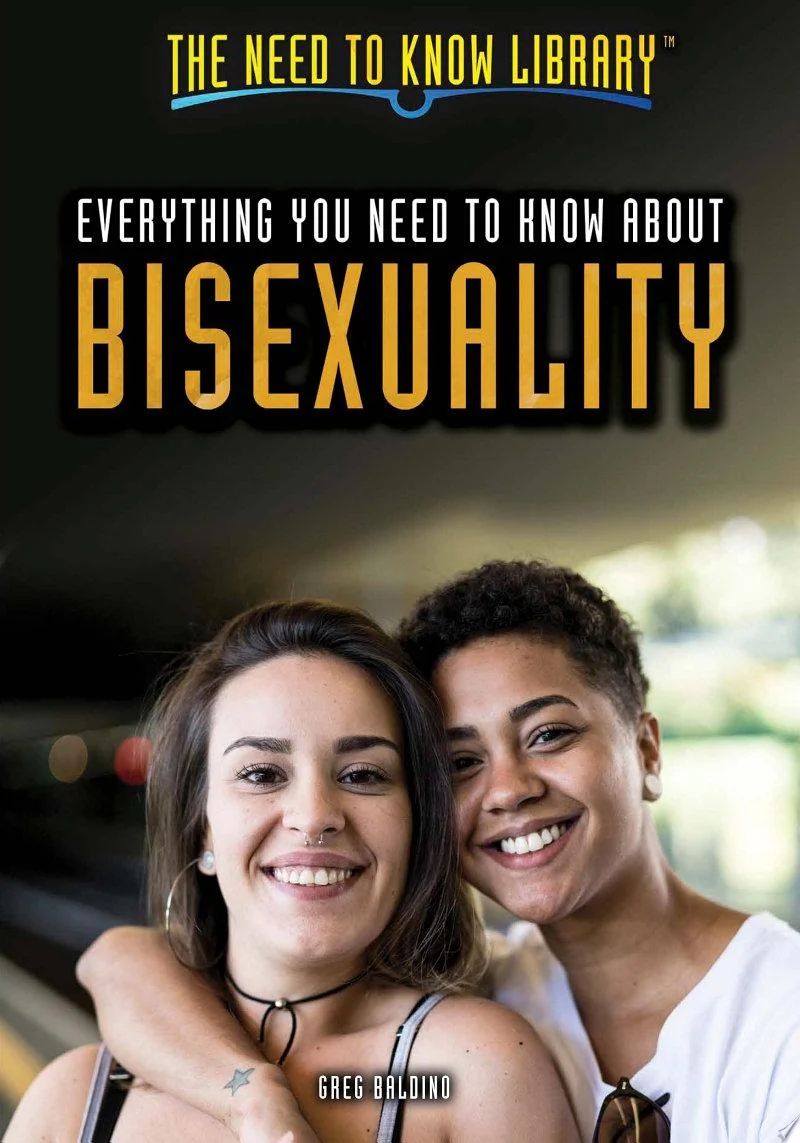
Everything You Need to Know About Bisexuality
by Greg Baldino
- Publication Date:
- July 15th, 2019
- Publisher:
- The Rosen Publishing Group, Inc
- ISBN-13:
- 9781508187530
- ISBN-10:
- 1508187533
- Pages:
- 66
Why Everything You Need to Know About Bisexuality Has Been Challenged
Critics of this title have generally objected not to any single passage but to the premise that a school library should stock a factual primer on bisexuality for young readers at all. See more ↓
Challenged or banned in 1 state across 1 school district.
Overview
Written by Greg Baldino, this nonfiction guide offers young readers a grounding in bisexuality as an identity and as a lived experience. It traces the vocabulary people use to describe attraction to more than one gender, along with a historical view of how that attraction has been understood, named, and stigmatized across different eras.
Much of the book is concerned with the particular position bisexual people occupy: often met with suspicion or erasure not only from the wider heterosexual culture but from other members of the LGBTQ+ community as well. It walks through the practical and emotional terrain of coming out, the persistence of biphobia, and the gap between how bisexuality is portrayed in popular media and how bisexual people actually describe their own lives.
The text closes with reference material meant to extend its usefulness beyond a single reading: a glossary of terminology, a directory of supportive organizations, and shorter sidebar features on symbols and events tied to bisexual and broader queer identity.
Context and Significance
The book belongs to a genre of identity-focused nonfiction aimed at adolescent readers, designed less as narrative and more as a reference and orientation tool. Its structure — definitions, history, social obstacles, then resources — mirrors how many library and classroom materials on LGBTQ+ topics are built, prioritizing clarity and accessibility over argument.
What distinguishes its subject matter is the attention paid to bisexuality specifically, rather than treating it as a subset of a broader queer narrative. The book's discussion of "heterosexual privilege" and of skepticism toward bisexuality from within LGBTQ+ circles reflects ongoing conversations about bisexual erasure — the tendency for bisexual identity to be minimized, doubted, or folded into either gay or straight categories rather than recognized on its own terms. In centering that dynamic, the book positions itself as filling a gap that broader introductory LGBTQ+ texts sometimes leave unaddressed.
Why Everything You Need to Know About Bisexuality Has Been Challenged
A parent raising concerns about this title has typically argued that a school library has no business shelving a book that walks children through terminology and social dynamics tied to sexual attraction, regardless of the age group the publisher intended it for. The complaint tends to center on the presence of the subject matter itself in a school setting rather than on any particular passage, framing the book's inclusion of coming-out narratives and identity vocabulary as material better left to parents to introduce, if at all.
Underlying most objections is a broader discomfort with nonfiction that treats bisexuality as a valid, unremarkable identity rather than a topic requiring caution or qualification. Because the book explains concepts like biphobia and misrepresentation in straightforward terms, some challengers have characterized it as advocacy rather than education, arguing that its matter-of-fact tone amounts to encouragement rather than information. This book has been the subject of formal challenges in 1 state and 1 school district tracked in this catalog, reflecting the same tension seen with many LGBTQ+-themed titles: a disagreement over whether age-appropriate, factual treatment of a topic is distinct from promotion of it.
Where to Buy


Affiliate links may generate a small commission at no extra cost to you, which helps support this site.
Banned in Schools
Banned or challenged in 1 state across 1 school district.
Kentucky 1 district
- Boyle County Schools Banned