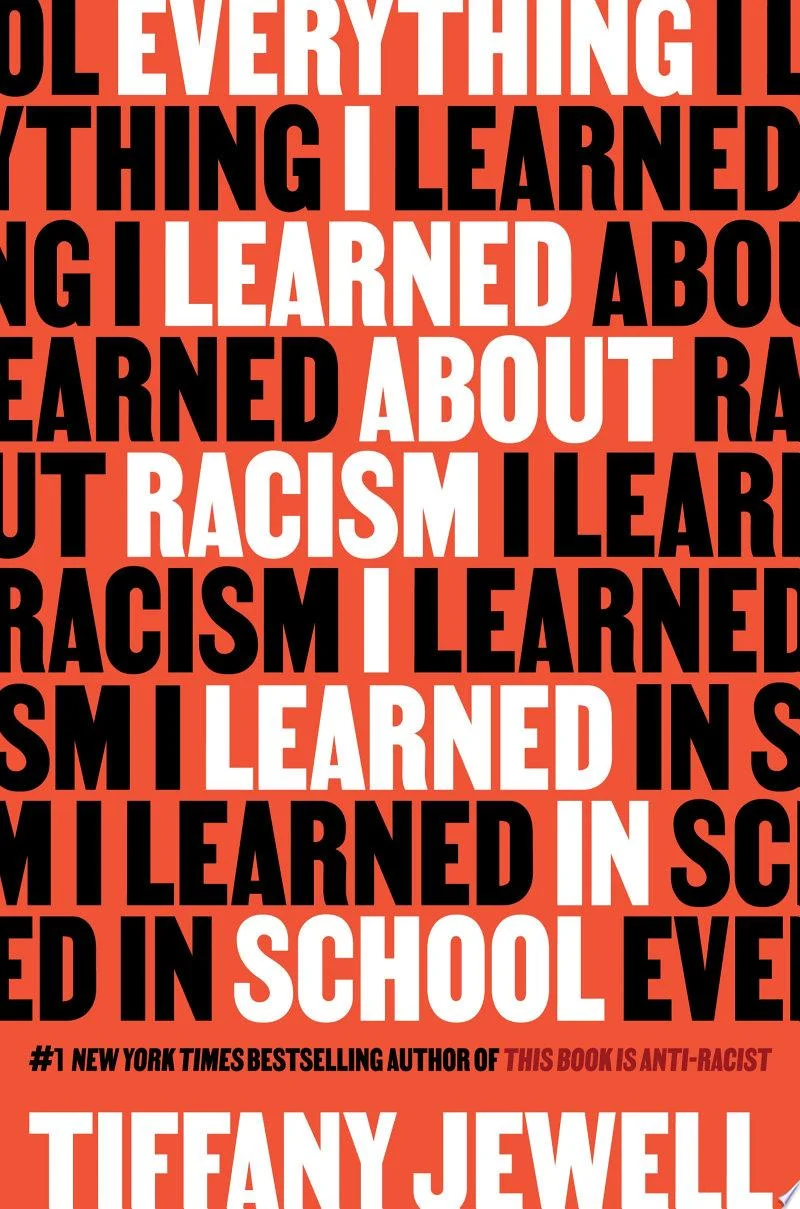
Everything I Learned About Racism I Learned in School
- Publication Date:
- February 27th, 2024
- Publisher:
- HarperCollins
- ISBN-13:
- 9780063319486
- ISBN-10:
- 0063319489
- Pages:
- 248
Why Everything I Learned About Racism I Learned in School Has Been Challenged
Some communities have pushed back against assigning students a book that frames their own schools as sites of racial harm rather than neutral ground. See more ↓
Challenged or banned in 1 state across 1 school district.
Overview
Everything I Learned About Racism I Learned in School follows Tiffany Jewell's own path through classrooms, from her earliest days in elementary school to her college years, using that personal arc as a frame for a much larger argument: that American schools were not built as neutral spaces, and that their history of exclusion still shapes who thrives in them today.
Jewell does not carry the book alone. Interspersed with her narrative are essays, reflections, and short accounts from a wide range of other writers and educators of color, several of them established authors in their own right, alongside a few teen contributors. Their experiences span different grade levels, regions, and school settings, giving the book a chorus-like structure rather than a single linear argument.
The result reads less like a textbook and more like an assembled record — part memoir, part history, part invitation for the young reader to examine their own school experience with a more critical eye.
Context and Reception
The book extends territory Jewell staked out in her earlier bestseller on antiracism, but narrows the focus considerably: rather than addressing racism broadly, it asks what racism looks like specifically inside the institution most young readers spend their days in. That shift from abstract principle to lived, daily environment is part of what distinguishes it within her body of work.
Structurally, the decision to braid in outside contributors rather than rely solely on Jewell's voice reflects a broader trend in recent YA nonfiction toward collective testimony over single-author authority. It also means the book resists easy categorization as either memoir or history — it borrows tools from both, using Jewell's chronology as scaffolding for the other contributors' accounts.
Why Everything I Learned About Racism I Learned in School Has Been Challenged
Reviewers have generally praised the book for the clarity of its structure and the candor of its contributors, treating it as a useful entry point for students beginning to think critically about the institutions around them. That same candor is precisely what has drawn objection elsewhere: critics argue that a book built around personal accounts of racial harm in schools asks young readers to view their own classrooms with suspicion rather than trust.
The substance of the pushback centers on the book's core premise — that racism is embedded in the structure of American schooling itself, not merely an occasional lapse by individuals. Some object to this as a one-sided indictment of educational institutions, arguing it encourages students to interpret ordinary school experiences through a racial lens before they have the context to evaluate such claims themselves. Others have raised concern about the book's suitability for the age range it targets, questioning whether younger readers are equipped to engage with accounts of discrimination and institutional critique without more guided framing.
In the catalog tracked here, the book has drawn a challenge in 1 state and 1 district, placing it among the more narrowly contested titles rather than one facing widespread objection.
Where to Buy




Affiliate links may generate a small commission at no extra cost to you, which helps support this site.
Banned in Schools
Banned or challenged in 1 state across 1 school district.