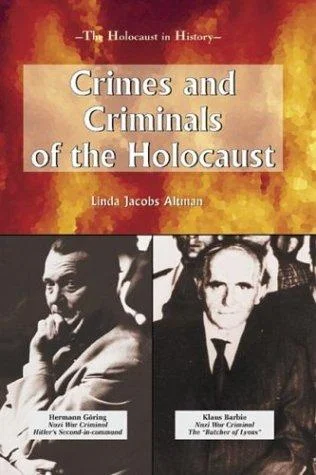
Crimes and Criminals of the Holocaust (Holocaust in History)
- Publication Date:
- March 1st, 2004
- Publisher:
- Enslow Publishers
- ISBN-13:
- 9780766019959
- ISBN-10:
- 0766019950
- Pages:
- 104
Why Crimes and Criminals of the Holocaust (Holocaust in History) Has Been Challenged
Some parents and reviewers have argued that the book's candid depiction of torture and death in the camps is too graphic for the young readers it was written for. See more ↓
Challenged or banned in 1 state across 1 school district.
Overview
This entry in the "Holocaust in History" series lays out, in direct and unflinching terms, how Nazi Germany's camp system functioned as a machine of persecution against Jews, Roma people, disabled individuals, and other groups the regime deemed unworthy of life. Rather than focusing on a single survivor's story, the book takes a broader view, surveying the range of cruelties inflicted across different camps and populations.
A second strand of the narrative follows the legal reckoning that came after the war, tracing how courts and tribunals attempted to assign responsibility to the officials, guards, and bureaucrats who carried out or enabled these crimes. This pairing of atrocity and accountability gives the book a structure built around cause and consequence: what was done, and what, if anything, was done about it afterward.
Written for younger readers as part of a historical series, the book favors clear documentation over narrative embellishment, presenting its subject as a matter of historical record rather than personal drama.
History, Memory, and the Question of Justice
Books of this kind sit at an uneasy intersection of history and pedagogy. They are written to ensure that genocide is not reduced to an abstraction for students encountering it for the first time, which means they cannot soften the material without undermining the purpose of the account. At the same time, they are aimed at an audience still developing the context to process violence on this scale, a tension that runs through much Holocaust literature for young people.
The book's attention to groups beyond the primary Jewish victims, including Roma communities and people with disabilities, reflects a historiographical shift toward a fuller accounting of who the Nazi regime targeted and why. Its interest in postwar trials also situates it within a broader conversation about what justice can and cannot accomplish after mass atrocity, a question that remains unresolved in historical scholarship and continues to inform how the Holocaust is taught.
Why Crimes and Criminals of the Holocaust Has Been Challenged
Graphic descriptions of violence are the primary source of objection to this book, which has drawn one challenge tracked across a state and a district in this catalog. Readers and reviewers have raised concerns that its detailed treatment of torture, murder, and medical experimentation performed on concentration camp prisoners is too disturbing for the age group the book is marketed to, even though the series is designed for younger students.
Underlying these objections is a familiar disagreement about how much historical detail children should be given when the subject is genocide. Some challengers argue that the specifics of camp violence could be presented with less graphic language; others contend that stripping away that detail risks minimizing the scale of what occurred. The book's unflinching approach, intended to convey the gravity of the Holocaust honestly, is precisely what has made it a target for removal in some school settings.
Where to Buy




Affiliate links may generate a small commission at no extra cost to you, which helps support this site.
Also by Linda Jacobs Altman
Banned in Schools
Banned or challenged in 1 state across 1 school district.
Tennessee 1 district
- Monroe County Schools Banned