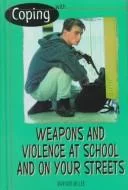
Coping with weapons and violence in school and on your streets
- Publication Date:
- January 1st, 1999
- Publisher:
- Rosen Pub. Group
- ISBN-13:
- 9780823929689
- ISBN-10:
- 082392968X
- Pages:
- 217
Why Coping with weapons and violence in school and on your streets Has Been Challenged
Critics of this title have argued that spelling out the mechanics of school and street violence for a teen audience does more to unsettle young readers than to protect them. See more ↓
Challenged or banned in 1 state across 1 school district.
Overview
Maryann Miller's "Coping with Weapons and Violence in School and on Your Streets" belongs to the genre of practical, issue-focused nonfiction written directly for teenagers. Rather than telling a story, it works as a guide, walking young readers through the realities of gun violence, gang activity, and physical danger they may encounter at school or in their own neighborhoods.
The book's approach is informational and preventive. It lays out what warning signs might look like, how conflicts escalate, and what options a teenager has for staying safe or seeking help, whether from a teacher, a counselor, or a parent. The tone aims to be steadying rather than alarming, treating young readers as capable of understanding difficult realities and acting on that understanding.
Books of this kind are typically shelved as self-help or social-issues nonfiction for young adults, often used by school librarians and counselors as a resource rather than assigned as classroom reading. Its purpose is less about literary experience and more about giving teens a vocabulary and a set of concrete strategies for a subject many find frightening to discuss.
Context and Themes
The book sits within a broader wave of young-adult nonfiction published in the wake of high-profile school shootings and rising public concern about youth violence, a genre that includes titles on bullying, gangs, and personal safety. These books emerged as publishers and educators sought ways to address fear and confusion among students without waiting for a crisis to force the conversation.
What distinguishes this kind of writing from fiction dealing with similar subject matter is its directness: it does not dramatize violence for narrative effect but instead names it plainly, in the register of a manual or a counselor's conversation. That directness is precisely what makes such books useful to some adults and unsettling to others, since discussing weapons and violence candidly with teenagers requires naming specifics that many would rather keep at a distance.
The book also reflects an assumption common to its era of publication: that honest information, rather than avoidance, is the more effective way to keep young people safe. That premise has not been uniformly shared by parents, administrators, or communities weighing what belongs in a school library.
Why Coping with Weapons and Violence in School and on Your Streets Has Been Challenged
A parent objection to this title has centered on the concern that a book explaining how violence and weapons operate in schools could, in the wrong hands, normalize or even instruct rather than deter, with the request framed around whether such explicit subject matter belongs on shelves accessible to younger students. The complaint reflects a recurring worry in these disputes: that describing a danger in order to help readers avoid it risks making that danger feel more present or more permissible than it would if left unaddressed.
Underlying this challenge is a broader disagreement about how much detail children should be given about violence before they are considered old enough to handle it responsibly. Some challengers argue that discussions of guns and physical danger, even when framed protectively, expose younger readers to ideas and fears they are not yet equipped to process, and that such material is better introduced by parents at a time and in a manner they choose themselves rather than through a library shelf.
This book has been formally challenged in 1 state and 1 school district tracked in this catalog, a record that places it among the smaller number of nonfiction safety guides to draw sustained objection, most challenges to youth literature concentrating instead on fiction dealing with similar themes.
Where to Buy



Affiliate links may generate a small commission at no extra cost to you, which helps support this site.
Banned in Schools
Banned or challenged in 1 state across 1 school district.
Tennessee 1 district
- Monroe County Schools Banned