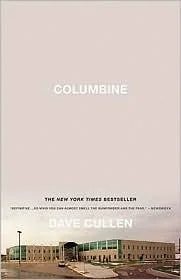
Columbine
by Dave Cullen
- Publication Date:
- January 1st, 2010
- Publisher:
- Twelve
- ISBN-13:
- 9780446546928
- ISBN-10:
- 0446546925
- Pages:
- 417
Why Columbine Has Been Challenged
Some readers have argued that a detailed, evidence-based reconstruction of a school shooting belongs in adult nonfiction collections rather than in front of younger students. See more ↓
Challenged or banned in 1 state across 1 school district.
Overview
Dave Cullen covered the aftermath of the April 1999 shooting at Columbine High School as it happened, and he spent the following decade untangling what actually occurred from the assumptions that hardened into public memory almost overnight. The result is a work of narrative journalism that methodically dismantles the early explanations — that the killers belonged to a "Trench Coat Mafia," that they were bullied outcasts targeting jocks, that the massacre followed any clean, comprehensible logic.
Drawing on police files, journals, videos, and consultations with psychologists who studied the case, Cullen instead builds two distinct psychological portraits of the perpetrators, showing how different their motivations and temperaments actually were despite acting together. He sets these portraits against the experiences of students, teachers, and family members who lived through the attack and its long recovery.
The book moves between the killers' interior world and the community's external one, tracing how survivors and first responders rebuilt their lives in the years that followed. Its structure — cutting between meticulous investigation and human aftermath — reflects Cullen's aim of replacing a familiar but inaccurate story with a more disquieting, better-documented one.
Behind the Myth-Making
Much of the book's significance lies in what it corrects. In the immediate aftermath of Columbine, media coverage settled quickly on a set of explanations involving outcasts, bullying, and goth subculture, and those explanations shaped years of public policy and school discourse. Cullen's reporting shows how thoroughly that narrative diverged from the documented evidence, and the book has since become a reference point for how journalism can either entrench or dismantle a tragedy's mythology in real time.
The book also sits within a broader conversation about how psychological profiling can illuminate — without excusing — acts of extreme violence. By treating the two killers as distinct case studies rather than a single unified threat, Cullen resists the impulse to flatten mass violence into one explanatory type, a choice that has influenced later journalism and research on school shootings.
Why Columbine Has Been Challenged
Much of the disagreement over this book concerns where it belongs on a shelf rather than whether it should exist at all — specifically, whether its unflinching subject matter is suited to younger or general-collection readers versus adult or mature nonfiction sections. The objections center on the book's graphic, factual treatment of a real mass shooting, including descriptions of violence, injury, and death that some readers find too disturbing for school libraries.
Other concerns focus on the psychological material itself: the book's close examination of the killers' mindsets, writings, and planning has led some to worry that such detail risks explaining or even romanticizing the perpetrators rather than simply documenting the event. Because the book draws directly from the killers' own words and drawings, some readers have questioned whether that material should be so accessible at all. In the catalog tracked here, the book has drawn a single challenge each in one state and one school district.
Where to Buy




Affiliate links may generate a small commission at no extra cost to you, which helps support this site.
Banned in Schools
Banned or challenged in 1 state across 1 school district.
Tennessee 1 district
- Monroe County Schools Banned