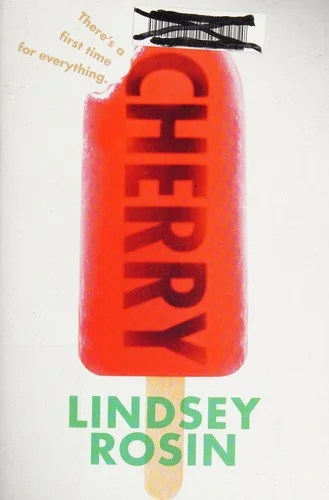
Cherry
- Publication Date:
- August 15th, 2017
- Publisher:
- Simon Pulse
- ISBN-13:
- 9781481459099
- ISBN-10:
- 1481459090
- Pages:
- 402
Why Cherry Has Been Challenged
Much of the pushback against this novel centers less on its plot than on its refusal to treat teenage sexual desire as something requiring apology or consequence. See more ↓
Challenged or banned in 1 state across 2 school districts.
Overview
Cherry follows a tight-knit circle of five high school seniors who make a collective decision: none of them will finish the school year still a virgin. Lindsey Rosin builds the novel around that single pact, then lets it fracture into five distinct storylines as each girl approaches the goal from a different angle, with different stakes and different reasons for wanting it.
Rather than treating the pact as a punchline, the book uses it as a structural device to examine how differently sexuality is experienced even within the same friend group. Some of the girls are motivated by curiosity, others by romance, others by a wish to simply get an anxiety-inducing milestone behind them. The result is less a single coming-of-age arc than five overlapping ones, tied together by loyalty and shared history.
Underneath the premise is a story about the last stretch of high school itself — the way friendships shift under the pressure of impending separation, and the way big decisions get made partly out of genuine desire and partly out of the fear of being left behind.
Friendship, Autonomy, and the Senior-Year Countdown
What Cherry is really interested in is agency: who gets to decide when and why a young person becomes sexually active, and how much of that decision is actually made in isolation versus in conversation with friends, expectations, and cultural noise. Rosin frames the pact not as peer pressure in the punitive after-school-special sense, but as a form of solidarity — a way for five girls to face something intimidating together rather than alone.
The novel sits within a broader shift in YA publishing toward frank, unembarrassed treatment of teenage sexuality, following in the wake of books that pushed back against the idea that female desire needed to be either romanticized into invisibility or moralized into a cautionary tale. Its reception has largely tracked that lineage: readers and reviewers have pointed to its ensemble structure and its willingness to let each character want different things from the same experience as a corrective to more uniform narratives about "losing it."
Why Cherry Has Been Challenged
Critics of Cherry have often praised the same quality that makes it controversial: its directness. The book has been described as refreshingly honest about teenage sexual desire, precisely because it declines to soften or punish the girls for wanting sex on their own terms — and that same bluntness is what has drawn objection from those who believe the subject does not belong in a book aimed at teen readers at all.
The substance of the challenges centers on the novel's explicit treatment of sex and the fact that its teenage characters are the ones initiating and pursuing it, which some parents and community members have argued normalizes sexual activity among minors rather than depicting it as a fraught or cautionary experience. Related objections point to the book's frank language around bodies and desire, arguing that the material is more appropriate for adult fiction than for a school library's young adult shelf. This catalog tracks challenges to Cherry in 1 state and 2 districts, reflecting a narrower but consistent line of objection focused specifically on age-appropriateness rather than on the book's literary merit.
Where to Buy




Affiliate links may generate a small commission at no extra cost to you, which helps support this site.
Banned in Schools
Banned or challenged in 1 state across 2 school districts.
Tennessee 2 districts
- Knox County Schools Banned
- Wilson County Schools Banned