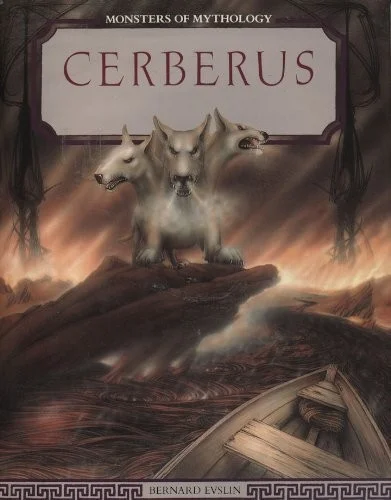
Cerberus
- Publication Date:
- January 1st, 1987
- Publisher:
- Chelsea House
- ISBN-13:
- 9781555462437
- ISBN-10:
- 155546243X
- Pages:
- 92
Why Cerberus Has Been Challenged
Objections to Cerberus have centered less on the writing itself than on its subject matter. See more ↓
Challenged or banned in 1 state across 1 school district.
Overview
Cerberus retells one of the best-known figures from Greek mythology: the monstrous three-headed hound stationed at the threshold of the Underworld. Bernard Evslin, a prolific adapter of classical myth for young readers, renders the creature's origin and duties in accessible, story-driven prose, situating Cerberus within the larger cast of gods, monsters, and mortals who populate Hades' domain.
Rather than a dry summary of myth, the book leans into narrative — presenting Cerberus's role as sentinel of the dead as a piece of dramatic storytelling, with the tension inherent in guarding a border between the living world and the realm beyond.
As with much of Evslin's output, the book is aimed at introducing younger readers to the source material of Western literature and language, using a single, vivid figure as an entry point into a much larger mythological system.
Myth-Making for Young Readers
Evslin built a career on translating the Greek pantheon into short, digestible narratives, and Cerberus fits that pattern: an outsized, monstrous figure made comprehensible through story rather than academic summary. The choice of subject is telling. Guardian monsters like Cerberus occupy a particular place in myth — neither wholly villain nor hero, but a fixed point of order at the edge of chaos, embodying the ancient world's preoccupation with boundaries between life and death.
The book's place in Evslin's wider catalog — which includes volumes on Hercules, the Trojan War, and various gods and monsters — reflects a broader mid-to-late-20th-century push to bring classical literacy into elementary and middle-school curricula. That project treated mythology less as religious doctrine and more as cultural inheritance: the shared vocabulary of heroism, fate, and the underworld that recurs throughout later literature. Read in that light, Cerberus is less about a single monster than about giving children a foothold in a tradition that echoes through everything from epic poetry to modern storytelling.
Why Cerberus Has Been Challenged
Objections to Cerberus have centered less on the writing itself than on its subject matter. Because the book presents figures from Greek religion — gods, an underworld, a guardian monster of death — as matter-of-fact narrative rather than clearly framed as ancient belief, some challengers have raised concerns about young readers encountering non-Christian religious cosmology, including the Underworld and its inhabitants, presented without qualification. Others have flagged the book's monster and death-centered content as unsuitable or frightening for the elementary-age readers it targets, given its unflinching treatment of a creature whose entire function is guarding the dead. This book has been challenged or banned in 1 state and 1 school district tracked in this catalog, consistent with the broader pattern of pushback against classical mythology titles in children's collections.
Where to Buy



Affiliate links may generate a small commission at no extra cost to you, which helps support this site.
Banned in Schools
Banned or challenged in 1 state across 1 school district.
Tennessee 1 district
- Monroe County Schools Banned