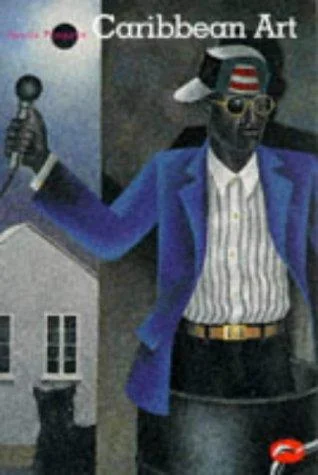
Caribbean art
- Publication Date:
- January 1st, 1998
- ISBN-13:
- 9780500203064
- ISBN-10:
- 0500203067
Why Caribbean art Has Been Challenged
Objections to this book have centered on its visual content and subject matter rather than its historical or critical framing. See more ↓
Challenged or banned in 1 state across 1 school district.
Overview
This survey traces the development of visual art across the Caribbean, drawing together painters, sculptors, and mixed-media artists whose work has often been overlooked in broader histories of art. Rather than treating the region as a single, uniform tradition, the book moves across islands and language groups to show how distinct artistic communities emerged from shared and divergent histories of colonization, migration, and cultural exchange.
The book pays particular attention to how Caribbean artists have negotiated influences from Europe, Africa, and the Americas while forging styles and subject matter rooted in their own landscapes and social realities. It considers formal innovation alongside the political and spiritual undercurrents that run through much of the work discussed.
Richly illustrated, the volume functions as both an introduction for newcomers and a reference point for readers already familiar with individual artists or national art scenes, situating individual careers within a wider regional context.
Context and Significance
Caribbean art has long occupied an uncertain place in mainstream art history, frequently filtered through the lens of tourism, folk art categorization, or diaspora studies rather than considered on its own terms. This book pushes back against that framing, arguing for the region's artists as full participants in modern and contemporary art movements who have developed their own critical vocabulary rather than simply absorbing outside trends.
The work also grapples with the legacy of colonialism as an artistic subject in itself, tracing how successive generations of artists have used their practice to process histories of slavery, indentured labor, and independence movements. In doing so, the book positions art as a form of historical and cultural documentation as much as aesthetic achievement, connecting individual artworks to broader questions of identity and self-representation across the region.
Why Caribbean Art Has Been Challenged
Objections to this book have centered on its visual content and subject matter rather than its historical or critical framing. As an illustrated survey, it reproduces artworks that some challengers have deemed inappropriate for certain audiences, including depictions involving nudity or the human body that appear within works addressing themes such as colonial violence, spirituality, and cultural memory. Because the book is structured around reproduced images rather than narrative text, disputes have tended to focus on specific plates rather than the book's broader arguments. According to the records tracked in this catalog, the title has drawn a challenge in 1 state and 1 district.
Where to Buy




Affiliate links may generate a small commission at no extra cost to you, which helps support this site.
Banned in Schools
Banned or challenged in 1 state across 1 school district.
Tennessee 1 district
- Oak Ridge Schools Banned