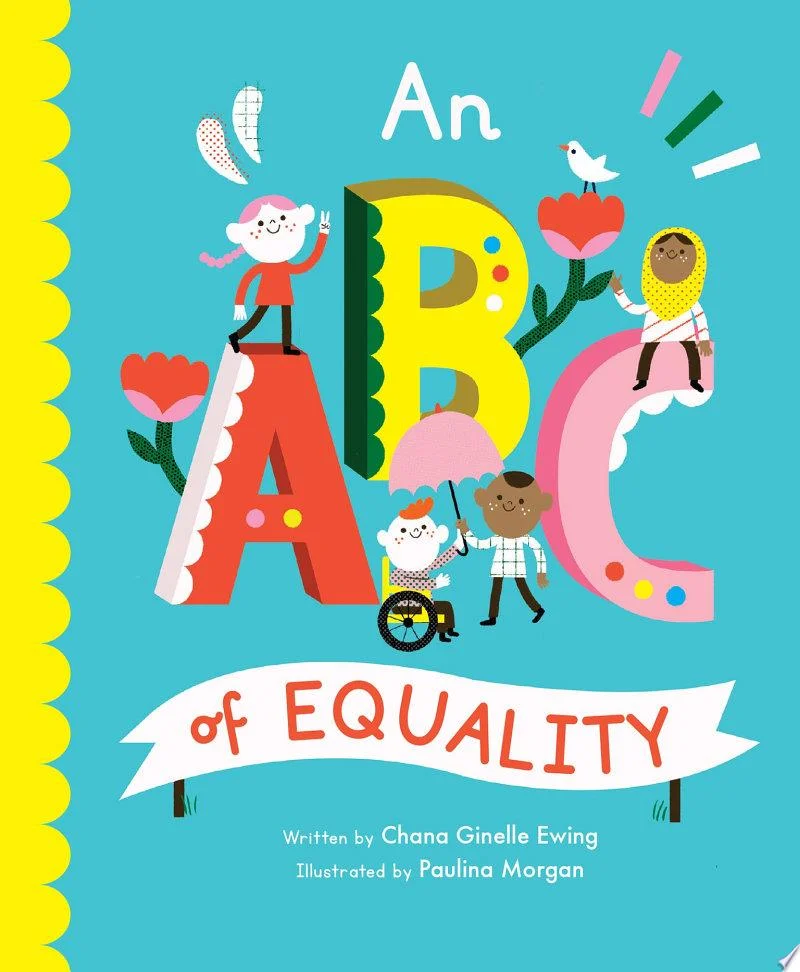
An ABC of Equality
- Publication Date:
- September 3rd, 2019
- Publisher:
- Frances Lincoln Children's Books
- ISBN-13:
- 9781786037428
- ISBN-10:
- 1786037424
- Pages:
- 54
Why An ABC of Equality Has Been Challenged
Critics argue the book uses a format meant for teaching letters to introduce young children to loaded social and political concepts before they can fully grasp them. See more ↓
Challenged or banned in 1 state across 1 school district.
Overview
An ABC of Equality takes the familiar structure of an alphabet book and repurposes it to introduce young readers to ideas about fairness, identity, and social difference. Each spread pairs a decorated letter and a one-word concept with a short, upbeat phrase, while the facing page offers a simple illustrated explanation aimed at a child's level of understanding.
The cast of figures who guide readers through the alphabet is deliberately varied, reflecting different ethnicities, body types, and abilities. Rather than building toward a plot, the book functions as a reference or discussion tool, something a caregiver might read aloud a letter or two at a time rather than cover to cover in one sitting.
Its concepts range from the concrete, like class and privilege, to the more abstract, like belief and xenophobia, and the book consistently frames these ideas in terms of curiosity, kindness, and self-understanding rather than argument or instruction.
An Alphabet Book With a Different Agenda
Alphabet books have long served as a vehicle for teaching more than letters, introducing everything from animals to numbers to civic values. An ABC of Equality extends that tradition into the territory of social studies, treating words like "privilege" or "ability" the way other primers treat "apple" or "ball": as vocabulary a child can begin to hold onto early, with fuller understanding expected to come later.
This approach places the book within a broader, contested movement in children's publishing toward early exposure to topics historically reserved for older students, including gender identity, systemic inequality, and prejudice. Supporters of this trend argue that abstract fairness concepts are best introduced young and reinforced gradually, in small, friendly doses rather than all at once; critics argue that some of this material belongs to parents and older classrooms rather than storybooks for toddlers and young readers. The book sits squarely in the middle of that disagreement, which largely explains the scrutiny it has drawn.
Why An ABC of Equality Has Been Challenged
Several entries in the book have drawn particular attention, among them the page built around "LGBTQIA," which invites children to find the words that describe themselves, and the page for "privilege," which asks young readers to notice their own advantages. Objectors argue that concepts like gender identity and systemic privilege are too complex, or too tied to family and personal values, to be distilled into a single rhyming phrase for a preschool or early-elementary audience, and that introducing them through a picture book risks presenting one side of an unsettled debate as settled fact.
Others have taken issue with the book's broader premise: that an alphabet format, designed for teaching basic literacy, is being used instead to deliver a curriculum of social and political ideas before children have the context to evaluate them. In the catalog tracked here, that objection has resulted in a challenge recorded in one state and one school district.
Where to Buy




Affiliate links may generate a small commission at no extra cost to you, which helps support this site.
Banned in Schools
Banned or challenged in 1 state across 1 school district.