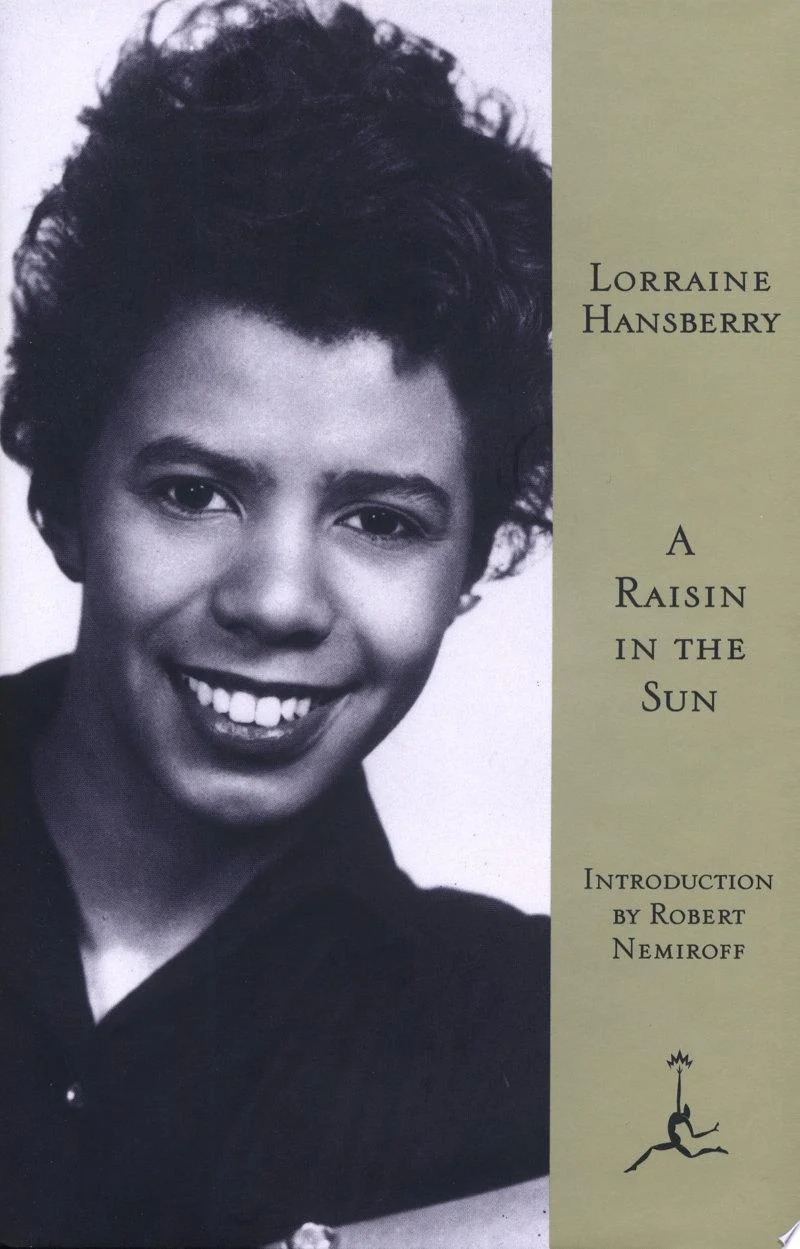
A Raisin in the Sun
- Publication Date:
- August 22nd, 1995
- Publisher:
- Modern Library
- ISBN-13:
- 9780679601722
- ISBN-10:
- 0679601724
- Pages:
- 178
Why A Raisin in the Sun Has Been Challenged
Critics have pushed back against the play's blunt language and its head-on look at housing discrimination, arguing that the material is too harsh for student readers even though it serves the story's larger point about racial injustice. See more ↓
Challenged or banned in 1 state across 1 school district.
Overview
A Raisin in the Sun centers on the Younger family, three generations sharing a cramped South Side Chicago apartment, as a life insurance payout forces a reckoning over what each member wants from life. A mother dreams of a house, a son of a business, a daughter of a career and an identity fully her own. Hansberry builds the play from these competing visions, letting the family's arguments carry the weight of larger questions about ambition, dignity, and inheritance.
The title borrows a line from Langston Hughes's poem "Harlem," which asks what becomes of a dream put off for too long. That image of stalled hope runs through the entire play, shaping not just the plot but the mood: a family pressing forward against forces designed to keep it in place.
When it opened on Broadway in 1959, the play marked a turning point for American drama. It was among the first works by a Black playwright to reach a mainstream Broadway stage, and its portrait of a working-class Black household resonated across racial lines in a way few prior productions had managed.
A Family's Reckoning and a Nation's Reflection
Hansberry wrote the Youngers as individuals rather than symbols, and that choice is central to the play's lasting force. Each character wants something different from the same windfall, and the drama treats those disagreements as legitimate rather than resolving them tidily. The result is a study of how economic precarity presses on family bonds, and of how ambition looks different depending on one's age, gender, and place in the household.
The play also sits at the intersection of the civil rights era and the long history of housing discrimination in American cities, giving it a documentary edge alongside its domestic drama. Commentators have noted that each passing decade seems to sharpen rather than dull its relevance, as the obstacles the Youngers face, restrictive neighborhoods, limited economic mobility, the burden of representing a whole race in white-dominated spaces, persisted well beyond 1959. Within Hansberry's own brief career, the play stands as her defining achievement, and it remains a fixture of American theater curricula and revival stages alike.
Why A Raisin in the Sun Has Been Challenged
Much of the scrutiny directed at the play traces back to its refusal to soften the realities of mid-century racism. Characters speak the language of their time, including slurs and blunt expressions of prejudice, in scenes meant to expose bigotry rather than endorse it; some reviewers have nonetheless argued that this material is too raw for classroom use without extensive framing. The Youngers' confrontation with a neighborhood association intent on keeping them out of a white enclave has similarly drawn objection for its direct depiction of discriminatory housing practices, with critics contending that the scene's frankness about racial exclusion makes some readers uncomfortable.
The play's family conflicts, particularly its candid handling of generational disagreement, strained marriage, and the pressures bearing down on a household with limited means, have also been cited as unsuited to younger audiences. This catalog records the title as challenged or banned in one state and one district.
Where to Buy




Affiliate links may generate a small commission at no extra cost to you, which helps support this site.
Banned in Schools
Banned or challenged in 1 state across 1 school district.
Tennessee 1 district
- Monroe County Schools Banned